Table of Contents
1. Introduction to Small Gear
1.1 Definition and Function of Small Gear
Small gears are precision-engineered mechanical components designed to transmit motion, torque, and power between rotating shafts. Although compact in size, these components perform mission-critical functions in countless mechanical systems where accuracy, synchronization, and efficiency are non-negotiable. Their geometry, tooth profile, and dimensional precision directly influence the operational stability of the equipment in which they are installed.
From an engineering perspective, small gears convert rotational energy while controlling speed ratios and torque multiplication. Whether integrated into a miniature actuator, an industrial sensor, or a sophisticated robotic assembly, these gears ensure that motion is transferred smoothly and predictably.
For procurement professionals, small gears may appear to be low-cost components within a larger bill of materials, but their influence on overall product performance is disproportionately large. A minor deviation in tooth geometry or concentricity can trigger vibration, premature wear, and costly warranty claims. As the saying goes, the devil is in the details, and nowhere is that more evident than in precision gear systems.
1.2 Importance in Modern Machinery
Modern machinery relies heavily on compact and efficient mechanical transmission systems. Small gears make it possible to reduce equipment size while maintaining high levels of performance. This capability is particularly important as manufacturers continue to pursue miniaturization without compromising reliability.
In today's competitive manufacturing environment, customers expect products that operate quietly, consume less energy, and maintain consistent performance over extended service intervals. Small gears contribute directly to achieving these objectives by optimizing power transmission efficiency and reducing mechanical losses.
Engineers often view gear systems as the heartbeat of motion-control assemblies. If the gears perform consistently, the entire machine benefits. If they fail, system performance deteriorates rapidly. Consequently, selecting high-quality gears becomes a strategic decision rather than a routine purchasing activity.
1.3 Applications Across Industries
Small gears are utilized across a remarkably diverse range of industries. Their versatility stems from their ability to provide precise motion control in confined spaces.
In the automotive sector, small gears support electric actuators, steering mechanisms, seat adjustment systems, and transmission components. In medical equipment, they facilitate accurate movement in diagnostic and surgical devices. Consumer electronics manufacturers employ them in cameras, printers, and smart appliances.
Industrial automation represents another major application area. Robotic arms, servo drives, conveyors, and positioning systems all depend on small gears to achieve repeatable motion. Aerospace manufacturers utilize miniature gearing systems in navigation instruments and control assemblies where reliability under extreme conditions is paramount.
Across all these industries, one common requirement remains unchanged: consistent performance every single time. Learn more about gear fundamentals on Wikipedia.
2. Types of Small Gears
2.1 Spur Gears
Spur gears are among the most widely used gear types due to their simplicity and cost-effectiveness. Their teeth are cut parallel to the shaft axis, enabling efficient transmission between parallel shafts.
Engineers appreciate spur gears for their high efficiency and straightforward manufacturing process. Because tooth engagement occurs simultaneously across the entire face width, power transfer remains highly predictable.
From a procurement standpoint, spur gears often represent the most economical solution for applications where noise levels and high-speed operation are not primary concerns. Their standardized design also simplifies sourcing and inventory management.
2.2 Helical Gears
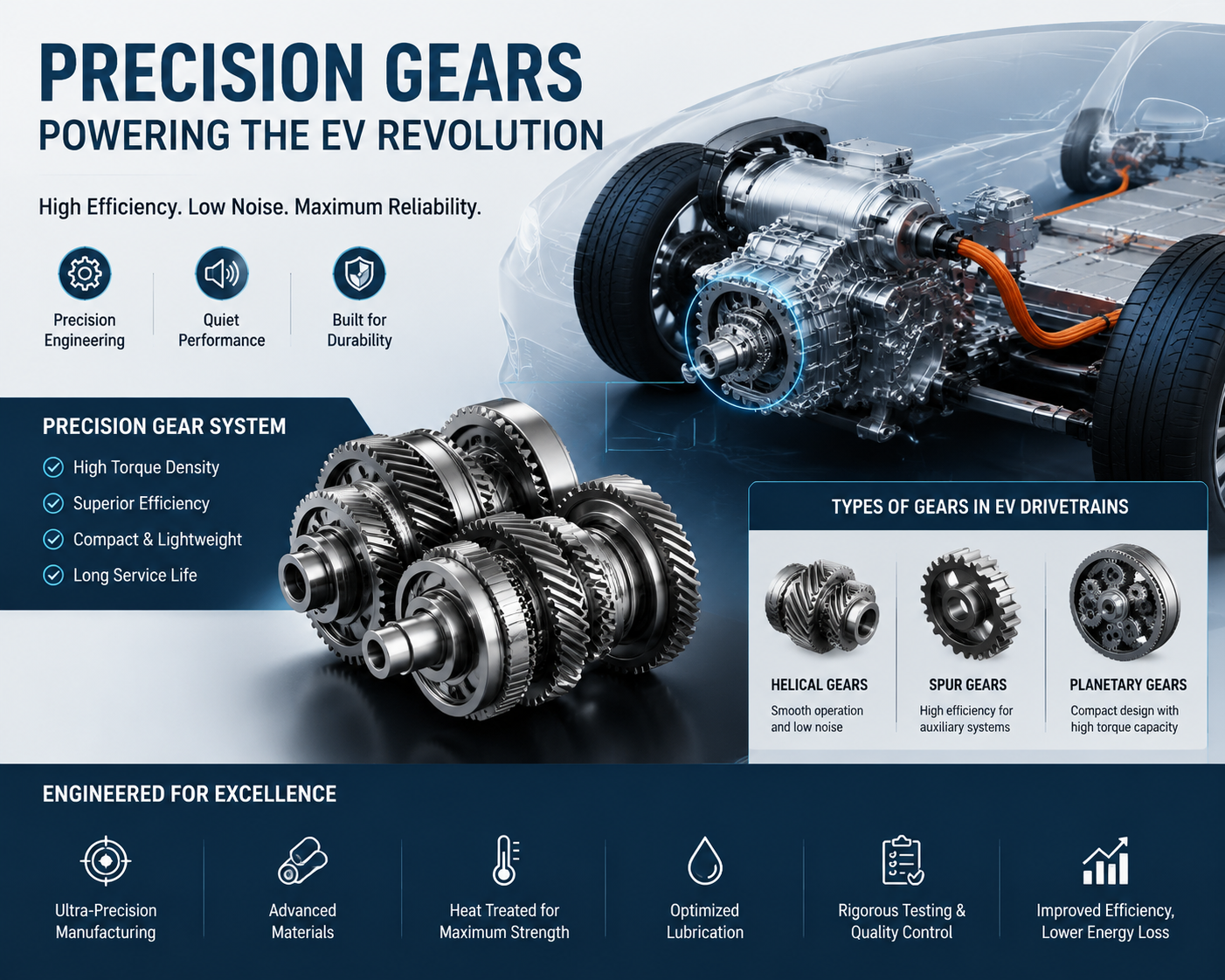
Helical gears feature teeth that are cut at an angle relative to the shaft axis. This design creates gradual tooth engagement, reducing impact loads and improving operational smoothness.
The oblique tooth geometry allows multiple teeth to remain engaged simultaneously, distributing loads more evenly and increasing load-carrying capacity. As a result, helical gears are frequently selected for high-speed and high-torque applications.
While manufacturing costs are generally higher than those of spur gears, the improved performance often justifies the investment. For many premium equipment manufacturers, the quieter operation and extended service life make helical gears an easy choice. Explore AGMA standards for gear design.
2.3 Bevel and Worm Gears
Bevel gears facilitate power transmission between intersecting shafts, commonly at right angles. Their unique conical geometry enables directional changes within mechanical systems.
Worm gears consist of a worm and a mating worm wheel. This arrangement provides substantial gear reduction ratios while occupying relatively little space. Additionally, many worm gear systems exhibit self-locking characteristics that enhance operational safety.
Engineers frequently select bevel and worm gears when spatial constraints or specific motion requirements limit the use of traditional gear configurations.
3. Materials Used for Small Gears
3.1 Steel and Stainless Steel
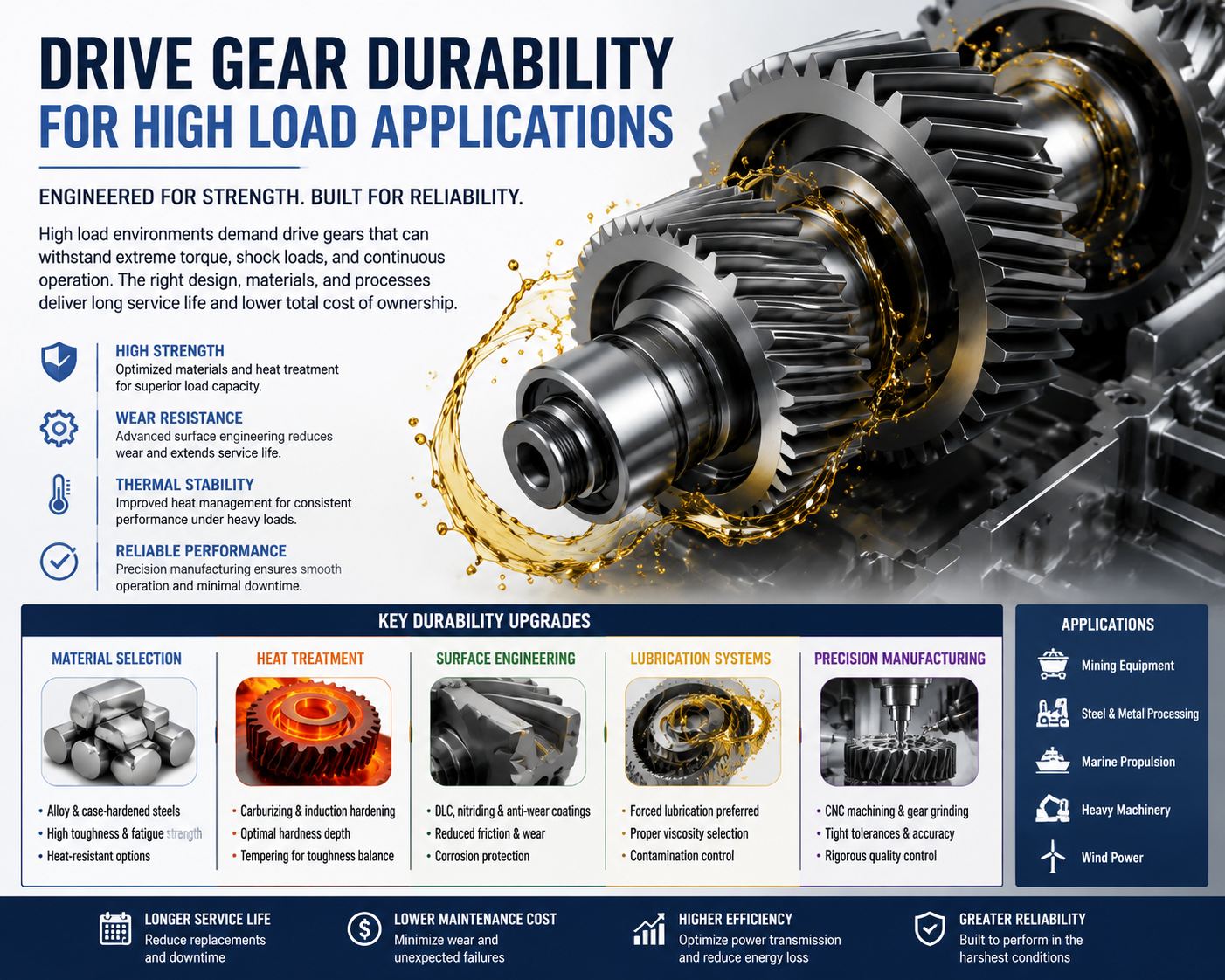
Steel remains the dominant material for small gear manufacturing due to its exceptional strength, wear resistance, and fatigue performance. Alloy steels can be heat treated to achieve superior hardness while maintaining adequate toughness.
Stainless steel offers additional corrosion resistance, making it particularly suitable for medical equipment, food-processing machinery, and marine applications.
For procurement teams, material certification is critical. Verifying metallurgical consistency helps ensure that each production batch delivers identical performance characteristics. For more, see ASM International resources.
3.2 Brass and Bronze
Brass and bronze gears are valued for their excellent machinability and resistance to corrosion. These materials also exhibit favorable anti-galling properties when paired with steel mating components.
Bronze gears are especially effective in applications requiring low friction and quiet operation. Their ability to withstand moderate loads while minimizing wear makes them a preferred choice in specialized industrial systems.
When lubrication conditions are less than ideal, bronze often proves surprisingly resilient, demonstrating why it remains relevant despite the availability of newer materials.
3.3 Engineering Plastics
Engineering plastics such as POM, nylon, PEEK, and PPS have transformed modern gear design. These materials provide low weight, corrosion resistance, and self-lubricating properties.
Plastic gears are commonly found in consumer electronics, automotive subsystems, and office equipment. They reduce noise levels and eliminate many lubrication requirements.
However, engineers must carefully evaluate temperature limits, creep behavior, and dimensional stability before selecting plastic gears for demanding applications.
4. Precision Manufacturing Processes
4.1 CNC Machining
CNC machining provides exceptional dimensional accuracy and repeatability. Advanced machining centers can produce intricate gear geometries while maintaining tight tolerances.
Modern CNC systems integrate sophisticated software, enabling manufacturers to achieve consistent quality across large production volumes.
For procurement managers evaluating suppliers, CNC capabilities often serve as a strong indicator of overall manufacturing competence.
4.2 Gear Hobbing
Gear hobbing remains one of the most efficient methods for producing gears in medium and high volumes. The process utilizes a rotating hob cutter that gradually generates the gear tooth profile.
The technique offers excellent productivity while maintaining impressive dimensional consistency. Many industrial gear manufacturers rely heavily on hobbing to achieve competitive pricing without sacrificing quality.
Simply put, when volume ramps up, gear hobbing often becomes the workhorse of production.
4.3 Injection Molding for Plastic Gears
Injection molding enables high-volume production of plastic gears with remarkable consistency. Once tooling is established, cycle times become extremely efficient.
The process supports complex geometries and integrated design features that would be difficult to achieve through machining alone.
For large-scale consumer products, injection molding frequently delivers the best balance between cost and performance.
5. Design Considerations for Performance
5.1 Tooth Profile Accuracy
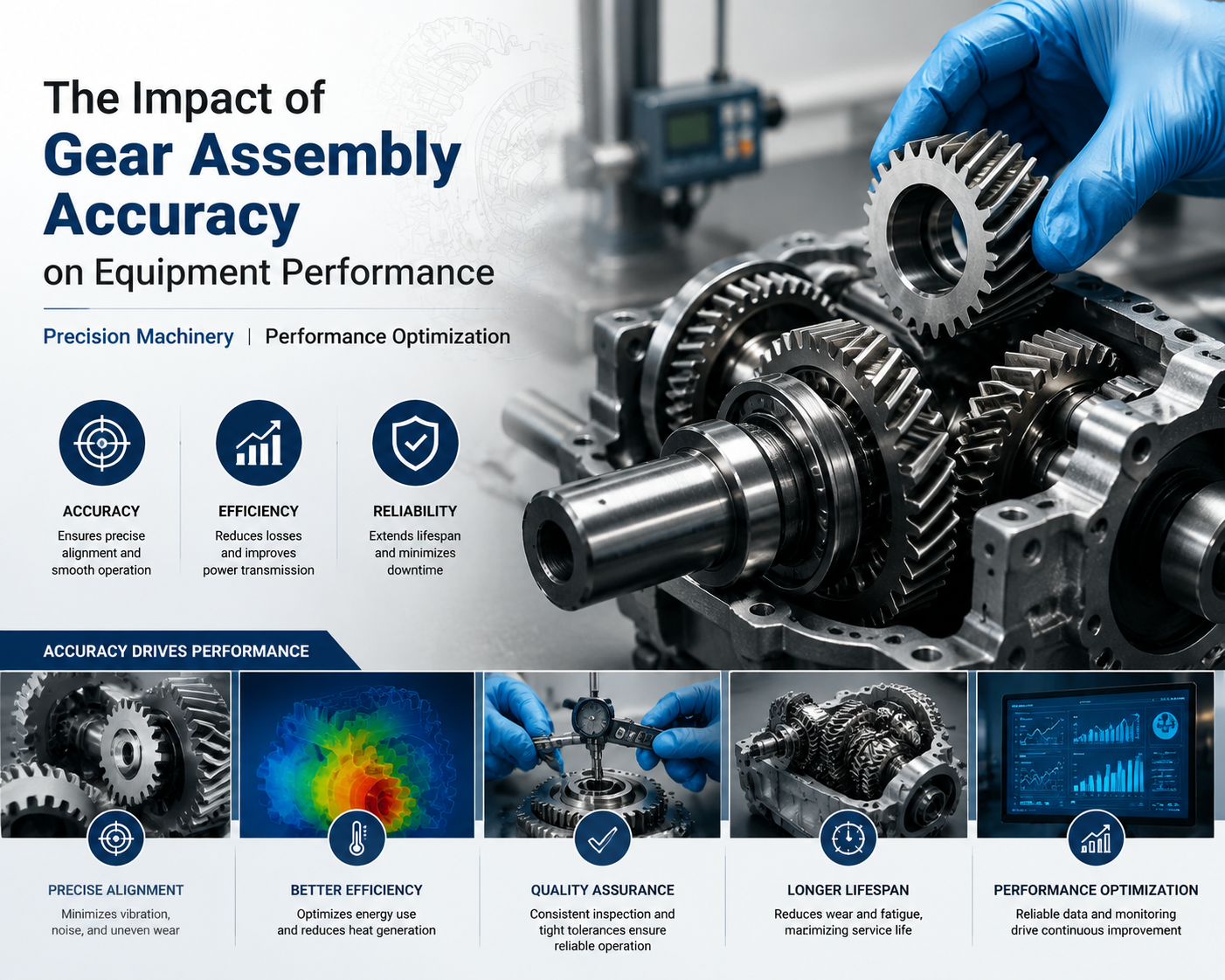
Tooth profile accuracy directly influences meshing quality, load transfer, and operational smoothness. Even microscopic deviations can generate vibration and accelerated wear.
Precision inspection systems verify involute geometry and ensure compliance with design specifications.
High-quality tooth profiles ultimately translate into lower maintenance costs and greater customer satisfaction.
5.2 Load Distribution
Uniform load distribution prevents localized stress concentrations that can shorten gear life. Proper gear alignment and optimized tooth geometry play critical roles in achieving balanced loading.
Finite element analysis is frequently employed to identify stress hotspots and refine designs before production begins.
A well-distributed load path is often the difference between a gear lasting five years or fifteen years.
5.3 Size and Weight Optimization
Modern products increasingly demand compact and lightweight components. Engineers must balance dimensional constraints against torque requirements and durability expectations.
Advanced simulation tools facilitate optimization without compromising structural integrity.
This balancing act requires both engineering expertise and manufacturing experience.
6. Lubrication and Maintenance
6.1 Types of Lubricants
Lubricants reduce friction, dissipate heat, and protect gear surfaces from wear. Common options include mineral oils, synthetic lubricants, greases, and specialty compounds.
The selection process depends on operating speed, temperature, load conditions, and environmental exposure.
Choosing the wrong lubricant can be like putting the wrong fuel in a high-performance engine—it rarely ends well.
6.2 Maintenance Schedules
Preventive maintenance programs significantly extend gear life. Regular inspections help identify wear patterns, lubrication deficiencies, and alignment issues before failures occur.
Establishing consistent maintenance intervals reduces unplanned downtime and improves equipment availability.
Organizations that treat maintenance proactively generally experience lower lifecycle costs.
6.3 Troubleshooting Common Issues
Common gear problems include pitting, scuffing, excessive backlash, noise generation, and tooth breakage.
Root cause analysis often reveals contributing factors such as poor lubrication, misalignment, contamination, or overloading.
Addressing underlying causes rather than symptoms delivers the most sustainable solutions.
7. Tolerances and Quality Standards
7.1 ISO and AGMA Standards
International standards provide objective benchmarks for gear quality. ISO and AGMA classifications establish acceptable limits for dimensional accuracy and performance.
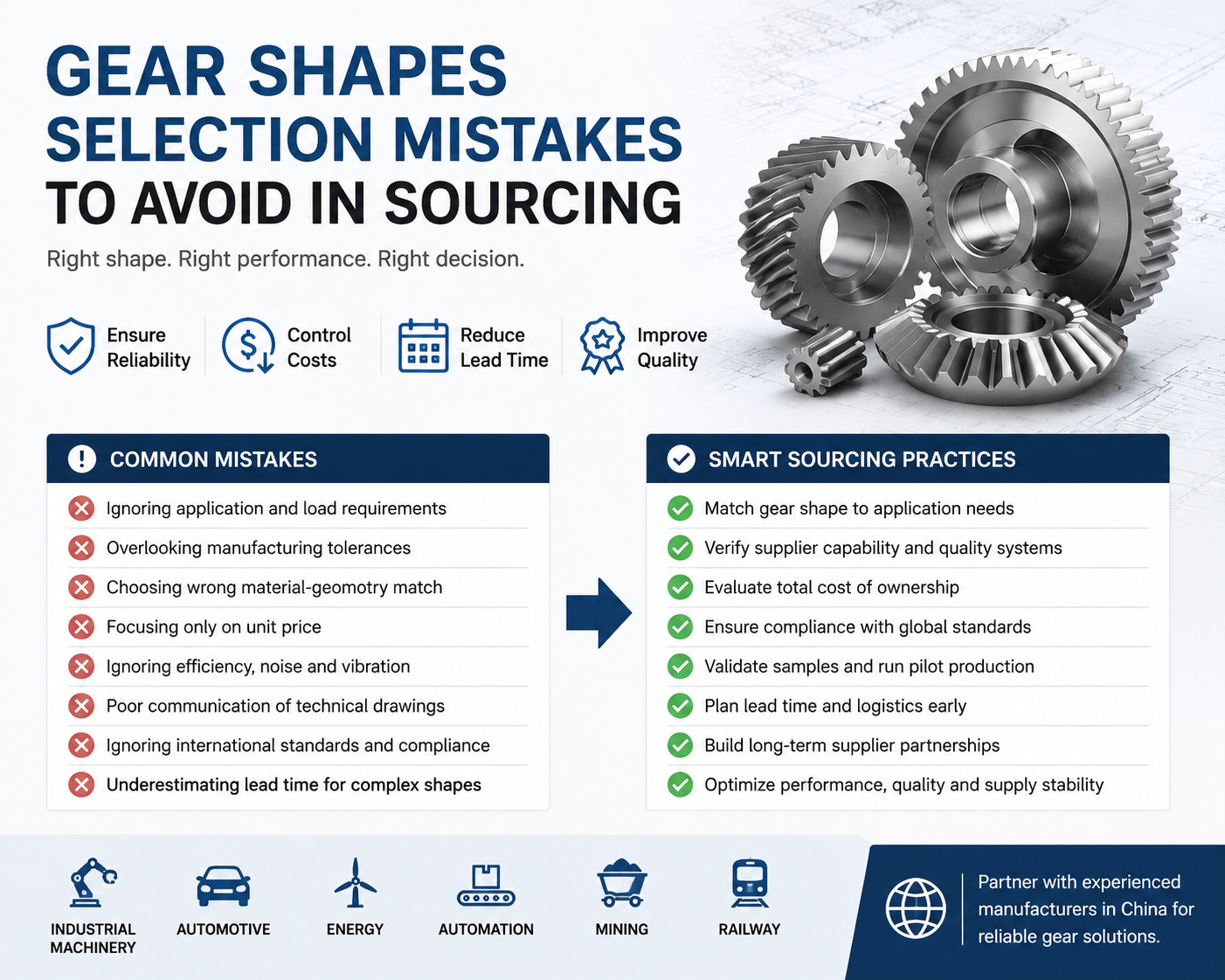
Compliance with recognized standards simplifies supplier evaluation and reduces sourcing risk.
For global brands, standards create a common language across continents and supply chains.
7.2 Measuring Gear Accuracy
Gear accuracy is evaluated using advanced metrology equipment including coordinate measuring machines, gear analyzers, and optical inspection systems.
Critical parameters include tooth spacing, runout, profile deviation, and lead variation.
Accurate measurement is essential because quality cannot be inspected into a product after defects have already been created.
7.3 Ensuring Consistency in Production
Process control methodologies help maintain stable production quality. Statistical analysis, automated inspection, and real-time monitoring contribute to consistent outcomes.
Reliable suppliers prioritize process capability rather than relying solely on final inspection.
Consistency is often the hallmark of world-class manufacturing.
8. Performance Testing Methods
8.1 Torque and Load Testing
Torque testing verifies a gear's ability to transmit power under specified operating conditions. Load testing evaluates structural integrity and durability.
These tests provide valuable data regarding safety margins and expected service life.
Manufacturers that invest heavily in validation testing typically produce more dependable products.
8.2 Wear and Fatigue Analysis
Wear and fatigue represent the primary failure mechanisms for many gear systems.
Accelerated life testing helps predict long-term performance by simulating years of service within a compressed timeframe.
Understanding fatigue behavior enables engineers to improve designs before products reach the market.
8.3 Noise and Vibration Testing
Noise and vibration measurements reveal subtle issues that may not be visible through traditional inspections.
Modern testing equipment identifies harmonic frequencies, resonance effects, and meshing irregularities.
For premium products, low-noise performance is often a significant competitive advantage.
9. Integration into Complex Systems
9.1 Gear Trains
Gear trains combine multiple gears to achieve specific speed and torque relationships.
These assemblies enable sophisticated motion control while maximizing design flexibility.
Proper gear train design requires careful attention to backlash, efficiency, and alignment.
9.2 Transmission Systems
Small gears play vital roles in compact transmission systems across automotive, industrial, and consumer applications.
Their performance directly affects efficiency, reliability, and user experience.
Even minor improvements in gear quality can generate measurable gains in system performance.
9.3 Compact Mechanical Assemblies
As products continue shrinking in size, compact gear assemblies become increasingly important.
Miniaturized designs demand exceptional manufacturing precision because tolerances become less forgiving as component dimensions decrease.
In these applications, precision truly is the name of the game.
10. Benefits for Brand Procurement Professionals
10.1 Cost-Effectiveness
High-quality small gears reduce warranty expenses, maintenance costs, and production disruptions.
Although premium gears may command higher initial prices, their total cost of ownership often proves substantially lower.
Smart procurement decisions focus on lifecycle value rather than unit cost alone.
10.2 Reliability in Supply Chains
Reliable suppliers provide predictable lead times, consistent quality, and transparent communication.
Stable supply chains reduce operational uncertainty and support long-term business growth.
For procurement teams, supplier reliability is worth its weight in gold.
10.3 Enhancing Product Quality
Superior gears contribute directly to smoother operation, longer service life, and improved customer satisfaction.
As a result, component quality becomes a key driver of brand reputation.
11. Challenges in Sourcing Small Gears
11.1 Variability in Manufacturers
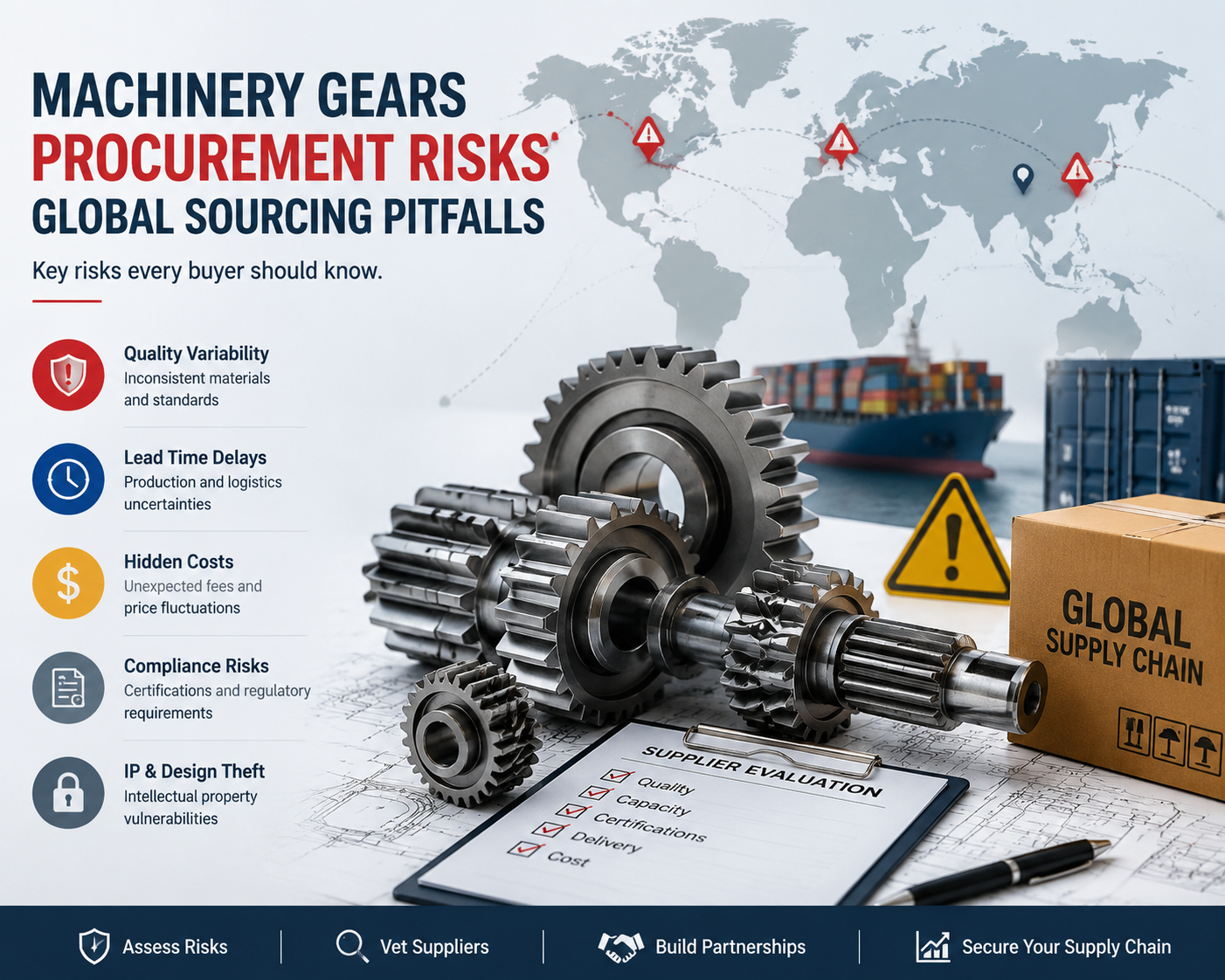
Not all suppliers possess equal engineering expertise or manufacturing capabilities.
Differences in equipment, process controls, and quality systems can lead to substantial performance variations.
Comprehensive supplier audits help mitigate these risks.
11.2 Lead Times and Supply Constraints
Global supply chains remain vulnerable to disruptions, transportation delays, and raw material shortages.
Diversified sourcing strategies improve resilience and reduce dependency on single suppliers.
11.3 Ensuring Material Compliance
Material verification is essential for regulatory compliance and performance assurance.
Documentation, testing, and traceability systems help ensure conformity with customer specifications.
12. Innovations in Small Gear Technology
12.1 Advanced Coatings
Modern coatings improve wear resistance, corrosion protection, and friction reduction.
Technologies such as DLC, PVD, and specialized nitriding treatments extend service life significantly.
12.2 Lightweight Materials
Advanced composites and engineered polymers enable substantial weight reductions while maintaining adequate strength.
These innovations support energy efficiency and product miniaturization initiatives.
12.3 3D Printed Gears
Additive manufacturing is opening new possibilities for rapid prototyping and low-volume production.
Complex geometries can be produced with unprecedented design freedom.
13. Case Studies of Successful Implementation
13.1 Automotive Industry Examples
Electric vehicles increasingly rely on precision small gears for actuators, sensors, and auxiliary drive systems.
High-quality gears contribute to efficiency, durability, and reduced cabin noise.
13.2 Robotics Applications
Robotic systems demand exceptional positional accuracy and repeatability.
Precision gears enable smooth motion control and support demanding automation tasks.
13.3 Consumer Electronics
Cameras, printers, and smart devices depend on miniature gears for compact and reliable operation.
Consumers rarely notice these components, yet they play a crucial role in product functionality.
14. Sustainability and Environmental Impact
14.1 Material Recycling
Recycling initiatives reduce resource consumption and support circular manufacturing practices.
Many gear manufacturers now incorporate recycled materials where application requirements permit.
14.2 Energy-Efficient Manufacturing
Modern production facilities utilize advanced equipment to reduce energy consumption and emissions.
Efficiency improvements often generate both environmental and economic benefits.
14.3 Reducing Waste in Production
Lean manufacturing techniques minimize scrap generation and improve material utilization.
Reducing waste strengthens profitability while supporting sustainability goals.
15. Cost Management Strategies
15.1 Bulk Sourcing Benefits
Higher purchasing volumes often unlock better pricing structures and production efficiencies.
Strategic volume planning helps organizations optimize procurement budgets.
15.2 Long-Term Supplier Partnerships
Strong supplier relationships encourage continuous improvement, innovation, and operational stability.
Partnership-based sourcing frequently delivers superior results compared to purely transactional approaches.
15.3 Minimizing Production Downtime
Reliable gear performance reduces maintenance requirements and unexpected failures.
Every hour of avoided downtime contributes directly to profitability.
16. Future Trends in Small Gear Production
16.1 Smart Manufacturing Integration
Industry 4.0 technologies are transforming gear production through automation, data analytics, and predictive maintenance.
Real-time monitoring improves process visibility and quality control.
16.2 AI-Assisted Design
Artificial intelligence is accelerating design optimization and performance prediction.
Engineers can evaluate thousands of design iterations in a fraction of the time previously required.
16.3 Global Supply Chain Optimization
Digital procurement platforms, enhanced traceability systems, and advanced logistics networks are reshaping global sourcing strategies.
Organizations that combine engineering excellence with supply chain agility will be best positioned to meet future market demands.
As machinery becomes more compact, intelligent, and performance-driven, small gears will continue to serve as indispensable components that quietly deliver consistent performance every time.
Additional industry resources: