Table of Contents
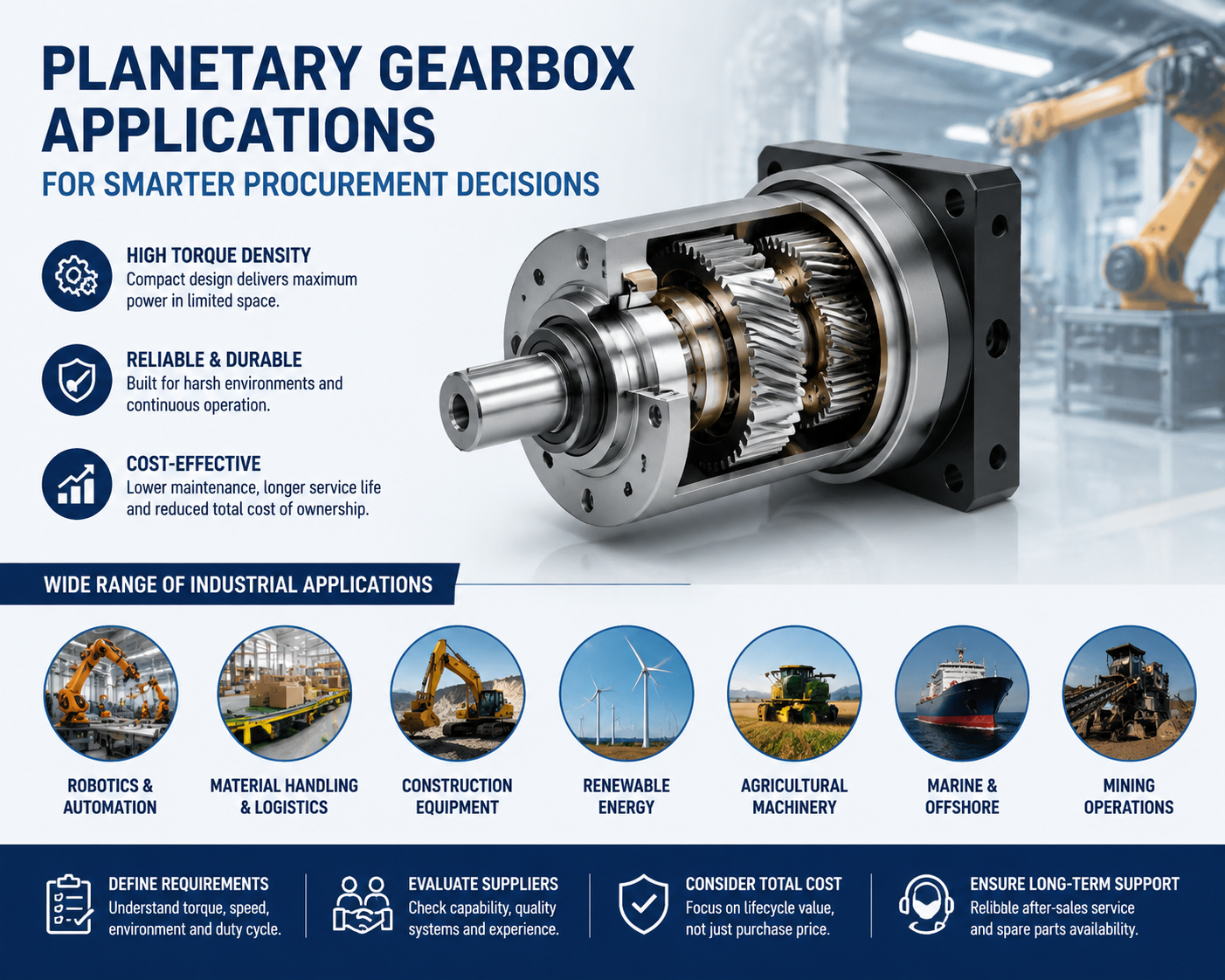
Planetary Gearbox Applications for Procurement Success
1. Introduction to Planetary Gearbox Applications
What Is a Planetary Gearbox
A planetary gearbox, also known as an epicyclic gearbox, is an intricate mechanical assembly where multiple gears rotate around a central sun gear, while simultaneously revolving within an outer ring gear. This configuration distributes load evenly across several contact points, delivering a combination of high torque density, compact footprint, and impressive durability. Unlike traditional gear systems that rely on a single input-output axis, the planetary design orchestrates synchronized rotations that maximize efficiency while minimizing backlash, making it the go-to solution for engineers demanding performance under stress.
Why Planetary Gearboxes Matter in Modern Machinery
Modern machinery is all about squeezing more power, precision, and reliability out of ever-smaller spaces. Planetary gearboxes matter because they can handle heavy loads and high torque without expanding the physical envelope of the system. From robotic arms that need precise motion to conveyor systems that run round-the-clock in logistics hubs, planetary gearboxes are the silent workhorses ensuring uptime, consistency, and minimal maintenance. For procurement professionals, understanding these benefits translates into smarter decisions about which gearboxes to source for maximum operational efficiency.
The Link Between Applications and Procurement Success
The right gearbox in the wrong application is a nightmare waiting to happen—think downtime, repair bills, and frustrated engineers. When procurement teams match planetary gearbox specifications to the exact industrial application, they not only reduce failure risks but also improve cost efficiency, streamline supply chains, and strengthen the partnership with OEM and ODM suppliers. A detailed understanding of where and how these gearboxes are applied is the bedrock of smarter procurement decisions, giving companies a competitive edge in both performance and pricing negotiations.
2. Understanding the Working Principle of Planetary Gearboxes
Key Components of a Planetary Gear System
A planetary gearbox comprises three primary elements: the sun gear at the center, multiple planet gears that orbit the sun, and an outer ring gear that encases the planetary assembly. Additional components like the carrier, bearings, and lubricants ensure smooth motion and distribute torque evenly. Every part is designed with precise tolerances; a slight deviation can result in performance loss or catastrophic failure, which is why procurement professionals must prioritize quality and compatibility when evaluating suppliers.
How Torque Is Distributed Across Multiple Gears
Torque distribution in a planetary system is elegantly efficient. Instead of putting the entire load on a single gear tooth, the planetary arrangement shares the burden across multiple points of contact simultaneously. This leads to reduced wear, higher torque capacity for a given size, and superior resistance to overloads. For engineers and purchasing teams, understanding this principle highlights why planetary gearboxes are often more reliable than conventional gear systems for demanding industrial applications.
Advantages of the Planetary Gear Arrangement
The planetary configuration offers several advantages: high torque-to-weight ratio, compact design, minimal backlash, and excellent efficiency even at high speeds. Its modular design allows for multiple ratio options and easy integration into various industrial systems. From a procurement perspective, these features translate into fewer replacements, extended service intervals, and reduced total cost of ownership—an aspect that savvy purchasing engineers cannot afford to ignore.
3. Why Procurement Professionals Should Understand Gearbox Applications
Reducing Purchasing Risks Through Technical Knowledge
Procurement teams often face the dilemma of balancing cost and performance. By understanding the technical nuances of planetary gearboxes, teams can filter suppliers based on capabilities, predict maintenance cycles, and anticipate operational stress points, thus reducing the risk of purchasing incompatible or low-quality units. Knowledge is the ultimate insurance policy against downtime and overbudget projects.
Improving Supplier Evaluation Processes
Knowing the ins and outs of gearbox applications enables procurement professionals to ask the right questions during supplier audits. From torque ratings and efficiency curves to material composition and tolerance specifications, technical awareness ensures suppliers meet not only industry standards but also the unique operational requirements of the buyer’s machinery. More about supplier evaluation can be found at NAFEMS.
Aligning Product Selection with Business Goals
Every procurement decision should support broader business objectives. Selecting planetary gearboxes that enhance equipment uptime, reduce maintenance costs, or enable production scaling directly contributes to profitability and competitiveness. It’s not just about buying a gearbox; it’s about aligning mechanical choices with corporate strategy.
4. Key Performance Benefits of Planetary Gearboxes
High Torque Density
Planetary gearboxes provide exceptional torque within a compact frame, enabling engineers to design lighter, more agile machinery without compromising power. For procurement professionals, this means acquiring units that deliver maximum performance without requiring oversized housings, which can be costly and cumbersome.
Compact and Space-Saving Design
In industries where floor space and machine footprint are at a premium, the compact design of planetary gearboxes is a game-changer. These gearboxes can fit in tight spots while still delivering significant torque, giving engineers flexibility in design and procurement teams leverage in cost management.
Enhanced Efficiency and Reliability
The balanced load distribution and low backlash inherent in planetary gear systems enhance efficiency and reduce wear, ensuring long-term reliability. For procurement, choosing gearboxes with proven efficiency ratings means fewer replacements, lower energy costs, and smoother operations—a win-win for both engineering and finance teams.
5. Common Industrial Applications of Planetary Gearboxes
Material Handling Equipment
Forklifts, conveyors, and cranes rely heavily on planetary gearboxes to manage torque loads and maintain smooth motion. Their robust design ensures minimal downtime, even in environments where continuous operation is mandatory.
Packaging and Automation Systems
High-speed automated packaging lines demand gearboxes that can handle rapid cycles without sacrificing accuracy. Planetary gearboxes provide the necessary precision and durability to maintain consistent output while minimizing wear.
Heavy Industrial Machinery
From steel mills to injection molding machines, planetary gearboxes are essential for handling high torque in heavy-duty applications. Their compact yet powerful design allows engineers to integrate them into machines that are both space-efficient and capable of enduring intense operational demands.
6. Planetary Gearbox Applications in Robotics and Automation
Precision Motion Control Requirements
Robotic arms and CNC machinery demand gearboxes that provide pinpoint accuracy. Planetary gearboxes, with minimal backlash and high repeatability, are critical to ensuring that movements are precise and synchronized.
Supporting High-Speed Operations
Automation systems often operate at high RPMs. Planetary gearboxes can maintain performance at speed without excessive heat generation or wear, making them ideal for high-throughput production lines.
Improving Production Line Efficiency
By providing smooth torque transfer and reliable motion control, planetary gearboxes help optimize cycle times, reduce bottlenecks, and enhance overall line efficiency—a major concern for engineers and procurement alike.
7. Planetary Gearbox Applications in Construction Equipment
Excavators and Earthmoving Machines
Excavators rely on planetary gearboxes in their swing drives and travel motors to provide both high torque and precise control. Their rugged design ensures performance in harsh, dirt-laden environments.
Concrete Mixing Systems
Mixers require consistent torque under variable load conditions, which planetary gearboxes handle gracefully, ensuring smooth operation and extended service life.
Mobile Lifting Equipment
Cranes and mobile lifts use planetary gearboxes to combine torque and speed control, enabling safe, reliable lifting even under heavy load conditions.
8. Planetary Gearbox Applications in Renewable Energy Systems
Wind Turbine Drive Systems
Planetary gearboxes play a pivotal role in wind turbines, translating slow rotor speeds into the high-speed rotation needed by generators, all while enduring variable loads and environmental stress. Learn more about wind turbine gearboxes at energy.gov.
Solar Tracking Equipment
Accurate solar tracking requires precise and reliable motion control, which planetary gearboxes provide, optimizing energy capture and efficiency over long-term operations.
Energy Storage and Power Management Solutions
Gearboxes in energy storage systems ensure consistent performance in mechanical actuators, helping maintain system reliability and energy efficiency.
9. Planetary Gearbox Applications in Agricultural Machinery
Harvesting Equipment
Harvesters demand high torque under continuous operation. Planetary gearboxes ensure consistent performance, reducing downtime during peak seasons.
Irrigation and Pumping Systems
Pump drives in irrigation systems benefit from the efficient torque distribution and durability of planetary gearboxes, ensuring reliable water delivery even under variable operating conditions. Their ability to maintain performance while handling fluctuating loads makes them a preferred solution for agricultural pumping applications where consistency and efficiency are paramount.
Automated Farming Machinery
Robotic tractors, autonomous sprayers, precision seeders, and advanced harvesting equipment increasingly rely on planetary gearboxes to achieve dependable motion control. These compact yet powerful gear units support modern precision agriculture by enhancing productivity, minimizing downtime, and improving operational accuracy across a broad range of farming activities.
10. Planetary Gearbox Applications in Material Handling and Logistics
Conveyor Systems
Planetary gearboxes are integral components in conveyor systems, delivering smooth torque transmission and dependable operation. Their ability to handle continuous-duty cycles while maintaining high efficiency helps warehouses, distribution centers, and manufacturing facilities move products reliably with minimal interruptions.
Automated Warehouses
Automated storage and retrieval systems demand precise positioning and repeatable motion. Planetary gearboxes support these requirements by providing low backlash, high torque density, and excellent reliability. As warehouse automation continues to expand globally, these gearboxes remain essential for maintaining operational efficiency.
Forklifts and Lifting Devices
Forklifts, pallet handling equipment, and lifting devices require compact power transmission systems capable of managing substantial loads. Planetary gearboxes provide the necessary torque while maintaining a compact footprint, supporting safe and efficient material handling operations.
11. Planetary Gearbox Applications in Mining Operations
Crushing and Grinding Equipment
Mining crushers and grinding mills operate under extreme torque loads and demanding environmental conditions. Planetary gearboxes distribute these loads efficiently, reducing stress concentrations and improving equipment longevity. Their rugged construction makes them particularly suitable for heavy mining applications.
Conveyor and Transport Systems
Large-scale mining conveyors operate continuously, often transporting massive quantities of material over long distances. Planetary gearboxes provide the reliability and torque capacity necessary to sustain uninterrupted operation while minimizing maintenance requirements.
High-Load Continuous Operations
Mining operations frequently involve around-the-clock production schedules. Planetary gearboxes excel in these environments due to their robust load-sharing characteristics, enabling them to withstand continuous operation while maintaining performance and reliability.
12. Planetary Gearbox Applications in Marine and Offshore Equipment
Deck Machinery
Marine deck equipment such as capstans, anchor handling systems, and cargo handling machinery depend on planetary gearboxes for reliable torque transmission. Their compact design and durability make them well-suited for challenging maritime environments.
Winches and Hoisting Systems
Winches and hoisting equipment require high torque output and precise control. Planetary gearboxes provide both attributes while maintaining a relatively small footprint, making them ideal for offshore and marine lifting applications.
Offshore Drilling Equipment
Offshore drilling systems operate under extreme loads and harsh environmental conditions. Planetary gearboxes deliver the robustness and reliability needed to support drilling operations, helping ensure safe and efficient performance throughout extended operational cycles.
13. Factors Procurement Teams Should Evaluate Before Purchasing
Torque and Load Requirements
Understanding actual operating loads is fundamental when selecting a planetary gearbox. Procurement teams should carefully evaluate continuous torque, peak torque, shock loads, and duty cycles to ensure the selected gearbox can perform reliably throughout its intended service life.
Speed Ratio and Performance Specifications
The gearbox ratio directly influences output speed and torque. Procurement professionals must verify that the selected gearbox meets application-specific requirements related to speed, efficiency, backlash, precision, and overall system performance.
Environmental Operating Conditions
Environmental factors such as temperature extremes, moisture exposure, dust contamination, chemical exposure, and vibration levels significantly affect gearbox performance. Selecting a gearbox designed for the intended operating environment helps prevent premature failures and costly downtime.
14. How Gearbox Quality Impacts Total Cost of Ownership
Maintenance and Downtime Costs
High-quality planetary gearboxes typically require less frequent maintenance and experience fewer unexpected failures. Reduced downtime directly translates into higher productivity and lower operating costs, making quality an important procurement consideration.
Service Life Expectations
Premium gearboxes manufactured using superior materials and precision engineering often deliver significantly longer service lives. This extended longevity reduces replacement frequency and contributes to lower lifecycle costs.
Long-Term Return on Investment
Although higher-quality gearboxes may involve greater initial investment, they frequently provide superior long-term value through reduced maintenance expenses, improved efficiency, and enhanced operational reliability.
15. Evaluating OEM and ODM Planetary Gearbox Suppliers
Manufacturing Capabilities
Procurement professionals should assess a supplier's manufacturing infrastructure, machining capabilities, assembly processes, testing procedures, and production capacity. Strong manufacturing capabilities are often indicators of consistent product quality.
Engineering and Customization Support
Many applications require customized gearbox solutions. Suppliers with experienced engineering teams can provide design optimization, application support, and tailored solutions that improve overall system performance.
Quality Assurance and Certifications
Certifications such as ISO 9001 demonstrate a supplier's commitment to quality management. Comprehensive testing procedures, documented quality controls, and traceability systems further enhance confidence in product reliability.
16. Custom Planetary Gearbox Applications for Specialized Industries
Industry-Specific Design Requirements
Industries such as aerospace, defense, medical equipment, marine operations, and renewable energy often require highly specialized gearbox designs. Customization ensures compliance with unique technical and regulatory requirements.
Tailored Performance Solutions
Custom planetary gearboxes can be optimized for specific torque outputs, gear ratios, efficiency targets, environmental conditions, and dimensional constraints, resulting in superior application performance.
Competitive Advantages of Customization
Organizations that invest in customized gearbox solutions often achieve higher productivity, improved equipment reliability, and enhanced market competitiveness through application-specific optimization.
17. Common Procurement Mistakes When Sourcing Planetary Gearboxes
Choosing Based Solely on Price
Selecting a gearbox based only on purchase price can lead to higher long-term costs through increased maintenance, reduced efficiency, and premature failures. Total lifecycle cost should always be considered during the procurement process.
Ignoring Future Maintenance Requirements
Maintenance considerations such as lubrication intervals, spare parts availability, repairability, and technical service support play a significant role in long-term operational success. Overlooking these factors can create costly challenges later.
Overlooking Supplier Technical Support
Strong technical support can significantly improve implementation success and long-term reliability. Suppliers that provide engineering assistance, troubleshooting support, and application expertise often deliver greater overall value.
18. Global Sourcing Considerations for Planetary Gearboxes
Supplier Location and Lead Times
Supplier geography affects shipping costs, delivery schedules, inventory planning, and responsiveness. Procurement teams should carefully balance cost advantages against logistical considerations when selecting global suppliers.
Logistics and Supply Chain Reliability
Reliable supply chains are essential for maintaining production continuity. Evaluating logistics capabilities, inventory management systems, and supply chain resilience helps minimize disruption risks.
Managing International Procurement Risks
International sourcing introduces considerations such as tariffs, customs regulations, currency fluctuations, geopolitical uncertainty, and compliance requirements. Effective risk management strategies help protect procurement operations.
19. Future Trends Shaping Planetary Gearbox Applications
Smart and Connected Gear Systems
The integration of sensors and digital monitoring technologies is transforming traditional gearboxes into intelligent systems capable of providing real-time performance data and predictive maintenance insights. Learn more about Industrial IoT.
Lightweight and High-Performance Materials
Advancements in metallurgy and composite materials are enabling the development of lighter gearboxes with enhanced strength and durability. These innovations contribute to improved machine efficiency and reduced energy consumption.
Industry 4.0 Integration Opportunities
As manufacturing facilities embrace Industry 4.0, planetary gearboxes are increasingly integrated into connected production ecosystems. This integration supports predictive maintenance, operational transparency, and data-driven optimization.
20. Procurement Checklist for Selecting the Right Planetary Gearbox
Defining Technical Requirements
Clearly document application requirements, including torque, speed, efficiency targets, operating conditions, mounting configurations, and expected service life before engaging potential suppliers.
Assessing Supplier Qualifications
Evaluate supplier experience, manufacturing capabilities, engineering expertise, quality systems, customer references, and industry reputation to ensure reliable long-term partnerships.
Verifying Long-Term Supply and Support
Confirm the supplier's ability to provide ongoing technical assistance, spare parts availability, product upgrades, and long-term production support to protect future operational continuity.
21. Conclusion
Key Takeaways for Procurement Professionals
Planetary gearboxes offer a compelling combination of compactness, efficiency, reliability, and torque capacity. Understanding their applications allows procurement professionals to make more informed purchasing decisions that support operational success.
Building a Strategic Gearbox Sourcing Process
A structured sourcing process should incorporate technical evaluation, supplier assessment, lifecycle cost analysis, and long-term support considerations. This comprehensive approach reduces risk while maximizing value.
Making Smarter Procurement Decisions with Application Knowledge
Knowledge of planetary gearbox applications empowers procurement teams to align product selection with operational objectives, improve supplier relationships, reduce total ownership costs, and enhance equipment performance. In today's competitive industrial landscape, application knowledge is not just useful—it is a decisive strategic advantage.