Table of Contents
Pinion Meaning Explained: Selection and Design Guide
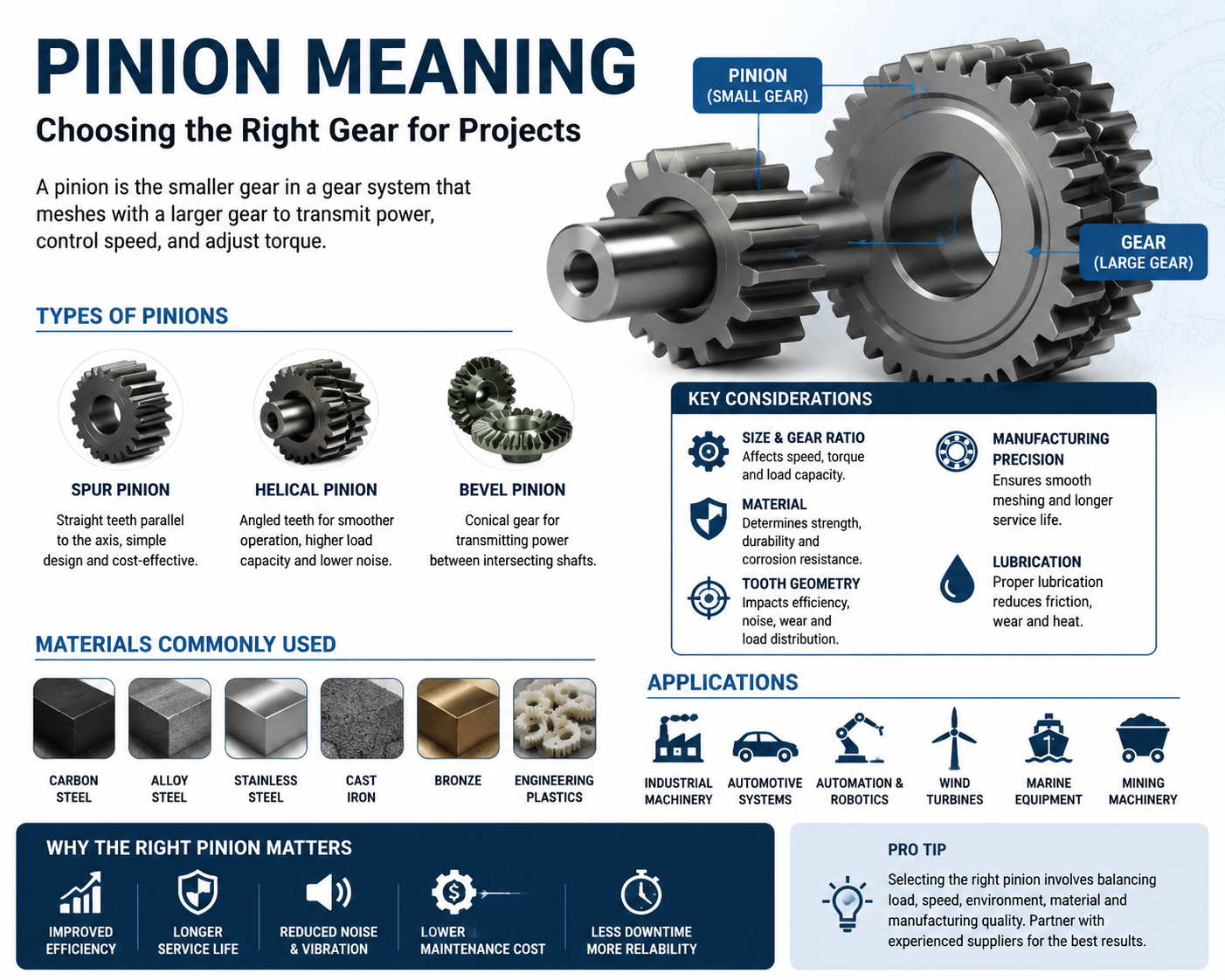
Pinion Meaning: Choosing the Right Gear for Projects
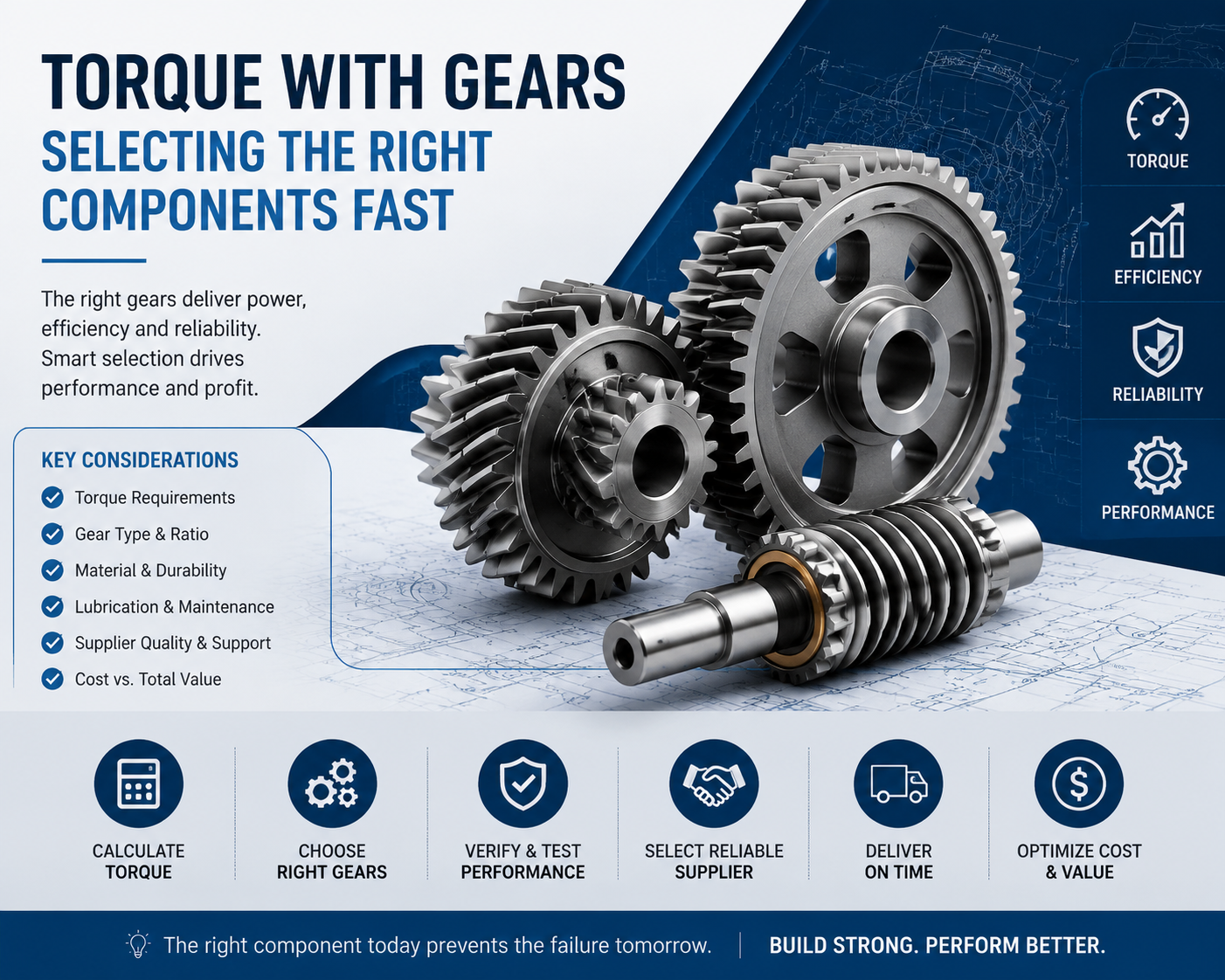
Pinions are fundamental components in power transmission systems and are widely used across industrial machinery, automation equipment, automotive systems, and heavy-duty gearboxes. Understanding pinion meaning, selection criteria, materials, manufacturing processes, and performance considerations helps engineers and procurement professionals make informed sourcing and design decisions.
For additional technical background on gears and power transmission systems, readers may find these resources useful:
- Wikipedia – Gear
- Wikipedia – Gear Train
- American Gear Manufacturers Association (AGMA)
- International Organization for Standardization (ISO)
- Engineering Library – Gear Design Fundamentals
1. Introduction to Pinion Meaning
1.1 Definition of Pinion in Mechanical Engineering
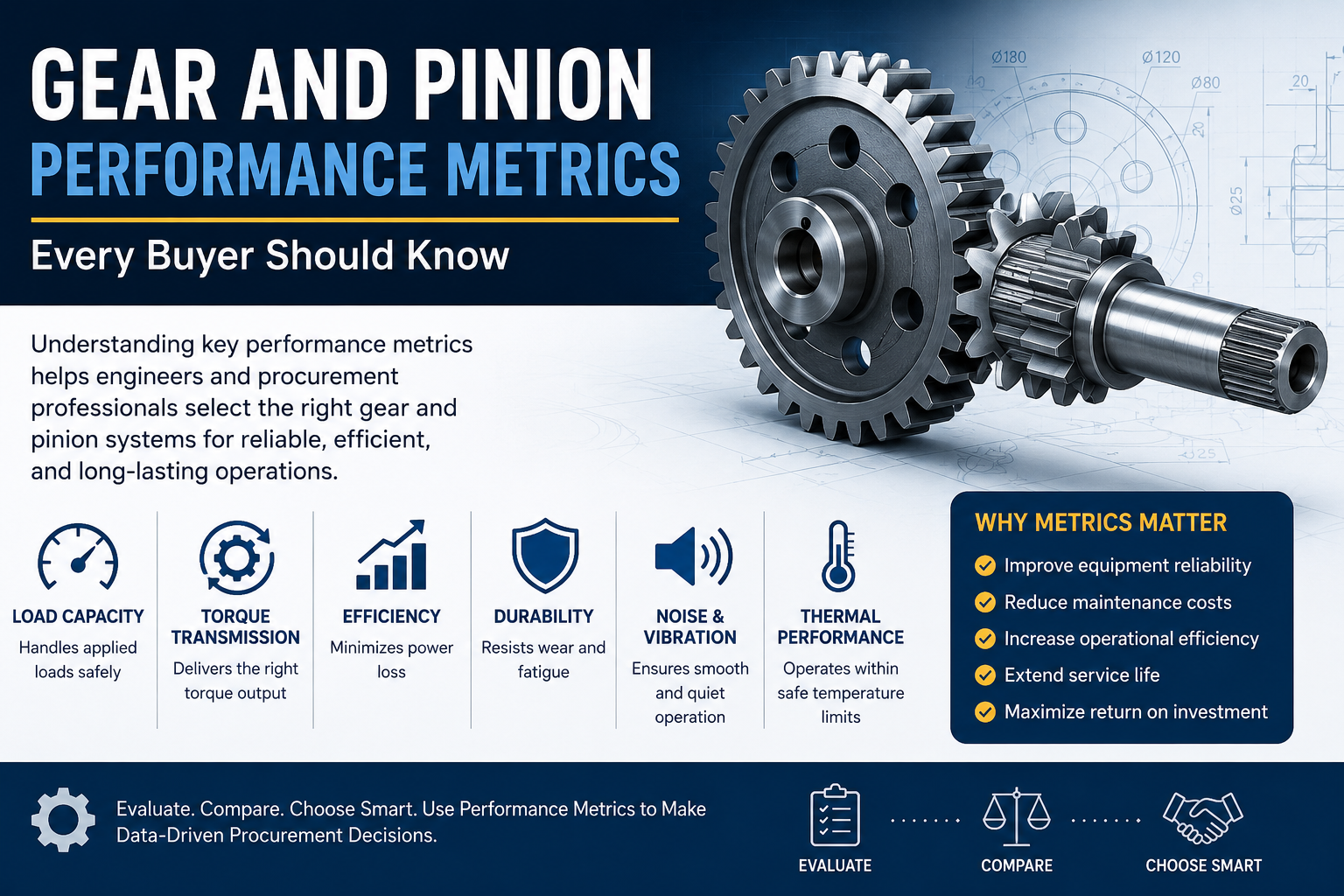
In mechanical engineering, a pinion is the smaller gear within a meshing gear pair. It transmits rotational motion and torque to a larger mating gear, often referred to simply as the gear wheel. Although the term appears straightforward, the pinion is frequently the driving element in power transmission systems and plays a disproportionately important role in determining performance, efficiency, durability, and operational reliability.
From an engineering perspective, the pinion is much more than a small toothed component. Its geometry, tooth count, material composition, heat treatment process, and manufacturing accuracy directly influence the behavior of the entire drivetrain. Whether installed in industrial gearboxes, automotive transmissions, conveyor systems, robotics, or heavy mining equipment, the pinion often experiences the highest stress concentration because of its smaller diameter and higher rotational speed.
For procurement professionals, understanding the meaning of a pinion goes beyond terminology. It involves recognizing how design specifications affect service life, maintenance costs, supply chain risk, and overall equipment performance. In many projects, selecting the wrong pinion can become the weak link in the chain, creating unexpected downtime and expensive replacement cycles.
1.2 Importance of Pinions in Gear Systems
Pinions serve as the cornerstone of countless gear systems. They initiate torque transfer, control rotational speed relationships, and influence load distribution throughout the mechanical assembly. Without a properly designed pinion, even the most sophisticated gearbox can suffer from inefficiency, vibration, excessive wear, or catastrophic failure.
One reason pinions are so important is that they typically undergo more load cycles than larger gears. Due to their smaller size, they rotate more frequently during operation, which means they experience accelerated fatigue accumulation. Engineers often pay close attention to pinion tooth strength because pinion failure commonly occurs before the larger mating gear reaches its design limits.
In industrial settings, operational continuity often depends on pinion performance. A malfunctioning pinion can halt production lines, interrupt logistics operations, or disable critical machinery. As many engineers like to say, the devil is in the details, and the pinion is one of those details that can make or break a mechanical system.
1.3 Overview of Pinion Applications
Pinions are used in a remarkably diverse range of industries and equipment. Their versatility stems from their ability to efficiently transmit power between rotating shafts while modifying speed and torque characteristics.
Common applications include:
- Industrial gearboxes
- Automotive transmissions
- Rack and pinion steering systems
- Conveyor systems
- Mining machinery
- Wind turbines
- Agricultural equipment
- Robotics and automation systems
- Aerospace mechanisms
- Marine propulsion systems
In modern manufacturing facilities, pinions are frequently found in automated production lines where precision motion control is essential. In mining environments, massive hardened pinions transfer enormous loads under harsh operating conditions. In contrast, robotic applications often utilize compact precision pinions designed for accuracy and minimal backlash.
The wide range of applications demonstrates why engineers and purchasing specialists must thoroughly understand pinion selection criteria before committing to suppliers or product specifications.
2. Types of Pinions
2.1 Spur Pinions
Spur pinions are the most widely used type of pinion due to their simplicity, cost-effectiveness, and manufacturing efficiency. These pinions feature straight teeth parallel to the gear axis, allowing direct engagement with mating spur gears.
One of the primary advantages of spur pinions is their high mechanical efficiency. Because tooth engagement occurs along a straight line, energy losses remain relatively low compared to more complex gear configurations. Manufacturing processes are also straightforward, helping reduce production costs and lead times.
However, spur pinions generate more noise and vibration at high speeds. The sudden engagement of teeth creates impact loading, which can increase acoustic emissions and wear rates in demanding applications.
Typical applications include:
- Packaging equipment
- Industrial conveyors
- Machine tools
- Material handling systems
- Agricultural machinery
For procurement teams focused on cost optimization, spur pinions often represent the most economical solution when speed and noise constraints are moderate.
2.2 Helical Pinions
Helical pinions feature teeth cut at an angle relative to the shaft axis. This angled geometry allows gradual tooth engagement, resulting in smoother operation and reduced noise levels.
Because multiple teeth share the load simultaneously, helical pinions offer improved load-carrying capacity compared to spur pinions. The load distribution characteristics contribute to longer service life and enhanced reliability.
Advantages include:
- Lower vibration levels
- Quieter operation
- Higher load capacity
- Improved durability
- Better high-speed performance
The trade-off comes in the form of axial thrust forces generated during operation. Engineers must account for these forces through appropriate bearing selection and housing design.
Helical pinions are commonly found in:
- Automotive transmissions
- Industrial gearboxes
- Compressors
- Pumps
- High-speed manufacturing equipment
For OEM buyers seeking premium performance and long-term reliability, helical pinions frequently justify their higher acquisition cost.
2.3 Bevel Pinions
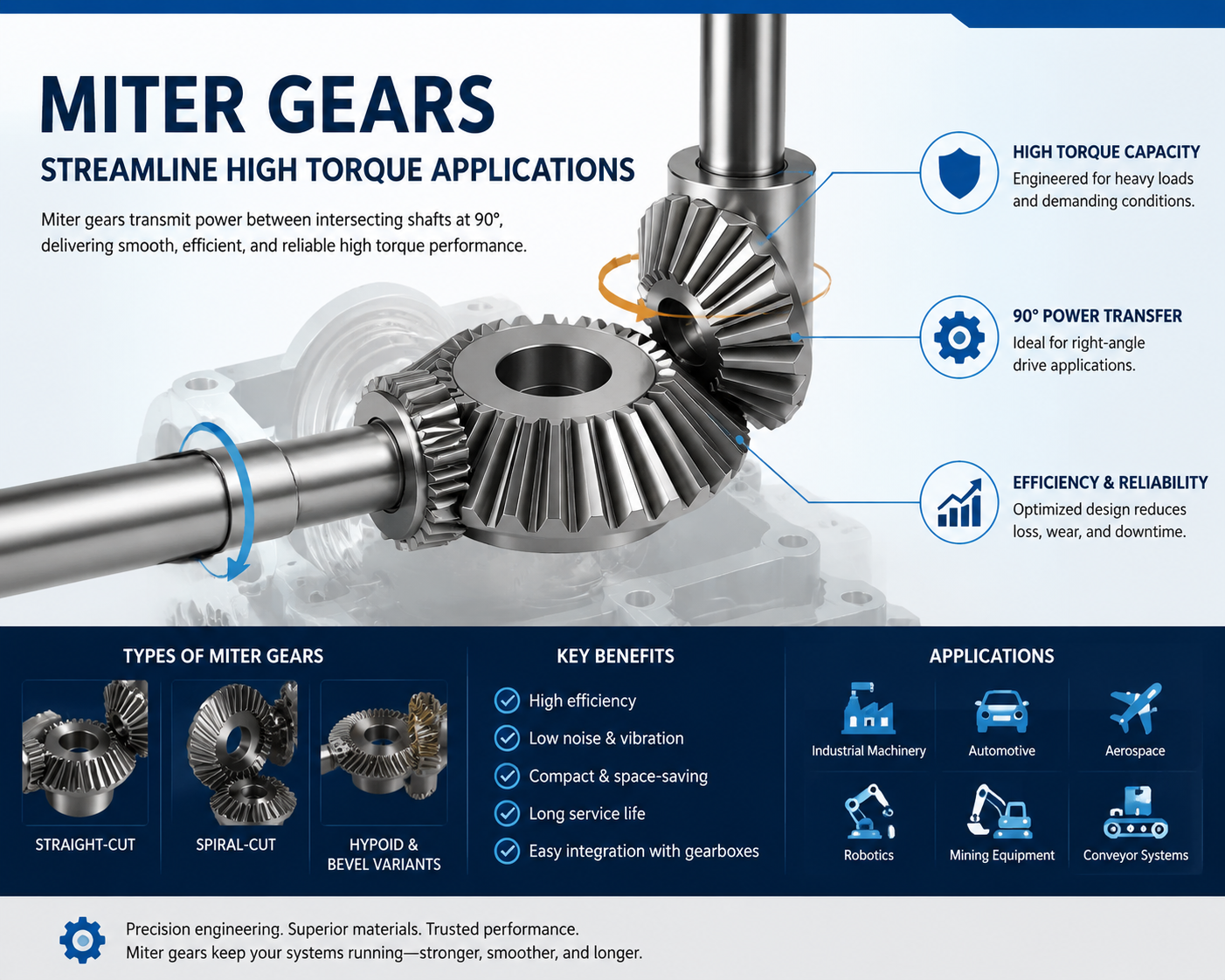
Bevel pinions are designed to transmit power between intersecting shafts, typically positioned at a 90-degree angle. Their conical geometry allows directional changes in power flow while maintaining efficient torque transmission.
Bevel pinions can be manufactured in several configurations:
- Straight bevel
- Spiral bevel
- Zerol bevel
- Hypoid bevel
Spiral bevel pinions are particularly popular because they offer smoother engagement and superior load capacity. Hypoid variants provide additional advantages through offset shaft arrangements, making them common in automotive differential systems.
Industries relying heavily on bevel pinions include aerospace, marine, mining, and heavy transportation sectors where directional power transfer is required.
3. Pinion Materials and Their Impact
3.1 Common Materials Used for Pinions
Material selection remains one of the most critical decisions in pinion engineering. Different applications demand unique combinations of strength, wear resistance, corrosion protection, and cost efficiency.
Common pinion materials include:
- Carbon steel
- Alloy steel
- Stainless steel
- Cast iron
- Bronze
- Brass
- Engineering plastics
- Powder metallurgy alloys
Among these options, alloy steels such as 4140, 4340, and 8620 dominate industrial applications because they provide an excellent balance of machinability, strength, and heat treatment capability.
Stainless steel pinions are often selected for food processing, pharmaceutical, and marine environments where corrosion resistance is paramount. Plastic pinions find widespread use in lightweight automation systems where noise reduction and lubrication-free operation are desirable.
3.2 Material Strength and Durability
Strength and durability determine whether a pinion can withstand operational demands over its intended service life. Engineers evaluate several material properties when selecting pinions, including:
- Yield strength
- Tensile strength
- Hardness
- Fatigue resistance
- Impact toughness
- Wear resistance
High-strength alloy steels excel in heavy-duty environments because they resist bending fatigue and surface contact fatigue. Hardened gear teeth can withstand millions of load cycles before showing signs of deterioration.
Procurement specialists should avoid evaluating materials based solely on purchase price. A lower-cost material may result in significantly higher maintenance expenses, replacement frequency, and downtime losses over the equipment lifecycle.
3.3 How Material Affects Performance
Material properties influence virtually every aspect of pinion performance. Harder materials improve wear resistance but may become more brittle if improperly heat treated. Softer materials offer greater toughness but may wear rapidly under heavy loads.
Material selection affects:
- Load capacity
- Noise generation
- Heat dissipation
- Lubrication requirements
- Corrosion resistance
- Service life expectancy
The relationship between material choice and operational performance highlights the importance of aligning engineering specifications with real-world application conditions rather than relying on generic industry assumptions.
4. Pinion Size and Design Considerations
4.1 Determining the Right Pinion Size
Selecting the correct pinion size is one of the most consequential decisions in gearbox design and procurement. A pinion that is undersized may experience premature tooth failure, excessive wear, and operational instability, while an oversized pinion can increase system cost, weight, and spatial requirements without delivering proportional benefits.
Engineers typically determine pinion size by evaluating:
- Required torque transmission
- Input and output speeds
- Service factor
- Duty cycle
- Available installation space
- Operating environment
- Gear ratio requirements
Calculations often begin with transmitted power and rotational speed. These values help determine the tangential force acting on the gear teeth. From there, engineers assess tooth bending stress and surface contact stress using accepted design methodologies.
In practical purchasing environments, selecting the right pinion size requires close collaboration between design teams and suppliers. A common mistake is assuming that a larger pinion automatically guarantees greater reliability. In reality, optimal sizing depends on balancing strength, efficiency, weight, manufacturability, and cost.
Many experienced engineers follow the principle that bigger is not always better. Proper engineering analysis consistently outperforms overdesign when it comes to long-term equipment reliability.
4.2 Tooth Profile and Geometry
The geometry of a pinion tooth directly affects load transfer, efficiency, noise generation, and service life. Even small deviations in tooth profile can significantly alter gearbox performance.
Key geometric parameters include:
- Pressure angle
- Module
- Diametral pitch
- Addendum
- Dedendum
- Tooth thickness
- Helix angle
- Root radius
The involute tooth profile remains the industry standard because it maintains a constant velocity ratio during engagement. This characteristic helps reduce vibration and ensures smooth power transmission.
Pressure angle selection is particularly important. Higher pressure angles generally increase tooth strength but also increase radial loads on bearings. Lower pressure angles may improve smoothness but can reduce load-carrying capacity.
Modern manufacturing technologies enable highly precise tooth geometries, allowing OEMs to achieve tighter tolerances and improved meshing characteristics. For procurement teams sourcing pinions globally, verifying profile accuracy through inspection reports and quality certifications is essential.
4.3 Gear Ratio Implications
The number of teeth on a pinion directly affects gear ratio and overall system behavior. Since the pinion is typically the smaller member of the gear pair, changes in its tooth count can dramatically influence torque multiplication and speed reduction.
Gear ratio affects:
- Output speed
- Output torque
- Energy efficiency
- Equipment responsiveness
- Dynamic loading characteristics
A smaller pinion paired with a larger gear produces greater torque multiplication but may increase tooth stress due to reduced tooth engagement. Conversely, increasing pinion tooth count can improve load sharing and durability.
Engineers must strike a balance between performance objectives and mechanical limitations. Excessively small pinions may suffer from undercutting during manufacturing, weakening tooth roots and increasing failure risk.
For industrial procurement projects, understanding gear ratio implications helps buyers avoid specification mismatches that can result in costly redesigns or delayed production schedules.
5. Understanding Pinion Function in Gearboxes
5.1 Role in Power Transmission
Within a gearbox, the pinion serves as the primary initiator of torque transfer. Its rotational movement engages with a mating gear, transmitting mechanical energy while modifying speed and torque according to the desired ratio.
The pinion experiences several simultaneous forces:
- Tangential forces
- Radial forces
- Axial forces in helical designs
- Dynamic impact loads
- Cyclic fatigue stresses
Because the pinion generally rotates faster than the larger gear, it accumulates more stress cycles over its service life. This is one reason why pinions often dictate gearbox durability.
In industrial applications such as conveyors, crushers, mixers, and automated production equipment, efficient power transmission depends heavily on precise pinion design. Even minor defects can propagate through the drivetrain and affect overall equipment effectiveness.
5.2 Interaction with Other Gears
A pinion never operates in isolation. Its performance depends heavily on the characteristics of the mating gear and surrounding drivetrain components.
Important interaction factors include:
- Center distance accuracy
- Tooth profile compatibility
- Surface finish quality
- Alignment precision
- Material compatibility
- Lubrication conditions
When a pinion meshes correctly with its mating gear, loads are distributed evenly across the tooth surface. Poor interaction conditions can create localized stress concentrations that accelerate wear and fatigue.
Engineers frequently observe that gear failures attributed to pinions are actually caused by system-level issues. Misalignment, improper lubrication, inadequate bearing support, or housing distortion can all negatively affect pinion performance.
As the saying goes in many maintenance departments, the gear is only as good as the system around it.
5.3 Efficiency and Load Distribution
Load distribution is one of the most critical aspects of gearbox performance. A properly designed pinion helps distribute forces evenly, minimizing localized stresses and improving overall efficiency.
Factors affecting load distribution include:
- Tooth geometry
- Manufacturing accuracy
- Surface hardness
- Alignment quality
- Bearing arrangement
- Shaft stiffness
Uniform load distribution offers several benefits:
- Reduced wear
- Lower operating temperatures
- Improved efficiency
- Longer service life
- Reduced maintenance costs
Modern finite element analysis allows engineers to optimize load distribution before production begins. This capability is particularly valuable for OEM projects where reliability requirements are stringent and downtime costs are substantial.
6. Pinion Selection for Industrial Projects
6.1 Factors Influencing Pinion Choice
Selecting the right pinion for industrial applications requires careful consideration of multiple factors. Engineers and procurement specialists must balance performance, reliability, cost, and manufacturability to achieve optimal outcomes.
Key influencing factors include:
- Operating torque and speed
- Service factor and duty cycle
- Material compatibility and strength
- Environmental conditions such as temperature, moisture, and contaminants
- Maintenance expectations
- Lubrication availability
- Space constraints and installation geometry
Evaluating these factors ensures the selected pinion can handle anticipated loads without premature failure while maintaining efficiency and reducing long-term maintenance costs.
6.2 Matching Pinion to Application Requirements
Different industrial applications demand different pinion characteristics. For example, a high-speed robotic arm requires lightweight precision pinions with minimal backlash, whereas a mining crusher demands hardened, heavy-duty pinions capable of sustaining extreme loads.
Steps to match pinions with applications include:
- Analyzing load cycles and torque requirements
- Calculating gear ratio requirements
- Selecting suitable materials and heat treatments
- Assessing lubrication and environmental compatibility
- Verifying dimensional constraints and tolerances
Aligning the engineering specifications with real-world operating conditions minimizes operational risk and ensures predictable system performance.
6.3 Common Selection Mistakes
Even experienced engineers can make errors when selecting pinions. Common mistakes include:
- Prioritizing cost over material quality
- Ignoring service factor and duty cycle
- Underestimating environmental effects such as dust, moisture, or chemicals
- Overlooking alignment and shaft stiffness considerations
- Neglecting lubrication requirements and thermal effects
- Relying solely on supplier recommendations without verification
Avoiding these mistakes requires systematic evaluation, collaboration between engineering and procurement teams, and adherence to proven design standards.
7. Pinion Manufacturing Processes
7.1 Machining Methods
Pinion manufacturing involves precise machining techniques to achieve accurate tooth geometry, surface finish, and dimensional tolerances. Common methods include:
- Hobbing – widely used for spur and helical pinions
- Shaping – suitable for small to medium-sized pinions
- Broaching – often used for internal gears or splined pinions
- Grinding – for high-precision or hardened pinions
- Gear milling – for prototypes or custom designs
The choice of machining method affects production speed, cost, and achievable accuracy. High-precision applications, such as robotics or aerospace, typically require grinding and finishing processes to meet tight tolerances.
7.2 Heat Treatment Techniques
Heat treatment significantly impacts pinion strength, hardness, fatigue resistance, and wear characteristics. Common heat treatment methods include:
- Carburizing – adds a hardened surface layer while maintaining a tough core
- Nitriding – produces a hard, wear-resistant surface without significant distortion
- Quenching and tempering – balances hardness and toughness
- Induction hardening – provides localized surface hardness
Proper heat treatment ensures the pinion can handle cyclic loads without surface pitting, bending fatigue, or premature wear. Incorrect heat treatment may lead to brittle teeth, warping, or unexpected failures.
7.3 Quality Control Standards
High-quality pinions require rigorous quality control. Standards and inspection methods include:
- Dimensional inspection using coordinate measuring machines (CMMs)
- Tooth profile verification with specialized gauges
- Surface finish measurement using profilometers
- Hardness testing (Rockwell, Vickers, or Brinell)
- Non-destructive testing such as magnetic particle inspection
- Batch traceability and material certification review
OEMs and ODMs often integrate quality management systems aligned with ISO 9001, AGMA, or other relevant standards to ensure consistent, reliable pinion production.
8. Pinion Alignment and Installation
8.1 Importance of Proper Alignment
Proper alignment of pinions within a gearbox or drivetrain is critical to avoid excessive wear, noise, and vibration. Misaligned pinions can result in uneven load distribution, tooth fatigue, and premature failure.
Alignment considerations include:
- Parallelism of shafts
- Center distance accuracy
- Angular misalignment compensation
- Bearing support and shaft deflection
- Housing rigidity and thermal expansion effects
In practice, small deviations in alignment can dramatically reduce pinion service life. Experienced engineers often implement alignment verification procedures using dial indicators, laser alignment systems, or specialized gear checking tools.
8.2 Installation Best Practices
Following best practices during pinion installation ensures proper engagement and long-term reliability. These practices include:
- Cleaning mating surfaces and removing contaminants
- Verifying tooth contact patterns using marking compounds
- Lubricating gears before initial operation
- Checking bearing preloads and shaft positioning
- Gradually increasing operational load during initial startup
Proper installation minimizes initial wear, reduces noise, and ensures predictable performance throughout the operational lifecycle.
8.3 Avoiding Common Installation Errors
Common installation mistakes can have severe consequences, including:
- Misaligned shafts causing uneven tooth wear
- Incorrect backlash adjustment leading to excessive stress
- Insufficient lubrication at startup
- Failure to torque fasteners properly
- Neglecting to inspect for manufacturing defects before assembly
Vigilance during installation, combined with systematic inspection and adherence to OEM guidelines, can prevent many of these errors and ensure optimal gear performance.
9. Pinion Wear and Maintenance
9.1 Signs of Pinion Wear
Pinion wear manifests in several visible and measurable ways. Recognizing early signs allows preventive maintenance to mitigate damage and extend service life. Common indicators include:
- Pitting or spalling on tooth surfaces
- Excessive backlash or looseness
- Noise and vibration increase
- Surface scoring or scuffing
- Tooth root cracking or deformation
- Lubricant contamination with metal particles
Proactive monitoring of these signs is essential for high-reliability industrial operations.
9.2 Preventive Maintenance Tips
Preventive maintenance strategies help ensure pinion longevity and reduce unexpected downtime. Recommended practices include:
- Regular inspection of tooth surfaces and backlash
- Monitoring lubrication levels and quality
- Vibration and temperature analysis for early anomaly detection
- Scheduled replacement intervals based on duty cycle
- Alignment verification during periodic maintenance
- Cleaning and debris removal from gear housing
A structured preventive maintenance program supports operational continuity and minimizes repair costs over time.
9.3 Extending Pinion Lifespan
Extending pinion service life requires integrating proper material selection, heat treatment, lubrication, alignment, load management, and environmental protection. Techniques to enhance lifespan include:
- Choosing high-strength alloy or surface-hardened materials
- Applying advanced lubricants suitable for operating conditions
- Minimizing contamination with seals and filters
- Optimizing load sharing and gear geometry
- Maintaining accurate alignment and backlash
- Monitoring for early wear and fatigue
A comprehensive approach to pinion lifecycle management reduces operational risk and improves return on investment for industrial machinery.
10. Lubrication and Pinion Performance
10.1 Types of Lubricants
Lubrication plays a pivotal role in pinion performance, reducing friction, heat, and wear. Engineers select lubricants based on speed, load, temperature, and environmental conditions.
Common lubricant types include:
- Mineral oils with EP additives
- Synthetic oils for high-temperature or high-speed applications
- Greases for enclosed or low-maintenance gearboxes
- Solid lubricants such as molybdenum disulfide for extreme environments
- Biodegradable oils for environmentally sensitive operations
10.2 Lubrication Schedules
Establishing proper lubrication schedules ensures continuous gear protection. Recommended practices include:
- Monitoring oil levels and top-ups as needed
- Regular oil or grease changes based on operational hours or load cycles
- Filtration or contamination removal
- Periodic analysis of lubricant condition (viscosity, contamination, additives)
- Adjusting lubrication frequency for seasonal temperature variations
10.3 Impact on Efficiency and Durability
Proper lubrication significantly affects pinion efficiency and durability. Inadequate lubrication can cause frictional losses, overheating, and accelerated wear, while optimized lubrication enhances energy efficiency, reduces noise, and prolongs service life.
Procurement teams should verify that suppliers provide lubricant recommendations tailored to specific pinion designs, operating environments, and duty cycles to ensure consistent, reliable performance.
11. Pinion in High-Speed Applications
11.1 Considerations for High RPM Systems
High-speed pinion applications, such as in turbines, compressors, and high-speed automation systems, impose unique challenges on engineers and procurement professionals. Selecting the right pinion requires careful evaluation of rotational speeds, torque, and dynamic forces. At elevated RPMs, centrifugal forces, vibration, and micro-pitting risk increase substantially, necessitating precise tooth geometry and material hardness.
Designers often employ finite element analysis (FEA) and dynamic simulations to predict behavior under high-speed operation. Pinions must withstand these loads without deforming, while maintaining precise tooth engagement to prevent noise, wear, and potential catastrophic failure.
11.2 Stress and Heat Management
High-speed operation generates significant heat due to friction and dynamic loading. Proper heat dissipation strategies are critical to maintaining performance. Techniques include:
- Advanced lubrication systems with high thermal stability
- Optimized tooth contact patterns to distribute load evenly
- Material selection for thermal conductivity and wear resistance
- Surface coatings to reduce friction and micro-pitting
- Cooling channels or external heat sinks in some specialized gearboxes
Managing heat and stress at high RPM prevents premature failure and ensures that pinions perform reliably over long operational cycles.
11.3 Safety Precautions
High-speed pinions require strict safety measures. Engineers and maintenance personnel must consider:
- Protective housings to contain fragments in case of failure
- Monitoring vibration and temperature continuously
- Routine inspections using non-destructive testing methods
- Emergency shut-off mechanisms
- Compliance with industry-specific safety standards such as ISO 14121 for machinery safety
A proactive approach to safety reduces operational risk and ensures personnel protection in high-speed applications.
12. Pinion in Heavy-Duty and Load-Bearing Projects
12.1 Load Capacity Analysis
Heavy-duty applications, including mining, marine propulsion, and large industrial machinery, demand pinions capable of handling enormous loads. Load capacity analysis involves calculating bending stress, surface contact stress, and fatigue life. Engineers often incorporate safety factors to accommodate shock loads, uneven torque, and unpredictable operating conditions.
Advanced computational tools, such as finite element analysis, help predict how pinions respond to heavy and dynamic loads, ensuring proper material selection and tooth design.
12.2 Reinforced Pinion Designs
Reinforced pinion designs increase durability and reliability in extreme conditions. Techniques include:
- Surface hardening through carburizing or nitriding
- Incorporating thicker tooth roots or larger modules
- Optimizing helix angles for load distribution
- Using high-strength alloy materials
- Applying surface coatings to reduce wear and corrosion
These strategies help maintain consistent performance under repeated high-load cycles and reduce the likelihood of catastrophic gear failures.
12.3 Reliability in Harsh Conditions
Harsh environments, such as mining, offshore, or chemical plants, expose pinions to abrasive materials, moisture, and corrosive agents. Ensuring reliability involves:
- Material selection resistant to corrosion and wear
- Enhanced sealing to prevent contamination
- Lubricant selection compatible with temperature extremes
- Routine inspection and preventive maintenance programs
- Monitoring systems to detect early signs of wear or damage
A well-designed pinion in heavy-duty applications balances mechanical robustness with maintenance practicality, ensuring continuous operation in challenging conditions.
13. Pinion Cost Factors
13.1 Material and Manufacturing Costs
Material choice is a primary driver of pinion cost. High-strength alloys, stainless steels, and specialized coatings increase initial expenses but improve durability and reduce lifecycle costs. Manufacturing processes, such as grinding, hobbing, and heat treatment, also influence pricing. High-precision or custom pinions demand additional inspection and finishing, further increasing costs.
13.2 Custom vs Standard Pinions
Custom pinions offer the advantage of tailored specifications, optimized for specific applications, but come at higher cost and longer lead times. Standard pinions are readily available, cost-effective, and suitable for common applications, but may require compromises in performance or compatibility.
13.3 Cost vs Performance Trade-Offs
Procurement professionals must weigh cost against long-term performance. Lower initial costs may result in higher maintenance, shorter lifespan, and increased downtime. Investing in higher-quality materials, advanced manufacturing, and precision designs can reduce total cost of ownership, particularly in high-stakes industrial operations.
14. Troubleshooting Pinion Issues
14.1 Common Pinion Failures
Pinions can fail due to various factors. Common failure modes include:
- Tooth breakage or chipping
- Pitting, spalling, or surface fatigue
- Wear due to inadequate lubrication
- Misalignment causing uneven stress distribution
- Cracking from shock loads or cyclic fatigue
Understanding typical failure mechanisms helps engineers and maintenance teams implement effective preventative measures.
14.2 Diagnosing Performance Problems
Effective diagnosis relies on systematic observation and measurement. Steps include:
- Visual inspection of tooth surfaces
- Vibration and noise analysis
- Measuring backlash and alignment accuracy
- Lubricant analysis for contamination or degradation
- Monitoring operating temperatures
These diagnostic approaches identify root causes, enabling targeted corrective actions that minimize downtime and repair costs.
14.3 Corrective Actions and Solutions
Once problems are identified, engineers can implement corrective measures, such as:
- Replacing worn or damaged pinions
- Adjusting alignment and backlash
- Upgrading lubrication systems
- Revising operating procedures to reduce shock loads
- Improving housing rigidity or bearing support
Applying corrective actions promptly helps restore system reliability and prevents recurrence of failures.
15. Pinion Standards and Industry Guidelines
15.1 International Standards (ISO, AGMA)
Pinions must comply with international standards to ensure performance, compatibility, and safety. Key standards include:
- ISO 6336 – Calculation of load capacity of spur and helical gears
- AGMA Standards – Gear design and manufacturing
- ISO 1328 – Accuracy of gears
- ISO 10825 – Gear quality and inspection procedures
Adhering to these standards ensures that pinions meet industry expectations for durability, load capacity, and interchangeability.
15.2 Compliance in OEM/ODM Sourcing
For OEM and ODM procurement, sourcing compliant pinions is critical to avoid operational risks and legal liabilities. Compliance includes:
- Verification of material certifications
- Review of manufacturing process documentation
- Dimensional inspection reports and gear quality certificates
- Testing records for heat treatment and hardness
- Supplier audits and ISO/AGMA certification verification
Compliance ensures consistency across production batches and reduces the likelihood of field failures or maintenance issues.
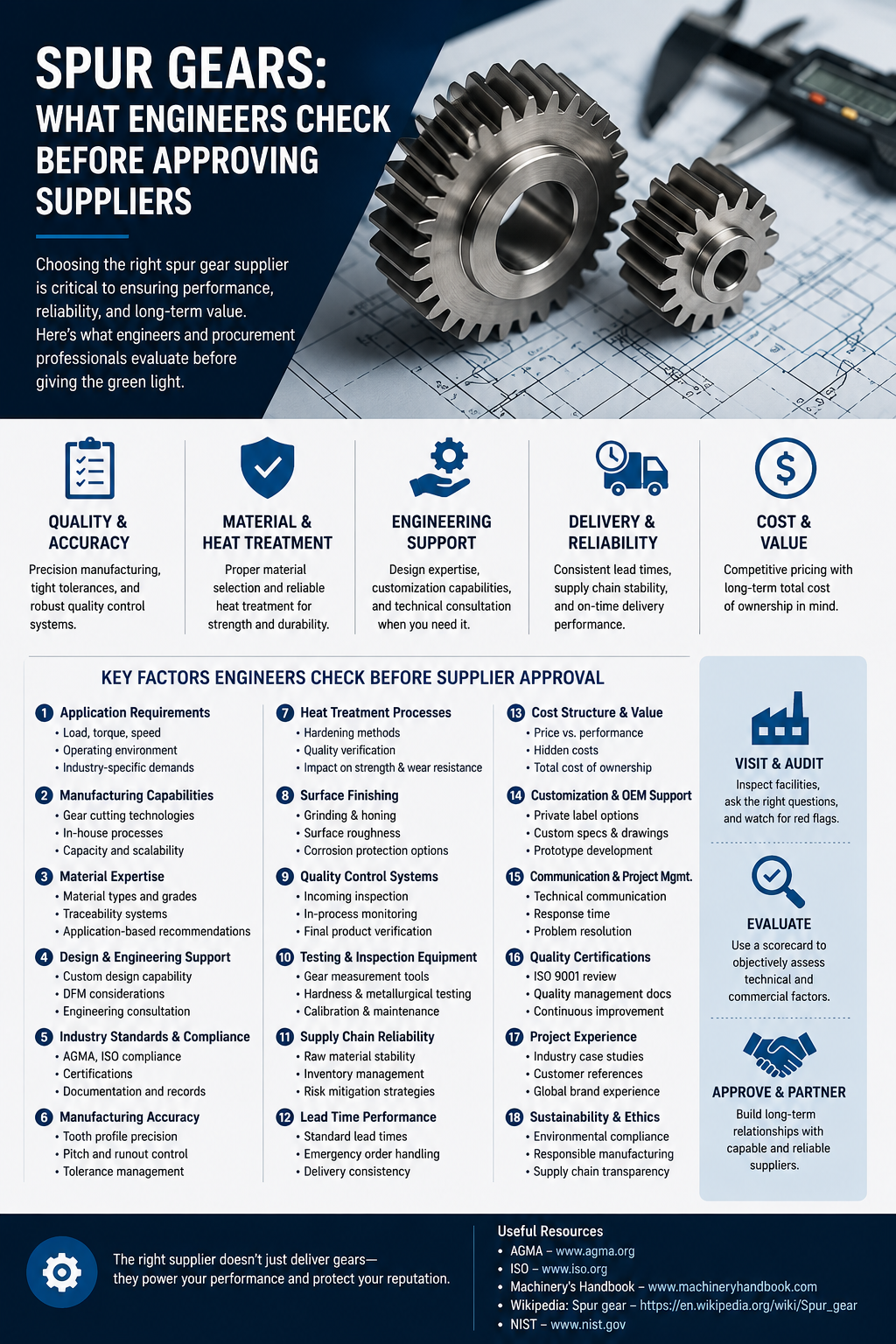
15.3 Best Practices for Procurement Professionals
Procurement teams can mitigate risks by following best practices, such as:
- Establishing clear technical specifications based on design requirements
- Validating supplier capabilities and track record
- Requesting inspection reports and sample verification
- Integrating quality checks into supply chain management
- Collaborating closely with engineering teams for proper selection
Adhering to these practices ensures that purchased pinions meet project requirements, performance expectations, and operational standards.
16. Case Studies and Real-World Examples
16.1 Successful Pinion Selection Stories
Several industrial projects demonstrate the importance of proper pinion selection. For example, a conveyor system in a large mining operation experienced a 40% reduction in downtime by upgrading to high-strength alloy pinions with optimized tooth profiles, illustrating the ROI of precision engineering and proper material selection.
16.2 Lessons Learned from Failures
Failures often result from overlooked details. One automotive OEM experienced differential pinion failure due to incorrect backlash adjustment and poor material choice, emphasizing the importance of aligning design specifications, installation practices, and material selection.
16.3 Key Takeaways for Project Planning
Lessons from case studies reinforce the following principles:
- Analyze load, speed, and duty cycle carefully
- Select materials and heat treatments appropriate to application conditions
- Verify compliance with international standards
- Implement proper installation and alignment procedures
- Integrate preventive maintenance to extend service life
Incorporating these lessons into planning ensures reliability, reduces unexpected downtime, and optimizes total cost of ownership.
17. Future Trends in Pinion Technology
17.1 Advanced Materials and Coatings
Emerging materials and coatings enhance pinion performance. Innovations include surface coatings to reduce friction, advanced alloy steels for higher fatigue resistance, and additive manufacturing for complex geometries that were previously unachievable.
17.2 Innovations in Gear Design
Future pinions may feature optimized tooth profiles generated by computer-aided design algorithms, enabling smoother load distribution and higher efficiency. 3D printing and precision machining techniques allow for lightweight, high-strength components tailored to specific industrial needs.
17.3 Impact on Industrial Applications
These technological advancements will improve efficiency, reduce maintenance, and extend service life across industrial sectors, from automotive and aerospace to heavy machinery and robotics.
18. Conclusion and Procurement Recommendations
18.1 Summary of Key Points
Pinions are critical components in gear systems, affecting torque transfer, efficiency, durability, and overall operational reliability. Understanding pinion types, materials, sizing, manufacturing, lubrication, and standards is essential for engineers and procurement professionals.
18.2 Strategies for Choosing the Right Pinion
Effective selection strategies include analyzing load and speed requirements, choosing suitable materials, adhering to standards, and working closely with suppliers to ensure precision, quality, and timely delivery.
18.3 Final Advice for Engineers and Buyers
Engineers and procurement specialists should prioritize lifecycle performance over initial cost, validate supplier compliance with international standards, and implement preventive maintenance programs. By doing so, organizations can achieve reliable, efficient, and cost-effective power transmission solutions for a wide range of industrial applications.