Table of Contents
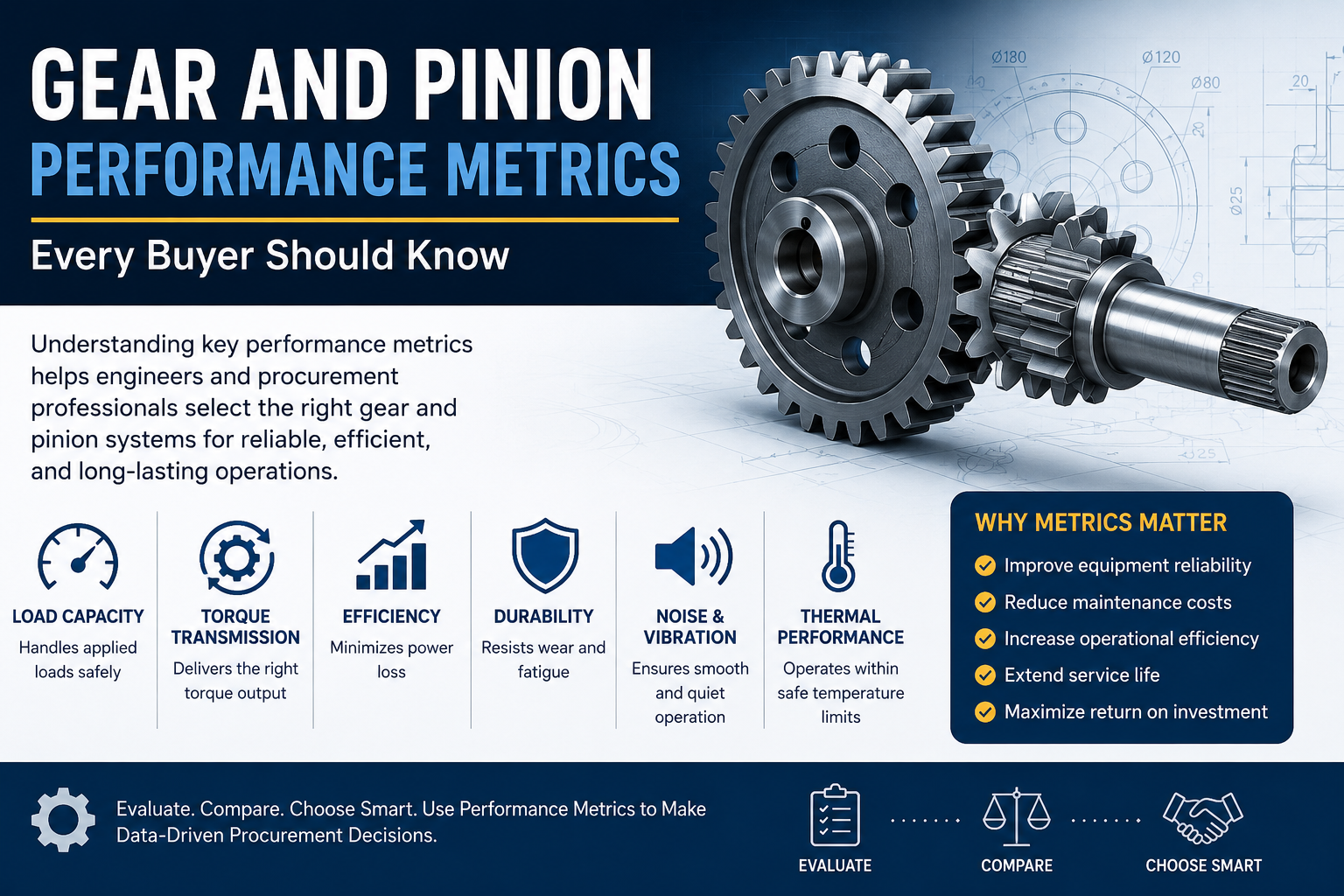
Gear and Pinion Performance Metrics Buyers Must Know
1. Introduction to Gear and Pinion Performance Metrics
Why performance metrics matter in gear procurement
When it comes to sourcing gears and pinions, numbers aren’t just numbers—they’re your lifeline. Performance metrics are the compass guiding procurement engineers through a sea of choices, ensuring that what lands on the factory floor won’t seize up or underperform under pressure. From torque thresholds to efficiency ratings, these metrics allow you to cut through the marketing fluff and get straight to what matters: durability, reliability, and value for money. Skipping this step is like buying a high-performance car without checking the engine specs—you're bound to hit a wall sooner or later.
The impact of metrics on equipment reliability
Gear and pinion performance metrics have a direct domino effect on machinery uptime. Imagine a gearbox failing mid-shift because the torque rating was underestimated or the material choice couldn’t withstand operational stress. Every metric—from tooth hardness to backlash—feeds into overall system reliability. For engineers and procurement pros, these numbers aren’t just academic; they’re practical insurance against downtime, unplanned maintenance, and the dreaded emergency sourcing scramble.
Common buyer challenges when evaluating gears and pinions
Even seasoned procurement engineers can trip over the nuances of gear evaluation. Ambiguous datasheets, inconsistent standards between suppliers, and obscure jargon like “AGMA class” or “surface microhardness” can muddy the waters. Buyers often struggle to reconcile what’s promised on paper with real-world performance, making metric literacy not just helpful—it’s essential.
2. Understanding the Basics of Gear and Pinion Systems
What is a gear and pinion assembly
At its core, a gear and pinion assembly is a mechanical translation device: it converts input motion into precise, controllable output, whether changing direction, speed, or torque. The “pinion” typically refers to the smaller gear that drives or is driven by the larger gear, creating a compact yet high-efficiency motion system. Think of it as the difference between a moped’s tiny cog and a monster truck’s massive gear teeth—they work together to get power where it needs to go.
Key components and their functions
A typical assembly includes the gear teeth, hub, shaft, bearings, and often lubrication channels. Each component plays a pivotal role: teeth handle torque transmission, the hub ensures structural integrity, shafts manage rotational alignment, and bearings reduce friction. Neglecting even one of these components can turn a smooth-running system into a jittery, noisy nightmare.
Industries that rely on gear and pinion systems
These assemblies are the unsung heroes across countless industries—automotive, aerospace, heavy machinery, robotics, and even renewable energy like wind turbines. Anywhere rotational motion needs precision and durability, you’ll find gears and pinions working behind the scenes, often invisible but absolutely critical. See more on energy.gov.
3. Load Capacity and Torque Transmission
Defining load capacity
Load capacity refers to the maximum force a gear or pinion can safely handle without permanent deformation or catastrophic failure. It’s usually expressed in Newton-meters (Nm) or pound-feet (lb-ft) and is critical when sizing components for high-stress applications. Misjudging load capacity is like putting a clumsy linebacker in a ballet—expect disaster.
Understanding torque ratings
Torque is the rotational equivalent of linear force, and torque ratings tell you how much twist a gear can withstand before yielding. High torque without proper load distribution can lead to tooth breakage, pitting, or accelerated wear, which is why knowing the torque ceiling is non-negotiable in procurement decisions.
Matching load requirements to application needs
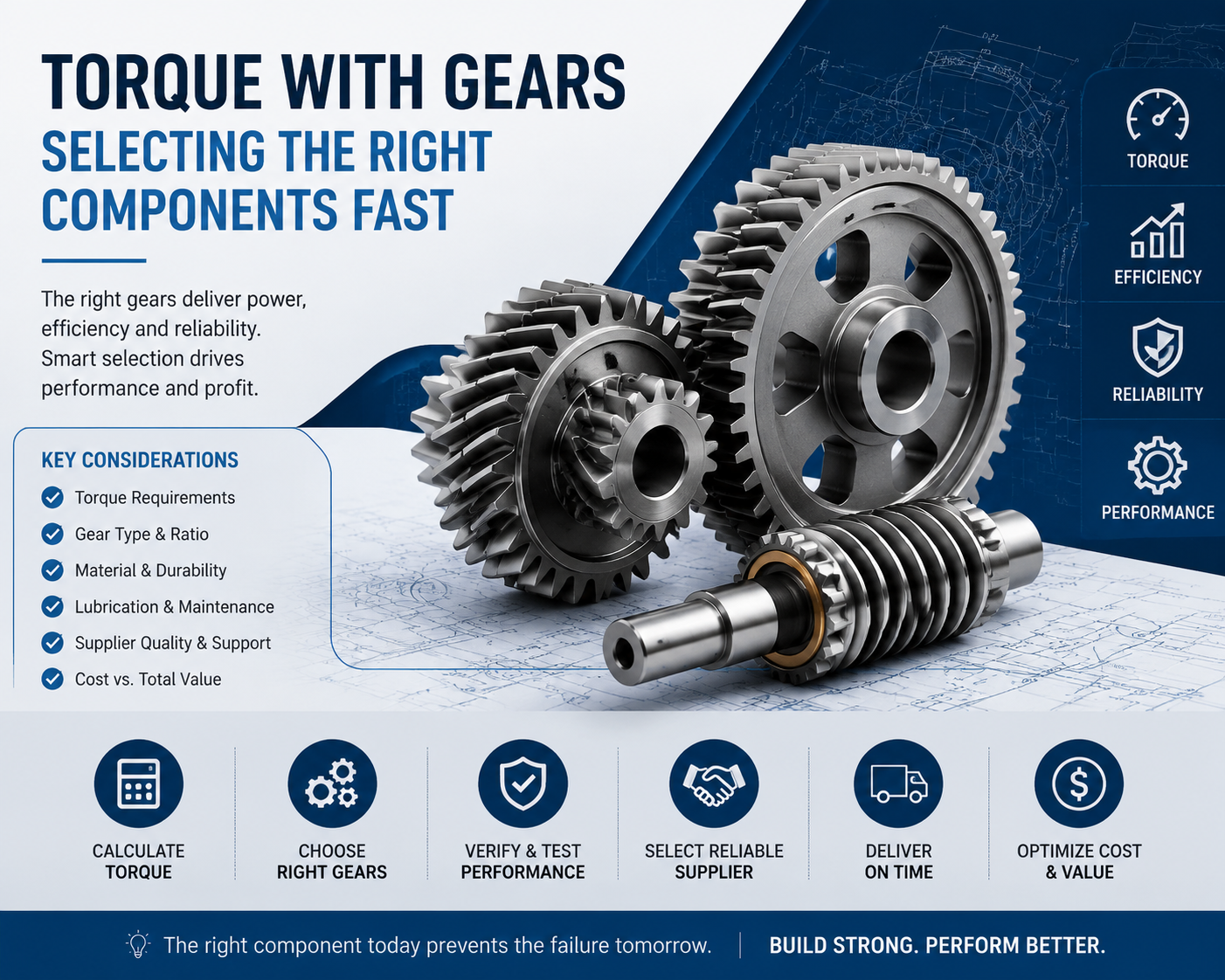
The trick is aligning the rated torque and load capacity with your actual operational demands. Over-specification wastes money, while under-specification invites mechanical chaos. Procurement engineers often have to balance ideal performance with cost constraints, ensuring reliability without breaking the budget.
4. Gear Ratio and Speed Performance
How gear ratios influence performance
Gear ratio is the relationship between the input and output rotational speeds. It dictates how torque is amplified or reduced, shaping the mechanical personality of the assembly. For instance, a 4:1 ratio boosts torque at the expense of speed, which can be perfect for lifting heavy loads but disastrous in high-speed automation.
Relationship between speed and torque
Speed and torque are a delicate see-saw: as you increase torque, rotational speed generally decreases, and vice versa. Understanding this trade-off is essential to avoid undersized gears that overheat or oversized gears that stall machinery.
Selecting the optimal ratio for efficiency
Efficiency is rarely achieved by chance. Choosing the right gear ratio involves analyzing operational cycles, peak loads, and desired throughput. A well-selected ratio ensures smooth performance, reduces energy consumption, and extends component life—essentially keeping your plant humming like a well-oiled symphony.
5. Efficiency Ratings and Power Loss
Measuring transmission efficiency
Transmission efficiency is the percentage of input power that’s effectively delivered to the output. Losses can be insidious, creeping in from friction, gear slip, or even imperfect meshing. High-efficiency systems conserve energy, reduce heat, and minimize operational cost—metrics every buyer should scrutinize.
Sources of mechanical power loss
Losses occur from friction, backlash, misalignment, and surface imperfections. Even microscopic deviations in gear tooth geometry can sap efficiency over time. Procurement engineers must evaluate not just the nominal efficiency, but how real-world operational stresses affect it.
Comparing efficiency across gear types
Planetary, helical, spur, and worm gears all have unique efficiency profiles. Spur gears boast simplicity but higher noise, helical gears offer smoother performance with slightly lower efficiency, and worm gears can be gloriously compact but notoriously lossy. Selecting the right type is a balancing act of efficiency, cost, and application demands. For reference, see Wikipedia: Gear.
6. Tooth Strength and Durability Metrics
Bending strength of gear teeth
Bending strength indicates how much load a tooth can carry before snapping—a critical metric, especially for high-torque environments. Fatigue fractures often initiate at the root, making accurate calculation and material selection non-negotiable for durability.
Contact stress resistance
Contact stress, or Hertzian stress, is the pressure at the interface between mating teeth. Excessive stress leads to pitting, spalling, or micro-fractures that escalate wear exponentially. Materials with high contact stress resistance are prized in heavy-duty applications.
Factors affecting long-term durability
Tooth geometry, material composition, heat treatment, lubrication, and operating environment all converge to determine lifespan. Procurement engineers must consider seasonal temperature swings, load spikes, and even ambient contamination when evaluating durability claims.
7. Surface Hardness and Wear Resistance
Common hardness measurement methods
Surface hardness is a key indicator of a gear’s ability to resist wear and deformation under repeated stress. The Rockwell, Brinell, and Vickers tests are widely used depending on material and gear size. Rockwell is quick and effective for medium hardness steels, Brinell works well for softer metals, and Vickers excels at microhardness measurements for high-precision gears. Understanding these scales allows procurement engineers to verify supplier claims and ensure long-term durability. For more on hardness testing, see ASM Materials Resources.
The role of heat treatment processes
Heat treatment transforms standard steel into a wear-resistant gear capable of withstanding harsh mechanical conditions. Carburizing enriches the surface with carbon to create a hard exterior while retaining a tough core. Nitriding introduces nitrogen for surface hardening without distortion. Induction hardening delivers targeted surface reinforcement. Skipping or poorly executing heat treatment is a major risk factor for premature failure.
Wear resistance in demanding environments
High operational speeds, heavy loads, abrasive contaminants, and fluctuating temperatures accelerate wear. Material selection, surface finish, and proper lubrication collectively determine lifespan. Buyers should review wear resistance data and, when possible, request accelerated life testing results to ensure components withstand real-world conditions.
8. Precision and Gear Accuracy Classes
Understanding gear accuracy standards
Gear accuracy is classified by AGMA, ISO, and DIN standards, specifying allowable deviations in pitch, profile, and runout. High-precision gears reduce vibration, increase torque consistency, and extend system life. Failing to understand these standards risks ordering parts that do not meet operational requirements. See Wikipedia: Gear Accuracy for more details.
Impact of precision on system performance
Precision affects vibration, wear, and noise. Even minor deviations can lead to operational errors or costly downtime in robotics, CNC machines, or aerospace equipment. Accurate tolerance adherence is crucial to prevent cascading issues across mechanical systems.
Selecting the right tolerance grade
Choosing tolerance grades balances cost and performance. High-tolerance gears are necessary for applications requiring minimal backlash and high repeatability. For lower-speed machinery or conveyors, looser tolerances may suffice. Procurement engineers should match tolerance to application needs to avoid over-engineering and unnecessary expense.
9. Backlash Measurement and Control
What backlash means in gear systems
Backlash is the small gap between meshing teeth that accommodates thermal expansion and misalignment. Too much backlash causes sluggish response and vibration, while too little increases friction and wear. Proper backlash measurement is essential for precision and longevity.
Acceptable backlash ranges by application
Precision robotics may tolerate only a few microns, while heavy-duty machinery may allow several tenths of a millimeter. Understanding acceptable ranges ensures performance without unnecessary cost.
Methods for minimizing backlash
Techniques include preloaded gears, split gears, adjustable mounts, and precision machining. Preloading introduces tension to remove slack, split gears allow fine-tuning, and precision machining ensures consistent engagement. Buyers should confirm suppliers can demonstrate and measure these techniques effectively.
10. Noise and Vibration Performance
Key causes of gear noise
Noise arises from tooth misalignment, surface roughness, and meshing imperfections. Excessive noise may indicate stress points or wear-prone areas, providing early warning of potential reliability issues. Quiet operation is not just comfort—it’s a proxy for efficiency and mechanical health.
Vibration measurement indicators
Vibration analysis evaluates amplitude, frequency, and harmonic content to detect imbalance, resonance, or misalignment. High-resolution monitoring identifies hidden mechanical stresses before visible damage occurs. For deeper understanding, see Quality Magazine: Vibration Analysis.
Procurement considerations for quiet operation
Noise and vibration reduction enhances efficiency and reduces wear. Optimized tooth geometry, surface finish, and proper lubrication contribute to quiet, reliable operation. Buyers should consider environmental and occupational regulations regarding permissible noise levels when evaluating suppliers.
11. Material Quality and Mechanical Properties
Common gear and pinion materials
Materials include alloy steels, stainless steels, bronzes, and composites. Alloy steels balance toughness and hardness, stainless steels resist corrosion, bronze reduces friction in low-speed applications, and composites provide lightweight alternatives. Material selection directly affects performance and maintenance requirements.
Strength versus cost considerations
High-strength materials improve longevity but raise procurement cost, while lower-cost materials may suffice in less demanding applications. Buyers must evaluate operational demands to balance cost and performance.
Material selection for specific industries
Applications differ by industry. Aerospace and robotics favor lightweight, high-strength alloys; agriculture may require corrosion-resistant steels that tolerate dirt and moisture. Matching material to operational environment is critical for reliability.
12. Heat Treatment Performance Indicators
Carburizing and case hardening metrics
Carburizing introduces carbon to create a hard surface while maintaining a ductile core. Key metrics include case depth, hardness profile, and surface uniformity. Inconsistent treatment leads to early tooth failure, making validation essential.
Induction hardening performance factors
Induction hardening rapidly strengthens gear surfaces locally. Metrics include surface hardness, core ductility, and dimensional stability. Inconsistencies may cause warping or cracks, highlighting the need for supplier verification.
Verifying treatment consistency
Consistency ensures every batch meets design requirements. Methods include microhardness testing, metallographic inspection, and sample testing. Documentation of these checks reassures buyers of predictable performance and reliability. Additional reading on heat treatment processes: MatWeb Material Data.
13. Fatigue Life and Service Life Expectations
Understanding fatigue failure
Fatigue failure is the silent assassin of gears—occurring long before any obvious wear appears. It happens when repeated cyclic loading creates microscopic cracks that grow over time until catastrophic failure occurs. For buyers, understanding fatigue characteristics means scrutinizing material properties, tooth geometry, and operating conditions to avoid unexpected downtime.
Unlike overload failures, which occur suddenly due to excessive force, fatigue failures develop gradually and often remain hidden until significant damage has already occurred. Gear teeth are subjected to continuous loading and unloading cycles during operation, making fatigue resistance one of the most critical factors influencing long-term reliability.
Procurement engineers should pay close attention to fatigue ratings, material certifications, and heat treatment quality because these factors significantly influence a gear’s resistance to crack initiation and propagation. A component with poor fatigue performance may initially meet specifications but ultimately fail long before its expected service life.
Life cycle testing methods
Life cycle tests simulate years of operational stress within a compressed testing period. These evaluations help manufacturers identify weaknesses and validate design assumptions before products reach the market.
Common testing methods include accelerated load testing, rotational endurance testing, contact fatigue testing, and finite element analysis (FEA) simulations. Accelerated testing subjects gears to elevated loads and speeds to replicate long-term operational wear within a shorter timeframe.
Advanced manufacturers often combine physical testing with computer simulations to create highly accurate predictions of service life. For procurement professionals, reviewing life cycle testing data provides valuable insight into expected field performance and allows for more informed purchasing decisions.
Predicting maintenance intervals
Understanding fatigue life enables organizations to establish realistic maintenance schedules that maximize uptime while minimizing unnecessary service interventions.
Engineers frequently use stress-life curves, load spectra analysis, and operational history data to estimate when components may require inspection or replacement. Predictive maintenance strategies based on fatigue data help prevent unexpected failures while optimizing maintenance budgets.
When evaluating suppliers, buyers should request estimated service life data under conditions similar to their intended application. Components operating under different load profiles may exhibit dramatically different maintenance requirements despite having identical specifications.
14. Thermal Performance and Operating Temperature
Temperature effects on gear performance
Temperature has a profound influence on gear performance, affecting material properties, lubrication behavior, dimensional stability, and overall efficiency.
As operating temperatures increase, metal hardness may decrease while lubricant viscosity drops, reducing the protective film separating gear teeth. Excessive temperatures can accelerate wear, increase oxidation, and shorten lubricant life.
Conversely, extremely low temperatures can make certain materials brittle and reduce lubrication effectiveness during startup. Procurement engineers must ensure selected gear materials and lubricants remain suitable across the entire operating temperature range expected in service.
Heat generation during operation
Heat is an unavoidable byproduct of mechanical power transmission. Friction between gear teeth, bearing losses, lubricant churning, and sliding contact all contribute to temperature rise during operation.
High-speed applications, elevated loads, and continuous-duty cycles typically generate more heat than intermittent operations. If heat generation exceeds the system's ability to dissipate thermal energy, temperatures can rise to damaging levels.
Understanding expected thermal loads helps engineers select appropriate materials, lubrication systems, and cooling strategies that maintain optimal operating conditions and protect long-term reliability.
Cooling and lubrication considerations
Cooling and lubrication work hand in hand to control operating temperatures and reduce wear.
Common cooling methods include natural convection, forced air cooling, oil circulation systems, and water-cooled heat exchangers. The choice depends on operating conditions, available space, and thermal requirements.
Lubricants not only reduce friction but also carry heat away from critical contact surfaces. Selecting a lubricant with appropriate viscosity and thermal stability ensures consistent protection across varying temperatures and load conditions.
15. Lubrication Performance Requirements
Lubrication's role in efficiency
Lubrication is one of the most influential factors affecting gear efficiency, durability, and operating reliability.
A properly maintained lubricant film separates mating tooth surfaces, reducing friction, minimizing wear, and lowering heat generation. Efficient lubrication can significantly improve transmission efficiency while extending component life.
Without adequate lubrication, metal-to-metal contact occurs, leading to rapid wear, surface damage, increased energy consumption, and ultimately premature failure. In many cases, lubrication deficiencies are among the leading causes of gearbox problems.
Choosing the correct lubricant type
Selecting the appropriate lubricant requires careful consideration of operating conditions, gear geometry, temperature range, load intensity, and environmental factors.
Mineral oils remain common in many industrial applications, while synthetic lubricants offer superior temperature stability, oxidation resistance, and extended service intervals. Specialized additives can further enhance wear protection and load-carrying capability.
Procurement engineers should evaluate lubricant compatibility alongside gear specifications, ensuring the selected lubricant supports the intended application and operating environment.
Monitoring lubrication effectiveness
Effective lubrication management requires ongoing monitoring rather than a one-time installation.
Oil analysis programs can detect contamination, oxidation, viscosity changes, and wear particles before they cause significant damage. Regular monitoring provides valuable information about equipment condition and lubricant health.
Organizations that implement proactive lubrication monitoring often experience reduced maintenance costs, longer equipment life, and fewer unexpected breakdowns compared with reactive maintenance approaches.
16. Dimensional Accuracy and Runout Metrics
Measuring dimensional consistency
Dimensional accuracy determines how effectively gears mesh and transfer power throughout their operational life.
Critical measurements include pitch diameter, tooth thickness, bore dimensions, face width, and root geometry. Even small deviations can influence load distribution, noise generation, and transmission efficiency.
Modern manufacturers often utilize Coordinate Measuring Machines (CMMs), gear inspection centers, and laser measurement systems to verify dimensional consistency and ensure compliance with specified tolerances.
Understanding radial and axial runout
Runout measures deviation from perfect rotational alignment and is typically classified as radial runout or axial runout.
Radial runout refers to variations in the gear's rotational radius, while axial runout measures side-to-side movement along the gear face. Excessive runout can create uneven tooth loading, vibration, noise, and accelerated wear.
Accurate runout measurements are particularly important in high-speed applications where small deviations can produce significant dynamic effects and compromise equipment reliability.
Effects on system alignment
Dimensional inaccuracies and excessive runout can negatively impact overall system alignment.
Misalignment increases stress concentrations within gears, bearings, shafts, and couplings, potentially shortening service life and reducing efficiency. Poor alignment may also generate additional vibration and noise during operation.
Procurement teams should review dimensional inspection reports and runout measurements carefully to ensure supplied components meet the alignment requirements of the intended application.
17. Quality Standards and Certification Requirements
Relevant international standards
International standards provide a common framework for evaluating gear quality, performance, and manufacturing consistency.
Organizations such as AGMA, ISO, DIN, and JIS establish guidelines covering gear accuracy, material requirements, testing methods, and performance classifications. Compliance with these standards improves confidence in product quality and comparability across suppliers.
Buyers should verify which standards apply to their industry and ensure suppliers provide documentation demonstrating compliance with relevant specifications.
Inspection and testing documentation
Inspection reports and testing records provide objective evidence that manufactured components meet design requirements.
Common documentation includes material certificates, hardness reports, dimensional inspection records, heat treatment certifications, runout measurements, and surface finish evaluations.
Comprehensive documentation supports traceability, facilitates quality audits, and reduces procurement risk by verifying that delivered products conform to specified requirements.
Supplier quality management systems
A supplier's quality management system plays a significant role in determining product consistency and long-term reliability.
Certifications such as ISO 9001 demonstrate structured quality processes, continuous improvement initiatives, and documented procedures for controlling manufacturing operations.
Suppliers with mature quality systems typically achieve lower defect rates, more consistent production outcomes, and improved customer satisfaction compared with organizations lacking formal quality controls.
18. Reliability Metrics for OEM Procurement
Mean time between failures considerations
Mean Time Between Failures (MTBF) is one of the most widely used reliability metrics in industrial equipment procurement.
MTBF estimates the average operational time between successive failures and provides a useful benchmark for comparing component reliability. Higher MTBF values generally indicate more dependable equipment and lower maintenance requirements.
While MTBF should not be viewed as an absolute guarantee of performance, it remains a valuable indicator when evaluating long-term operational risk and maintenance planning requirements.
Field performance data evaluation
Laboratory testing provides valuable insights, but real-world performance data often reveals the true reliability of a gear system.
Procurement professionals should review warranty records, service histories, customer feedback, and documented field performance whenever possible. These sources can highlight recurring issues that may not appear during controlled testing.
Field data also helps validate manufacturer claims and provides greater confidence that the product will perform reliably under actual operating conditions.
Reliability benchmarking across suppliers
Comparing reliability metrics across multiple suppliers allows procurement teams to make more informed sourcing decisions.
Important benchmarking criteria include MTBF values, warranty performance, defect rates, field failure frequencies, and customer support responsiveness. These metrics provide a broader perspective than price alone.
Organizations that benchmark supplier reliability systematically are often better positioned to reduce downtime, improve equipment availability, and achieve lower total ownership costs over the life of their machinery.
19. Cost-to-Performance Analysis
Balancing upfront and lifecycle costs
One of the most common procurement mistakes is focusing exclusively on the purchase price while overlooking the total cost of ownership. A lower-priced gear and pinion assembly may appear attractive initially, but frequent maintenance, premature wear, or production interruptions can quickly erase savings.
Experienced procurement engineers evaluate both capital expenditure and operational expenditure, including installation, maintenance frequency, lubrication, replacement intervals, downtime risks, and energy efficiency. A high-quality gear set with superior metallurgy and precision often delivers lower lifecycle costs than a cheaper alternative. See NIST: Total Cost of Ownership for guidance on evaluating lifecycle costs.
Identifying hidden ownership expenses
Hidden costs include increased labor, higher lubricant consumption, spare parts inventory, production downtime, emergency replacements, reduced efficiency, and warranty claim administration. Even small inefficiencies can accumulate into significant financial impact over time. Understanding these factors prevents low-cost options from becoming unexpectedly expensive.
Calculating procurement value
True procurement value compares performance metrics against total ownership costs, factoring in service life, reliability, energy efficiency, maintenance, uptime, and supplier support. Weighted scoring systems are often used to objectively evaluate options, ensuring technical performance is prioritized alongside price.
20. Supplier Evaluation Based on Performance Data
Critical performance reports to request
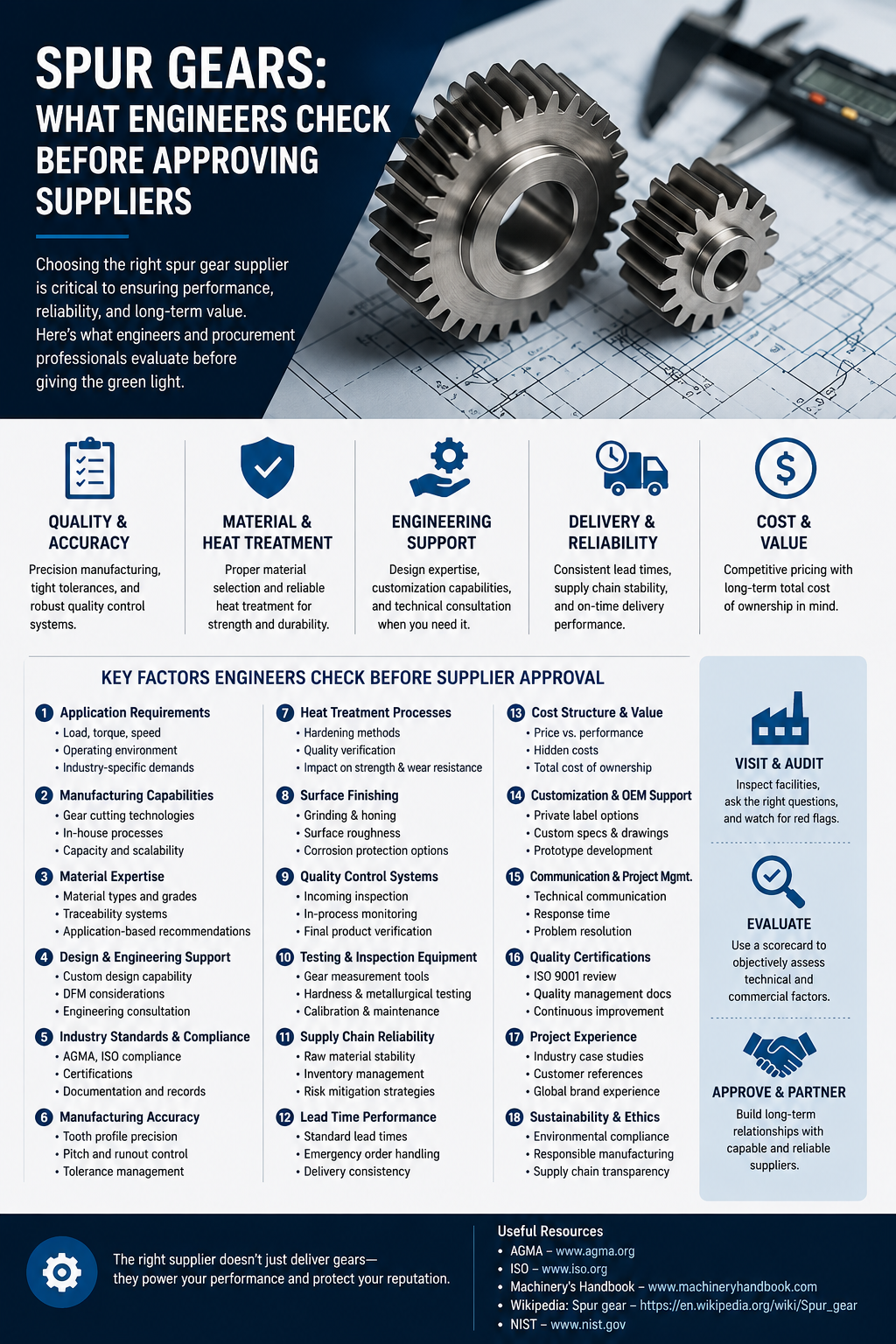
Performance claims should be verified with documentation. Request material certificates, hardness reports, gear accuracy inspection reports, heat treatment certifications, runout measurements, load testing, noise and vibration data, and surface roughness measurements. Objective data reduces risk of field failures.
Comparing supplier testing capabilities
Suppliers with advanced testing infrastructure—including Coordinate Measuring Machines (CMM), gear measuring centers, metallographic labs, hardness testers, and vibration analysis tools—can detect defects before shipment. Robust testing correlates with higher consistency and reliability.
Red flags during supplier assessment
Warning signs include incomplete inspection records, inconsistent technical data, lack of traceability, unrealistically low pricing, limited testing capabilities, frequent spec changes, and poor communication. Suppliers unable to clearly explain performance metrics should be approached with caution.
21. Common Mistakes Buyers Make When Reviewing Metrics
Overemphasizing price over performance
Focusing only on price can lead to higher maintenance costs, shortened lifespans, and unplanned downtime. Investing in quality often pays off through extended service life and reduced operational disruptions.
Ignoring application-specific requirements
Gears must be matched to operational conditions such as load, speed, environmental contamination, temperature extremes, duty cycles, and shock loading. Misalignment between gear selection and application requirements is a frequent source of premature failure.
Misinterpreting technical specifications
Technical datasheets can vary in standards or terminology. Misreading torque ratings, gear accuracy grades, hardness scales, load capacity, efficiency, or fatigue life can lead to inappropriate selections. Collaboration with design engineers ensures correct interpretation of specifications.
22. Performance Metric Checklist for Buyers
Essential metrics to verify before purchase
Buyers should confirm load capacity, torque rating, gear ratio, efficiency, surface hardness, material grade, accuracy class, backlash, runout, noise levels, fatigue life, and heat treatment quality before purchase.
Questions to ask suppliers
Key questions include: What testing methods are used? Can inspection reports be provided? Which standards are followed? How is traceability maintained? What is the expected service life? What warranty coverage exists? What quality certifications are held?
Documentation and validation requirements
Required documentation includes material certifications, dimensional inspection reports, heat treatment records, hardness tests, accuracy measurements, quality certificates, and production traceability. Proper documentation ensures reliability and compliance with specifications.
23. Future Trends in Gear and Pinion Performance Measurement
Digital monitoring and smart sensors
Connected manufacturing and smart sensors allow real-time monitoring of temperature, vibration, load, lubrication, and rotational speed. These technologies provide predictive insights, reducing the likelihood of unplanned failures. For more, see energy.gov: Gear Efficiency.
Predictive maintenance technologies
Predictive maintenance leverages sensor data, machine learning, and analytics to forecast failures, reduce downtime, optimize maintenance schedules, and improve spare parts management. Early identification of degradation prevents costly interruptions.
Emerging materials and manufacturing methods
Innovations include advanced alloy steels, powder metallurgy gears, hybrid composites, surface coatings, and additive manufacturing. These developments offer higher strength-to-weight ratios, improved wear resistance, and greater efficiency, enabling superior performance in modern industrial applications.
24. Conclusion
Key performance metrics every buyer should prioritize
Critical metrics include load capacity, torque ratings, gear accuracy, surface hardness, fatigue life, efficiency, backlash, and reliability metrics. These indicators form the foundation for informed procurement decisions.
Building a data-driven procurement strategy
Relying on documented performance data instead of assumptions or marketing claims reduces risk and improves operational outcomes. Comparing supplier capabilities and analyzing lifecycle costs enables strategic, informed purchasing decisions.
Achieving long-term reliability and value
Prioritizing performance metrics, supplier quality, and lifecycle cost analysis leads to higher uptime, reduced maintenance, longer component life, and better return on investment. Data-driven procurement ensures gear and pinion solutions deliver lasting value and operational success.