Table of Contents
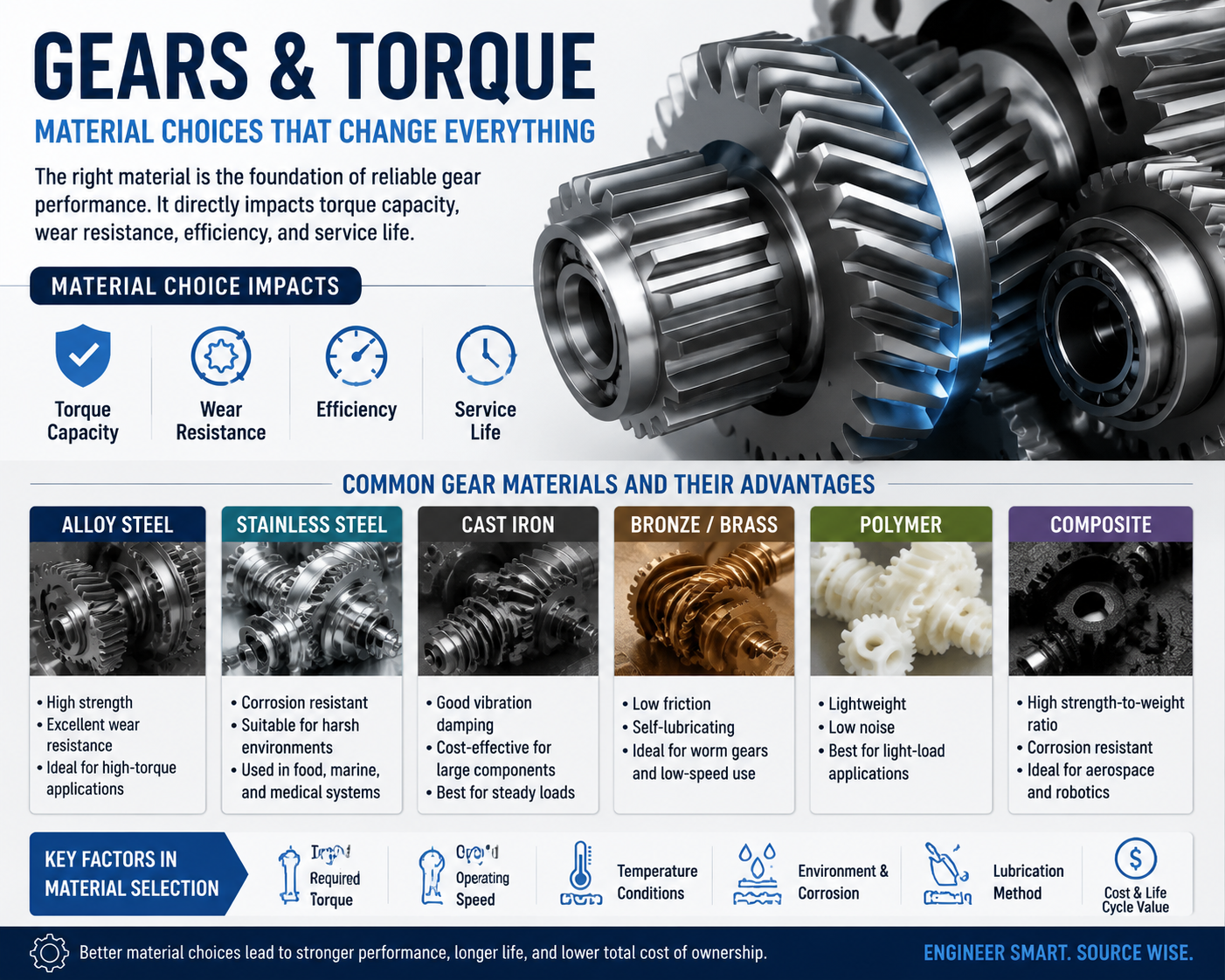
Gears and Torque Material Choices That Change Everything
1. Introduction: Why Material Choice Defines Gears and Torque Performance
Relationship between torque transmission and material behavior
In gear-driven powertrains, torque is not just a number on a spec sheet—it is a mechanical reality that relentlessly exposes every weakness in the material matrix, meaning the selection of base material directly dictates how effectively rotational energy is transmitted without slippage, deformation, or premature fatigue; in practical engineering terms, a gear is only as strong as its ability to resist torsional shear at the tooth root and maintain geometric integrity under repeated cyclic loading, and that is where metallurgical composition becomes the silent game-changer.
Why procurement teams prioritize material selection early
From a procurement engineer’s standpoint, material choice is not a downstream detail but a front-loaded risk decision, because once tooling, heat treatment routes, and supplier qualification are locked in, any change becomes expensive and disruptive—so teams “lock the spec early” to avoid downstream chaos, especially in OEM/ODM supply chains where global sourcing variability can turn a minor material deviation into a full-blown field failure issue.
Impact of material on lifecycle cost and reliability
Lifecycle cost is where the truth comes out; a cheaper gear material may look attractive on BOM level, but once you factor in wear rate, lubrication demand, downtime, and warranty claims, the equation flips fast—engineers often say, half-jokingly, “cheap steel is never cheap after 10,000 hours,” and that’s because torque-induced fatigue accumulates silently until failure shows up at the worst possible time.
Reference concepts: Gear fundamentals, Torque mechanics
---2. Fundamentals of Torque in Gear Systems
Definition of torque in mechanical power transmission
Torque is essentially rotational force multiplied by radius, but in gear systems it becomes a concentrated stress medium that is transferred tooth-to-tooth through localized contact zones, meaning the entire load path is highly nonlinear and sensitive to material elasticity and surface integrity.
How gears convert rotational force into usable output
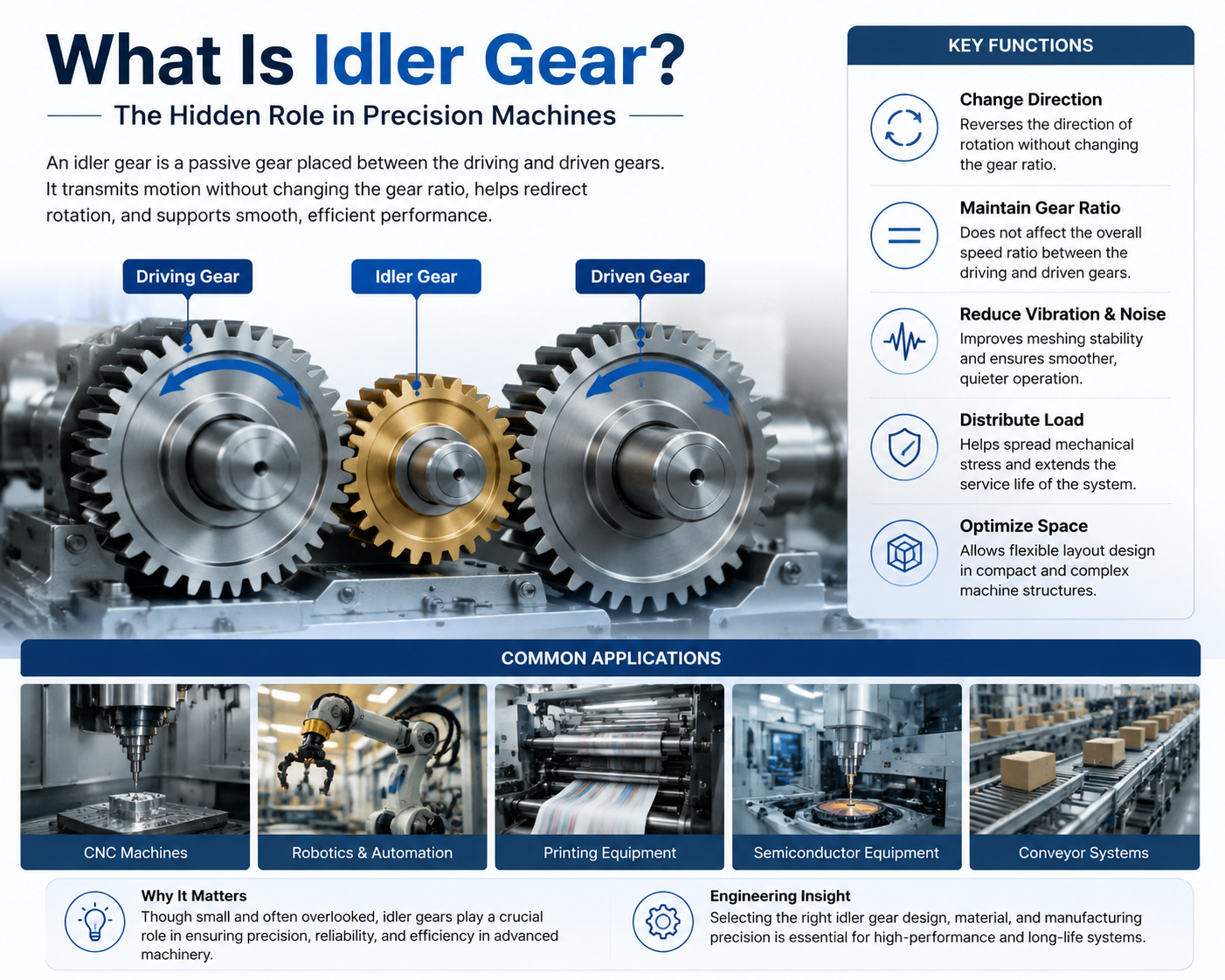
Gears function as controlled torque transformers, converting high-speed low-torque input into low-speed high-torque output (or vice versa), and this transformation depends heavily on tooth geometry, contact ratio, and material rigidity, where even small deviations in stiffness can lead to uneven load sharing and premature pitting.
Stress distribution across gear teeth under load
Under operational torque, stress is not evenly distributed but concentrated at the dedendum and contact surface, creating a combination of bending stress and Hertzian contact stress, and if material yield strength is insufficient, micro-deformation begins like a slow-motion domino effect that eventually escalates into macroscopic failure.
---3. Core Material Properties That Influence Torque Capacity
Tensile strength and yield strength relevance
Tensile strength determines ultimate failure resistance while yield strength defines the elastic limit before permanent deformation, and in gear applications, engineers typically design well below yield thresholds because once plastic deformation occurs, tooth geometry is compromised irreversibly.
Hardness versus toughness balance in gear design
Hardness improves wear resistance but can introduce brittleness, while toughness allows energy absorption under shock loads, so selecting gear materials is a balancing act—too hard and it cracks, too soft and it wears out, and as engineers like to say, “you can’t have a bulletproof gear that’s also butter-smooth under shock load without compromise.”
Fatigue resistance under cyclic torque loading
Fatigue resistance is arguably the most critical parameter because gears rarely fail in one dramatic overload event; instead, they degrade over millions of cycles, where micro-cracks initiate at inclusions or surface defects and propagate under repeated torsional stress until sudden failure occurs.
---4. Steel Alloys in High-Torque Gear Applications
Case-hardened alloy steels for heavy-duty systems
Case-hardened steels provide a hard outer shell with a ductile core, allowing gears to resist surface wear while maintaining internal toughness, making them ideal for high-torque industrial reducers where shock loads are unavoidable.
Through-hardened steels for uniform load distribution
Through-hardened steels offer consistent hardness throughout the cross-section, which improves predictability under load, especially in applications where torque is steady rather than impact-driven, though they may sacrifice some surface wear resistance compared to case-hardened alternatives.
Alloying elements that improve performance
Elements like chromium, molybdenum, nickel, and vanadium refine grain structure, improve hardenability, and enhance fatigue resistance, essentially acting as microscopic reinforcement scaffolding that strengthens the steel under torsional stress.
Reference: Alloy steel
---5. Carbon Steel vs Alloy Steel in OEM Gear Procurement
Cost-performance trade-offs in mass production
Carbon steel is the go-to for cost-sensitive production runs, but alloy steel dominates when performance margins are tight, and procurement engineers constantly weigh this “good enough vs bulletproof” dilemma depending on application criticality.
Wear resistance differences under torque stress
Alloy steels typically outperform carbon steels in wear resistance due to improved microstructure stability and hardenability, especially under lubricated high-torque conditions where surface fatigue is the primary failure mode.
Suitability for different industrial environments
Carbon steel works fine in controlled environments, but alloy steel is the workhorse material for unpredictable industrial settings where load spikes and environmental variability are part of the game.
---6. Stainless Steel Gears for Corrosive Torque Environments
Resistance to oxidation and chemical exposure
Stainless steel earns its place through chromium-driven passivation layers that protect against corrosion, making it essential in environments where moisture, chemicals, or saline exposure would otherwise degrade gear integrity.
Torque limitations compared to alloy steels
However, stainless steels generally exhibit lower hardness and reduced load-bearing capacity compared to hardened alloy steels, meaning torque capacity is often compromised unless compensated by design oversizing.
Applications in food, marine, and medical systems
These gears are widely used in hygienic systems, offshore equipment, and medical machinery where contamination control is as important as mechanical performance.
---7. Cast Iron Gear Materials and Torque Behavior
Vibration damping advantages in heavy machinery
Cast iron naturally dampens vibration due to its graphite microstructure, making it surprisingly effective in large gear housings where noise reduction and smooth operation are desirable.
Brittleness limitations under shock torque
The downside is brittleness—cast iron does not tolerate sudden torque spikes well, and under shock loading it behaves like glass under stress concentration, cracking without much warning.
Cost efficiency for large gear housings
Despite limitations, its low cost and excellent machinability make it attractive for non-critical large-scale applications where torque demands are steady rather than dynamic.
---8. Bronze and Brass in Low-Friction Torque Systems
Self-lubricating properties in worm gears
Bronze, particularly phosphor bronze, is widely used in worm gear systems due to its natural lubricity, reducing friction and preventing seizure under sliding contact conditions.
Wear compatibility with steel shafts
Bronze pairs exceptionally well with hardened steel shafts, creating a sacrificial wear relationship where the bronze component gradually wears instead of damaging the harder steel counterpart.
Use in precision and low-speed applications
These materials are common in precision positioning systems, elevators, and marine steering mechanisms where smooth torque transmission is more important than raw load capacity.
---9. Polymer Gears and Torque Limitations
Lightweight advantages in compact systems
Polymer gears shine in lightweight applications such as printers, appliances, and automotive actuators where inertia reduction is critical.
Temperature sensitivity under torque load
However, polymers soften under heat generated by frictional torque, which can lead to deformation and loss of dimensional accuracy if not properly engineered.
Engineering plastics used in OEM production
Materials like POM, nylon, and reinforced polyamides are commonly used, often with fiber reinforcement to extend torque capability.
---10. Composite Materials in Modern Gear Engineering
Fiber-reinforced polymer gear structures
Carbon fiber and glass fiber reinforcement significantly enhance stiffness-to-weight ratios, enabling gears that are both light and surprisingly torque-resistant.
Hybrid metal-composite torque handling
Hybrid designs combine metal cores with composite outer layers to optimize strength and weight, a growing trend in advanced mechanical systems.
Emerging use in aerospace and robotics
These materials are increasingly found in aerospace actuators and robotic joints where performance-per-gram is a critical metric.
---11. Heat Treatment Effects on Material Torque Strength
Carburizing and case hardening processes
Carburizing introduces carbon into the surface layer, producing a hard outer shell capable of resisting high torque-induced wear while preserving core ductility.
Impact of quenching and tempering
Quenching locks in hardness while tempering relieves internal stresses, and the balance between these processes defines final gear performance.
Microstructure changes under thermal processing
Heat treatment refines grain structures, transforming a soft ferritic matrix into a hardened martensitic structure that dramatically increases torque resistance.
Reference: Heat treatment
---12. Surface Coatings for Torque Optimization
DLC and PVD coatings for wear reduction
Diamond-like carbon (DLC) and physical vapor deposition (PVD) coatings reduce friction coefficients significantly, allowing gears to operate smoother under load.
Friction coefficient improvements
Lower friction translates directly into reduced heat generation and improved torque efficiency, which is a major KPI in industrial drivetrain systems.
Extended service life under heavy loads
Coatings act as a sacrificial barrier, extending gear life and reducing maintenance cycles in high-duty applications.
---13. Material Selection for High-Speed High-Torque Systems
Thermal expansion considerations
At high speeds, thermal expansion can distort gear geometry, and material selection must account for coefficient mismatches to avoid misalignment.
Lubrication dependency at high RPM
High-speed torque systems rely heavily on lubrication regimes, and material compatibility with lubricants becomes critical to avoid film breakdown.
Balancing inertia and strength requirements
Lightweight materials reduce inertia but must still withstand torque peaks, creating a delicate optimization problem for engineers.
---14. Material Failure Modes Under Torque Stress
Pitting and surface fatigue mechanisms
Pitting begins as microscopic surface cracks that expand under cyclic loading, eventually forming visible craters that degrade gear efficiency.
Tooth bending failure analysis
When bending stress exceeds yield limits, gear teeth deform or break, often in a catastrophic manner that halts the entire system.
Sudden fracture in brittle materials
Brittle materials fail without warning under shock torque, which is why they are rarely used in high-impact gear systems.
---15. Cost vs Performance Trade-offs in OEM Procurement
Lifecycle cost versus upfront material cost
Procurement decisions increasingly focus on total cost of ownership rather than unit price, especially in long-life industrial equipment.
Supplier consistency and material certification
Consistency in metallurgical quality is critical; even small variations in composition can lead to significant performance differences.
Risk management in global sourcing
Global supply chains introduce variability, so risk mitigation through dual sourcing and strict QA protocols is essential.
---16. Industry Applications and Material Benchmarking
Automotive drivetrain material selection standards
Automotive systems prioritize fatigue resistance and lightweight design, often using advanced alloy steels and surface treatments.
Industrial gearbox requirements in manufacturing plants
Industrial environments demand robustness and long service intervals, favoring hardened steels and heavy-duty alloys.
Renewable energy systems like wind turbines
Wind turbines require exceptional fatigue resistance due to constant torque fluctuations over long operational cycles.
---17. Environmental and Operational Factors Affecting Material Choice
Temperature extremes and thermal cycling
Materials must withstand expansion and contraction cycles without cracking or losing structural integrity.
Humidity, corrosion, and chemical exposure
Environmental degradation can significantly reduce gear lifespan if corrosion-resistant materials are not used.
Dust, contamination, and lubrication breakdown
Contaminants accelerate wear and disrupt lubrication films, increasing torque losses and surface damage.
---18. Future Trends in Gear Materials for Torque Systems
Nano-enhanced materials and surface engineering
Nanostructured coatings and grain refinement techniques are pushing torque capacity beyond traditional limits.
Lightweight high-strength alloy development
New alloys aim to combine low density with high fatigue resistance, ideal for next-gen mobility systems.
Sustainability-driven material innovation in OEM supply chains
Eco-friendly materials and recyclable alloys are becoming increasingly important as industries move toward greener manufacturing practices.