Table of Contents
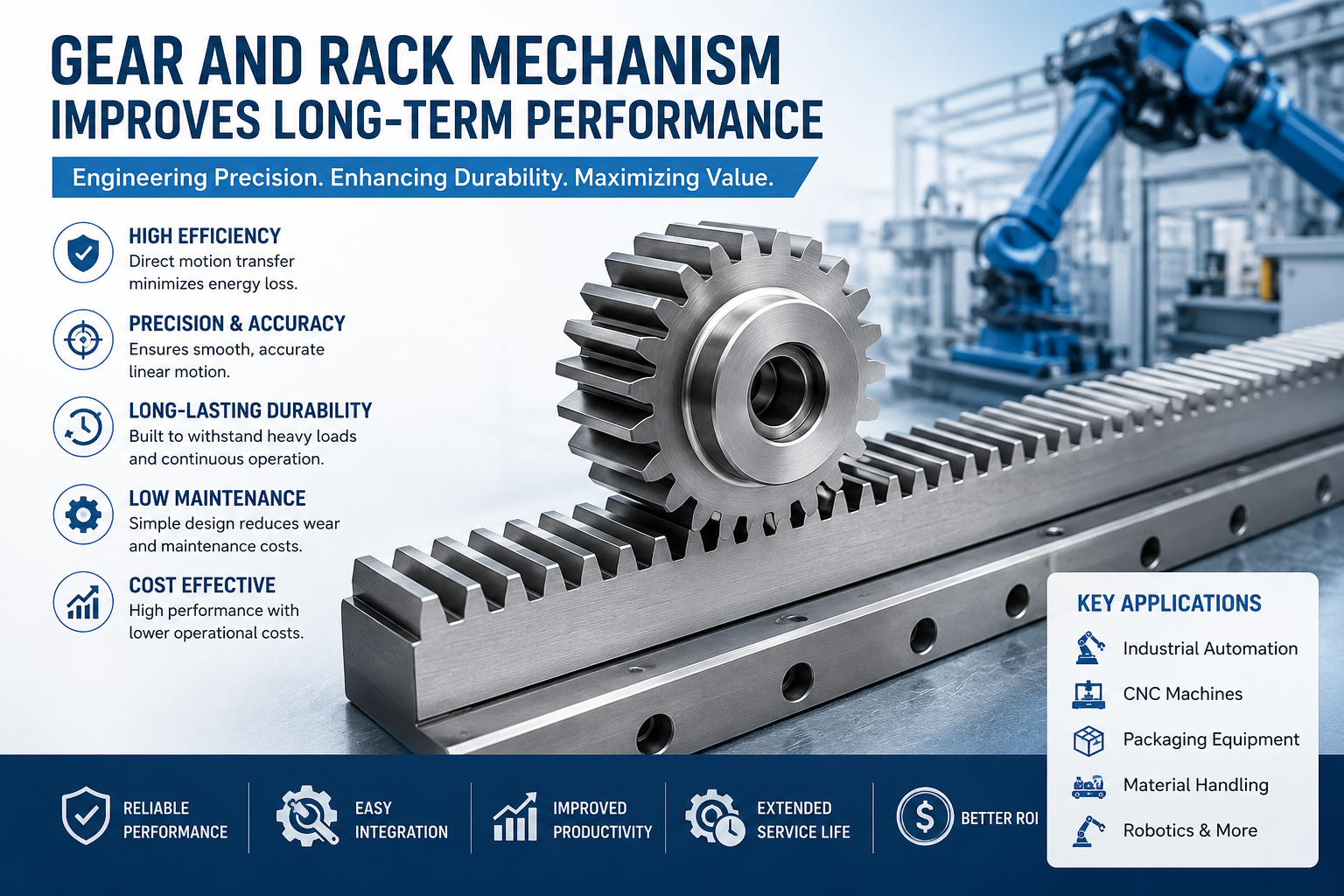
Gear and Rack Mechanism for Long-Term Performance
1. Introduction to Gear and Rack Mechanisms
1.1 Definition and Basic Principles
A gear and rack mechanism is a classic yet indispensable mechanical arrangement that converts rotational motion into linear motion, or vice versa, with remarkable precision. At its core, the system consists of a toothed gear — commonly referred to as a pinion — meshing seamlessly with a straight or slightly curved toothed bar, the rack. The underlying principle is deceptively simple: as the pinion rotates, its teeth engage with the linear teeth of the rack, translating angular motion into straight-line motion without slippage. This straightforward mechanism underpins countless industrial applications where accuracy, durability, and repeatable motion are non-negotiable, making it a go-to choice for engineers tasked with high-stakes procurement decisions. Learn more about gears on Wikipedia.
1.2 Historical Development and Evolution
The origins of gear and rack systems date back to antiquity, where early examples were employed in water-lifting devices and primitive mechanical clocks. Over centuries, incremental innovations — from the refinement of gear tooth profiles to the advent of hardened steel racks — have elevated the mechanism from rudimentary constructs to precision-engineered components essential in modern automation. During the Industrial Revolution, the proliferation of machinery demanded higher reliability, catalyzing innovations such as standardized module gears and heat-treated pinions. Today, this evolution has culminated in sophisticated, high-performance assemblies that not only endure extreme operational stress but also maintain micron-level positional accuracy. ASME overview of gear history.
1.3 Importance in Modern Mechanical Systems
In today’s fast-paced manufacturing environment, gear and rack mechanisms serve as the backbone of linear actuation systems, CNC machines, robotics, automotive steering assemblies, and heavy-duty material handling equipment. Their ability to deliver repeatable, controlled motion while tolerating heavy loads positions them as indispensable for procurement professionals aiming to secure long-term value. In applications where downtime translates directly into lost productivity and revenue, the choice of a reliable gear and rack setup is often the difference between a smooth-running production line and constant firefighting over mechanical failures.
2. Key Components of Gear and Rack Mechanisms
2.1 Types of Gears Used
Pinions are not one-size-fits-all; they come in myriad configurations tailored to application-specific demands. Spur gears, with straight-cut teeth, offer simplicity and high load capacity for standard linear motion tasks. Helical gears, featuring angled teeth, excel at reducing vibration and providing smoother engagement, albeit at slightly higher manufacturing complexity. For high-torque applications, hardened or case-carburized pinions are often preferred to mitigate premature wear and resist micro-pitting under cyclic loading.
2.2 Characteristics of Racks
Racks are the unsung heroes in this mechanism, translating rotational input into precise linear displacement. They may be machined from solid steel, extruded aluminum, or composite alloys depending on load and environmental considerations. Critical parameters include tooth profile accuracy, pitch consistency, and surface hardness, all of which directly influence backlash, wear resistance, and long-term stability. Some advanced racks incorporate anti-corrosion coatings or polymer inserts to further extend service life under harsh operating conditions. Rack and pinion overview on Wikipedia.
2.3 Supporting Elements and Assemblies
Beyond the pinion and rack, auxiliary components play a vital role in ensuring longevity and precision. Bearings, guides, end stops, and mounting brackets maintain alignment, reduce friction, and prevent misloading, while integrated shims and spacers allow fine-tuning of engagement. In high-end systems, linear guides or ball screw assemblies may supplement the rack to handle exceptionally high loads or provide redundancy, enhancing the overall robustness of the actuation system.
3. How Gear and Rack Mechanisms Work
3.1 Motion Transfer Principles
The beauty of a gear and rack system lies in its mechanical elegance. As the pinion teeth engage sequentially with the rack, rotational torque is converted into linear thrust with minimal energy loss. Properly designed meshing ensures a consistent motion profile, with negligible backlash and uniform load distribution, which is crucial in CNC operations and robotic pick-and-place systems. In essence, the mechanism serves as a mechanical translator, converting rotary energy into controlled, linear precision.
3.2 Load Distribution and Torque Handling
Efficient load distribution is the linchpin of long-term performance. When a pinion engages a rack, the contact surface area must be sufficient to spread out stress and prevent localized pitting or tooth deformation. Gear profile, material hardness, and mounting rigidity all interact to determine the system’s torque-handling capability. Engineers often run detailed finite element analyses (FEA) to predict stress hotspots and optimize tooth geometry, ensuring the mechanism can endure the cumulative effects of continuous operation without compromising reliability.
3.3 Efficiency in Linear and Rotary Motion
High-efficiency motion transfer is not just about minimizing friction; it involves balancing contact mechanics, surface finish, lubrication, and alignment. Misalignment or improper tooth engagement can sap efficiency and induce vibration, leading to premature wear. Conversely, a meticulously engineered gear and rack system operates with remarkable energy efficiency, translating nearly every bit of rotational input into usable linear motion while maintaining repeatable positional accuracy, which is precisely what procurement professionals are hunting for when evaluating long-term ROI.
4. Material Selection for Longevity
4.1 Common Metals and Alloys
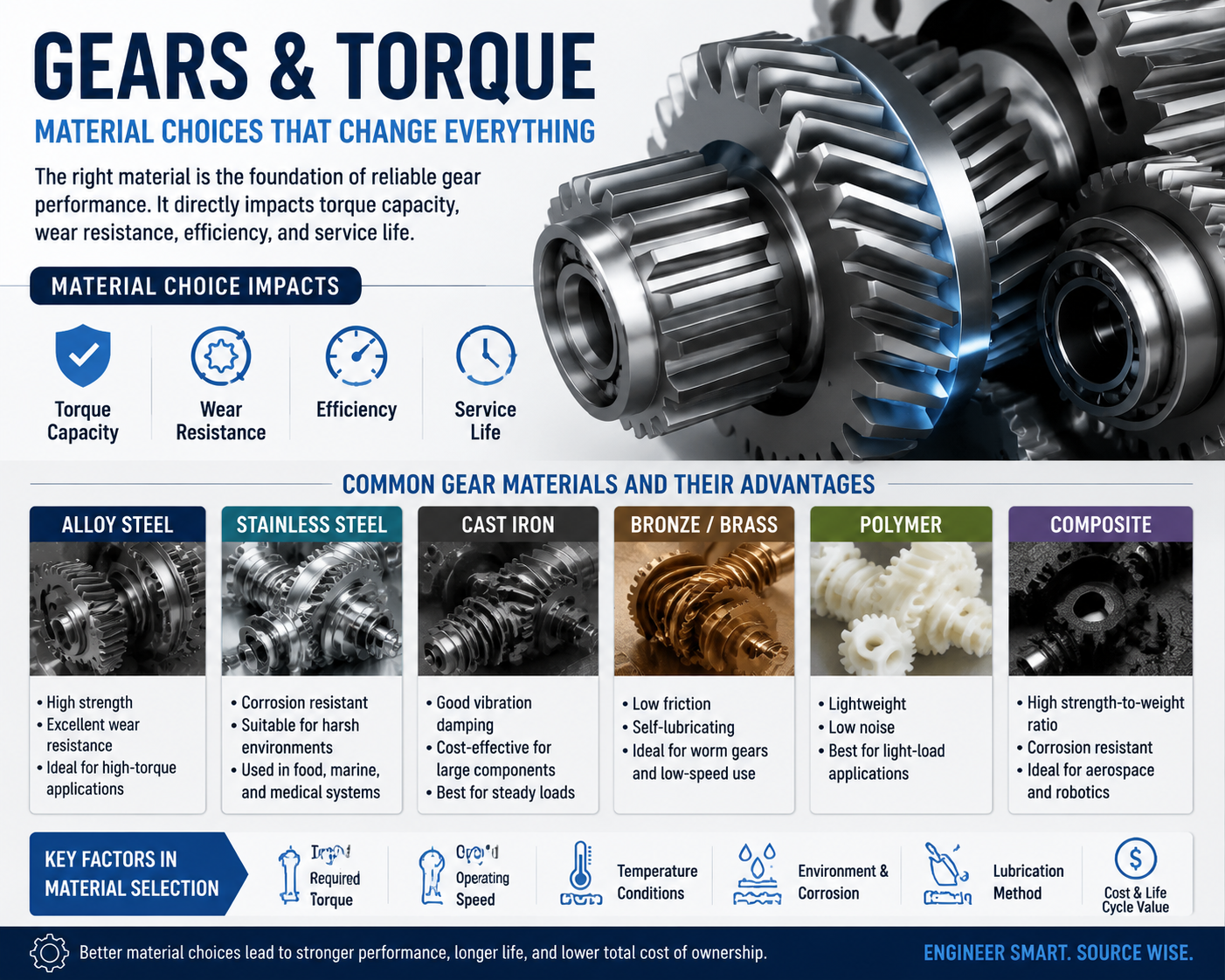
Steel remains the workhorse for most high-performance gear and rack applications due to its combination of hardness, tensile strength, and fatigue resistance. Alloy steels, often quenched and tempered, provide superior endurance under cyclic loading. For applications demanding corrosion resistance or reduced weight, engineers may turn to stainless steel or aluminum alloys, albeit with carefully considered trade-offs in wear resistance and torque capacity.
4.2 Advanced Composites for Wear Resistance
In environments where traditional metals may succumb to abrasion or chemical attack, composite materials offer an intriguing alternative. Fiber-reinforced polymers or hybrid metal-polymer racks can reduce friction, mitigate noise, and withstand moderate loads while extending operational life. These advanced composites also provide a degree of self-lubrication, a boon for continuous-duty applications where maintenance intervals are constrained.
4.3 Coatings and Surface Treatments
Surface engineering is often the unsung hero of durability. Hard chrome plating, nitriding, carburization, and DLC (diamond-like carbon) coatings dramatically improve wear resistance and reduce micro-pitting. Properly applied surface treatments can double or even triple the service life of a gear and rack mechanism, making them an attractive option for procurement professionals aiming to maximize the value of OEM or ODM investments in high-stress operational environments. Learn more about surface treatments.
5. Design Considerations for Performance
5.1 Gear Tooth Geometry Optimization
The long-term behavior of a gear and rack mechanism is determined long before the first production cycle begins. Tooth geometry governs contact ratio, force transmission, operating smoothness, and cumulative wear accumulation. Mechanical engineers rarely treat tooth design as a commodity decision because small geometric adjustments can create disproportionately large effects on service life.
Involute tooth profiles remain the industry benchmark due to their ability to maintain relatively constant velocity ratios despite minor center distance variations. Advanced applications frequently incorporate profile shifting, crowning, or customized flank modifications to accommodate dynamic loading conditions.
Tooth pressure angle also deserves strategic attention. Lower pressure angles can reduce radial forces and vibration, while higher pressure angles improve load-carrying capability. Procurement teams evaluating suppliers should look beyond catalog specifications and verify process capability in tooth profile accuracy. More on gear tooth geometry
5.2 Rack Alignment and Tolerances
Even premium-grade materials cannot compensate for poor alignment. Rack positioning accuracy directly influences load distribution, efficiency, and lifecycle stability. Rack straightness, mounting flatness, and parallelism must remain within controlled tolerance bands throughout installation and operation. Misalignment introduces asymmetric tooth loading, accelerates flank wear, and amplifies vibration signatures.
Thermal expansion becomes increasingly relevant in long travel systems. Intelligent designs incorporate expansion joints, segmented racks, or floating mounting structures to absorb these dimensional fluctuations. Buyers often request dimensional inspection reports and installation guidelines because real-world assembly conditions frequently determine whether theoretical lifespan becomes achievable.
5.3 Minimizing Backlash and Vibration
Backlash is often misunderstood as merely a precision issue; it directly influences durability and operating economics. Excessive backlash causes impact loading during direction changes, generating micro-shock events that accelerate tooth fatigue. Insufficient backlash increases friction and thermal buildup. The target is controlled clearance, not elimination at all costs.
Engineering approaches include spring-preloaded dual pinions, split gear arrangements, precision rack machining, controlled lubrication film thickness, and vibration damping supports. Reducing vibration also protects adjacent assemblies, including bearings and servo systems, critical for maintaining uptime in automated environments.
6. Lubrication and Maintenance Practices
6.1 Recommended Lubricants for Longevity
Lubrication is frequently underestimated until premature wear appears. A properly selected lubricant establishes a protective tribological film that separates tooth surfaces and minimizes adhesive wear. Selection depends on load, speed, temperature, humidity, and contamination exposure. Grease is suitable for moderate speeds, while oil is preferred for higher-speed or continuous-duty systems. Synthetic lubricants maintain stability across broad operating envelopes.
6.2 Maintenance Schedules and Checks
Reactive maintenance belongs to another era. Modern strategies emphasize scheduled intervention supported by measurable indicators. Effective routines include visual inspection of tooth conditions, lubrication verification, alignment checks, fastener torque validation, contamination removal, and noise/vibration monitoring. Inspection intervals should align with operating cycles rather than calendar dates alone. Maintenance Technology resource
6.3 Detecting Early Signs of Wear
Mechanical systems almost never fail without warning. Early indicators include increased operating noise, surface discoloration, tooth polishing patterns, irregular vibration, lubricant contamination, and unexpected positional deviation. Condition-monitoring programs using vibration analysis, oil analysis, and thermal imaging allow teams to intervene before damage propagates. Catching problems early is not luck—it is process discipline.
7. Wear and Tear Analysis
7.1 Common Failure Modes
Understanding failure is essential for extending operational life. Typical mechanisms include abrasive wear, adhesive wear, surface fatigue, tooth bending failure, scuffing, and corrosion-induced degradation. Surface fatigue develops gradually under repeated stress cycles and often manifests as pitting. Tooth breakage generally traces back to overload events, poor material selection, or cumulative fatigue. Root cause analysis should always precede replacement.
7.2 Environmental Factors Affecting Durability
Operating conditions exert tremendous influence. Dust intrusion acts like microscopic grinding media. Humidity promotes oxidation. Temperature fluctuations affect clearances and lubricant behavior. Chemical exposure can degrade coatings and initiate corrosion. Outdoor and heavy industrial environments require additional engineering measures including sealed enclosures, corrosion-resistant materials, environmental shields, and enhanced lubrication strategies.
7.3 Preventive Measures to Reduce Damage
The most economical failure is the one that never occurs. Preventive strategies include correct installation, routine alignment validation, scheduled lubrication, protective covers, load monitoring, and environmental isolation. Many organizations integrate reliability-centered maintenance with supplier collaboration to continuously improve component performance.
8. Load and Stress Management
8.1 Calculating Maximum Load Capacity
Load capacity calculations establish operational boundaries. Engineers evaluate tangential force, tooth bending stress, surface contact stress, dynamic loading factors, and safety coefficients. Both static and dynamic conditions must be considered. Simulation tools combined with empirical testing provide more reliable estimates than theoretical equations alone. Verified performance data is more valuable than optimistic catalog claims.
8.2 Stress Distribution Across Gear Teeth
Uniform stress distribution is fundamental. Poor distribution creates localized pressure peaks that accelerate fatigue and surface deterioration. Design methods include increased contact ratio, optimized tooth curvature, enhanced manufacturing precision, and controlled mounting rigidity. Finite element simulation reveals hidden stress concentrations that conventional calculations may overlook.
8.3 Mitigating Overloading Risks
Overloading accumulates through operational drift and unexpected process changes. Protection measures include torque-limiting devices, intelligent motion controls, load sensors, structural safety margins, and operator training. Modern industrial systems increasingly combine mechanical robustness with digital monitoring to create adaptive protection frameworks, making long-term performance more predictable.
9. Enhancing Efficiency in Motion
9.1 Reducing Friction and Energy Loss
Friction is the silent killer of long-term performance. Excessive friction translates into wasted energy, elevated heat, accelerated wear, and higher maintenance costs. Engineers combat this through high-precision machining, low-friction coatings, and the selection of advanced lubricants. Helical or herringbone pinions, when paired with well-aligned racks, distribute load more evenly and reduce point-contact stress, which minimizes energy loss. For procurement professionals, investing in low-friction, precision-engineered components often pays for itself through extended operational life and reduced electricity consumption in motor-driven systems.
9.2 Optimizing Gear Ratios
Gear ratios dictate the balance between torque and speed. Selecting an optimal ratio ensures that the system operates within its most efficient range, avoiding both underperformance and overstrain. In linear actuation, a smaller pinion rotating faster may offer higher speed but can increase wear, while a larger pinion reduces speed but improves torque distribution. Advanced CAD simulations help visualize performance envelopes, allowing engineers and buyers to make informed choices that maximize both efficiency and longevity. Understanding these trade-offs is essential for systems that operate continuously under variable loads.
9.3 Role of Precision Manufacturing
Precision manufacturing is the bedrock of reliability. Micron-level inaccuracies in gear teeth, pitch, or surface finish can cascade into measurable inefficiencies and premature failure. Techniques such as CNC hobbing, laser cutting, and high-speed grinding ensure consistent quality across batches. For OEMs and ODMs, adherence to strict process controls and ISO-certified quality management systems is a key procurement criterion, ensuring that what arrives at the production floor meets the theoretical design intent. Precision pays in reduced downtime, lower scrap rates, and predictable performance.
10. Case Studies of Long-Term Performance
10.1 Industrial Machinery Examples
In heavy industry, gear and rack mechanisms drive everything from press machines to conveyor automation. One notable example involves a steel mill where high-load racks are paired with dual helical pinions. Through careful material selection, surface treatment, and routine condition monitoring, the system operates reliably for over a decade with minimal unscheduled maintenance. Such examples demonstrate how long-term planning, engineering rigor, and proactive procurement strategies coalesce into operational reliability.
10.2 Automotive and Robotics Applications
In automotive assembly lines and robotics, precision and repeatability are paramount. Steering racks in modern vehicles rely on hardened pinions with tight backlash tolerances to ensure driver safety and responsive handling. Similarly, robotic pick-and-place systems employ gear and rack mechanisms to convert rotary servo motion into smooth linear travel, achieving positional accuracy within a few microns. In both cases, investing in high-quality components upfront avoids costly recalls, repair campaigns, or downtime, which procurement teams recognize as crucial for protecting brand reputation and ROI.
10.3 Lessons from High-Performance Systems
High-performance environments highlight the compounding effects of poor design, substandard materials, or inconsistent supplier quality. Data from aerospace and industrial robotics projects emphasize that incremental improvements — reduced backlash, precision alignment, optimal lubrication, and proactive monitoring — translate directly into extended service life. For procurement professionals, these lessons underscore the importance of holistic evaluation: price, material properties, supplier capability, and system integration collectively dictate long-term outcomes.
11. Cost-Benefit Analysis for Procurement
11.1 Initial Investment vs Lifespan Savings
The lowest initial cost rarely equals the best value. Gear and rack mechanisms with higher upfront costs, optimized materials, and precision manufacturing often deliver substantial lifecycle savings. Reduced maintenance, fewer replacements, less downtime, and higher operational efficiency justify paying more for components that remain reliable over years of continuous operation. Procurement professionals should shift focus from unit price to total value delivered over the equipment’s lifespan.
11.2 Evaluating Supplier Quality and Reliability
Supplier selection is as critical as component design. Evaluating certifications, process capabilities, historical performance, and post-sale support ensures that the purchased mechanisms meet expectations. Auditing production practices, inspecting sample components, and reviewing reliability data helps mitigate risks associated with batch-to-batch variation. For international sourcing, understanding the supplier’s quality culture and engineering competence can prevent costly surprises after the system is installed.
11.3 Total Cost of Ownership Considerations
True cost assessment encompasses acquisition, installation, maintenance, downtime, and eventual disposal or recycling. For instance, a slightly more expensive, hardened steel rack may reduce repair cycles by 50%, saving labor costs, lost production, and emergency shipping fees. Procurement teams increasingly employ life-cycle costing models to quantify these trade-offs, allowing for more data-driven decisions that balance short-term budget pressures with long-term operational efficiency.
12. OEM and ODM Sourcing Strategies
12.1 Choosing the Right Manufacturer
Selecting an OEM or ODM is not just a transactional decision; it is a strategic partnership. Factors to consider include production capacity, customization flexibility, engineering support, adherence to international standards, and history of delivering consistent quality. Engaging with suppliers capable of tailoring gear and rack dimensions, tooth profiles, and material treatments ensures that the mechanism matches both design intent and operational requirements.
12.2 Quality Certifications and Standards
Certifications such as ISO 9001, ISO 14001, and IATF 16949 signal a manufacturer’s commitment to consistent processes and environmental responsibility. Compliance with industry-specific standards guarantees that components are traceable, reliable, and capable of withstanding operational demands. Procurement teams frequently require detailed inspection reports, material certificates, and process documentation to reduce risk and ensure that specifications are met without compromise. ISO 9001 quality standards
12.3 Collaboration for Custom Solutions
For high-performance or non-standard applications, off-the-shelf solutions may not suffice. Close collaboration with OEMs or ODMs allows for custom tooth profiles, unique materials, or specialized coatings that extend service life and improve system efficiency. Early-stage engagement enables the integration of operational insights into the design process, reducing iterations and ensuring that the final mechanism meets both engineering and business objectives. This collaborative approach often differentiates successful procurement from reactive purchasing strategies.
13. Impact of Automation on Gear and Rack Use
13.1 Integration in Robotic Systems
Automation has elevated gear and rack mechanisms from conventional motion devices into precision-critical assets embedded throughout intelligent manufacturing ecosystems. In robotic environments, the expectation is no longer simply movement; it is movement executed with repeatable accuracy across thousands or millions of cycles.
Gear and rack systems are increasingly deployed in gantry robots, automated storage and retrieval systems, robotic welding cells, packaging lines, and synchronized assembly stations. Their appeal lies in their ability to deliver long travel distances without the limitations often associated with screw-driven alternatives.
Servo motors paired with precision racks create responsive actuation capable of handling acceleration and deceleration profiles while maintaining positional integrity. High-performance robotic installations frequently incorporate hardened racks, precision-ground pinions, and closed-loop control architectures.
For procurement teams supporting automation expansion, evaluating mechanical compatibility alongside digital integration capabilities has become essential.
13.2 Improving Repeatability and Accuracy
Repeatability remains one of the most important indicators of mechanical quality.
A mechanism that reaches position A accurately once but drifts after prolonged operation becomes a hidden operational liability.
Modern gear and rack systems improve repeatability through:
- Precision tooth finishing
- Controlled preload strategies
- High-rigidity mounting structures
- Thermal compensation methods
- Digital calibration routines
When repeatability improves, downstream quality metrics also improve. Tighter dimensional consistency reduces rework, stabilizes production throughput, and protects product quality.
Engineers understand that repeatability is not flashy, but in production environments, consistency wins the race.
13.3 Reducing Human Error and Downtime
Automation supported by robust gear and rack assemblies significantly reduces process variability caused by manual intervention.
Well-designed motion systems minimize:
- Positioning mistakes
- Setup variation
- Unplanned stoppages
- Operator fatigue
- Maintenance interruptions
Integrated monitoring systems can alert maintenance teams before degradation reaches failure thresholds.
For procurement leaders, this translates into measurable business outcomes:
- Higher equipment utilization
- Lower service costs
- Improved production scheduling
- Increased customer confidence
Long-term performance is not achieved through heroic troubleshooting; it is built into the system architecture from day one.
14. Future Trends in Gear and Rack Technology
14.1 Smart Materials and Sensors
Mechanical systems are becoming increasingly perceptive.
Smart materials and embedded sensing technologies now enable gear and rack mechanisms to communicate operating conditions in real time.
Emerging technologies include:
- Embedded strain sensing
- Surface temperature monitoring
- Wear detection layers
- Adaptive damping materials
- Intelligent lubrication indicators
These capabilities allow maintenance decisions to become predictive rather than reactive.
Instead of replacing components based on fixed schedules, organizations can make evidence-based decisions that maximize utilization while reducing operational risk.
14.2 Additive Manufacturing Applications
Additive manufacturing is reshaping how engineers approach component development and low-volume production.
Although traditional subtractive machining remains dominant for production-grade gear systems, additive technologies enable:
- Rapid prototyping
- Lightweight internal geometries
- Customized rack structures
- Faster design iteration cycles
Hybrid manufacturing approaches combining additive fabrication with precision finishing are opening new opportunities for performance optimization.
Procurement professionals evaluating future supply strategies increasingly recognize that manufacturing flexibility can become a competitive advantage.
Reference: NIST Additive Manufacturing Resources
14.3 Predictive Maintenance Innovations
Predictive maintenance represents one of the most meaningful shifts in industrial asset management.
Modern systems combine:
- Vibration analytics
- Acoustic monitoring
- Thermal diagnostics
- Machine learning models
- Operational trend analysis
By continuously evaluating system behavior, predictive platforms identify deterioration before visible damage appears.
The result is improved planning accuracy, lower emergency repair costs, and longer component life.
Nobody enjoys surprise shutdowns. Predictive maintenance reduces those unpleasant moments considerably.
15. Troubleshooting and Repair Techniques
15.1 Identifying Common Faults
Efficient troubleshooting starts with recognizing symptoms early and tracing them to underlying causes.
Common gear and rack issues include:
- Excessive backlash
- Irregular motion
- Tooth wear
- Noise escalation
- Lubrication breakdown
- Misalignment
Effective diagnostics combine observation with quantitative measurement.
Root cause analysis often reveals that visible failures originated from installation conditions, environmental contamination, or operational overload long before the final event occurred.
15.2 On-Site Repair Methods
Field repair capabilities play an important role in maintaining production continuity.
Depending on severity, repair approaches may include:
- Rack realignment
- Pinion replacement
- Surface refinishing
- Bearing replacement
- Lubrication restoration
- Segment replacement
Temporary corrective actions should always transition into permanent solutions during scheduled maintenance windows.
Repair quality matters because recurring interventions can quietly inflate total ownership cost.
15.3 Upgrading Components for Extended Life
Sometimes the most economical repair is strategic modernization.
Upgrade opportunities may include:
- Higher hardness materials
- Improved tooth geometry
- Enhanced lubrication systems
- Better sealing technologies
- Precision mounting improvements
Incremental upgrades frequently generate meaningful gains in reliability without requiring complete equipment replacement.
Lifecycle extension strategies are becoming increasingly attractive in capital-intensive industries.
16. Best Practices for Maximizing Lifespan
16.1 Routine Inspection Protocols
Inspection should be systematic rather than event-driven.
Strong inspection programs typically evaluate:
- Tooth condition
- Alignment integrity
- Lubrication performance
- Fastener security
- Surface deterioration
- Motion consistency
Documentation matters as much as inspection itself.
Trend analysis across inspection intervals often reveals degradation patterns before visible failure develops.
16.2 Optimizing Operational Conditions
Operating conditions exert enormous influence over service life.
Optimization areas include:
- Load control
- Environmental protection
- Thermal stability
- Speed management
- Vibration reduction
Even premium mechanical assemblies cannot consistently outperform unsuitable operating environments.
Long-term performance is usually the outcome of balanced engineering rather than extreme specifications.
16.3 Training Teams for Proper Handling
People remain a major variable in equipment reliability.
Training programs should address:
- Installation methods
- Inspection techniques
- Lubrication procedures
- Failure recognition
- Operational best practices
Cross-functional alignment between engineering, maintenance, procurement, and operations strengthens lifecycle outcomes.
The strongest equipment strategy tends to combine excellent hardware with disciplined execution.
17. Conclusion and Strategic Takeaways
17.1 Key Benefits for Long-Term Performance
Gear and rack mechanisms continue to earn their place across industrial sectors because they combine durability, precision, scalability, and efficient motion transfer.
When engineered and maintained correctly, they provide:
- Stable performance
- Reduced downtime
- Predictable maintenance
- Strong lifecycle economics
- Reliable operational output
Long-term value emerges through cumulative optimization rather than isolated improvements.
17.2 Recommendations for Procurement Professionals
Procurement decisions should extend beyond price comparisons.
Evaluation criteria should include:
- Supplier capability
- Manufacturing consistency
- Material selection
- Lifecycle support
- Quality assurance systems
- Long-term operating cost
Strategic sourcing reduces hidden costs and strengthens operational resilience.
The smartest purchase is often the one that creates the fewest problems five years later.
17.3 Aligning Gear and Rack Choices with Business Goals
Mechanical decisions increasingly influence commercial outcomes.
Selecting the right gear and rack mechanism supports:
- Production expansion
- Quality consistency
- Cost predictability
- Automation readiness
- Competitive differentiation
Organizations that align engineering specifications with procurement strategy position themselves for stronger performance and more resilient growth.
In the end, long-term performance is not a matter of luck. It is engineered, sourced, installed, and maintained with intention.
Additional references: NASA Engineering Resources | MIT Engineering