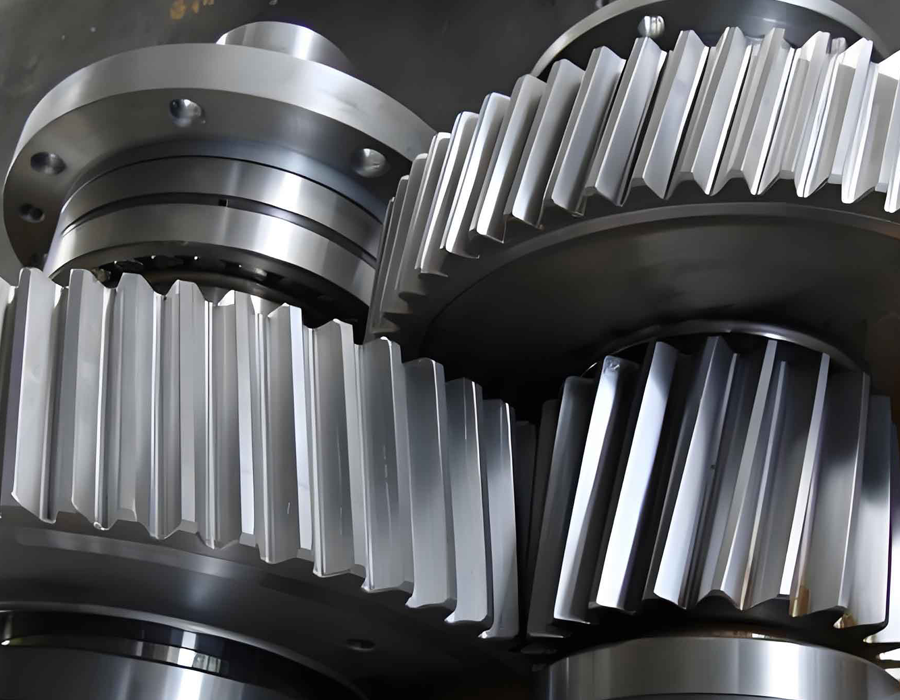
1. Introduction to Gear Wear Resistance
Definition of gear wear resistance
Gear wear resistance refers to a gear’s ability to withstand the gradual degradation of its teeth surfaces under operational stress, friction, and contact fatigue. Essentially, it’s a measure of how long your gears can keep spinning without the dreaded performance drop-off that triggers emergency maintenance.
Importance in mechanical engineering
In high-precision mechanical systems, even minor tooth wear can cascade into severe efficiency losses, increased noise, and ultimately catastrophic failure. For mechanical engineers and purchasing specialists, understanding gear wear resistance is like having a sixth sense—it allows for smarter material choices, more reliable component sourcing, and longer operational lifetimes.
Overview of industrial applications
From heavy-duty mining equipment to automotive transmissions, aerospace actuators, and industrial robots, gears are the unsung workhorses of machinery. Gear wear resistance is a critical metric that informs the design, maintenance scheduling, and lifecycle cost analysis in industries where downtime is measured in tens of thousands per hour.
2. Types of Gear Wear
Abrasive wear
This occurs when hard contaminants or misaligned surfaces grind against the gear teeth, like sandpaper on steel. Over time, the microscopic scoring accumulates and reduces tooth thickness, eventually jeopardizing load-bearing capacity.
Adhesive wear
When gear surfaces mate under high pressure, micro-adhesions can form, pulling away material from one surface and depositing it on another. Think of it as metal sticking to metal under stress, leaving behind a trail of surface scarring.
Fatigue wear
Repeated cyclic loading causes tiny cracks to propagate beneath the surface, ultimately spalling material from the teeth. Fatigue wear is often sneaky, invisible to the naked eye until a catastrophic chip or break occurs.
3. Factors Affecting Gear Wear Resistance
Material composition and hardness
Harder materials generally resist wear better, but overly brittle alloys can crack under impact loads. Engineers must balance toughness with hardness, often leveraging alloying elements like chromium, nickel, and molybdenum to optimize performance.
Lubrication and operating conditions
Lubricants form a protective film, reducing metal-to-metal contact, heat generation, and micro-welding of asperities. High temperatures or contaminated oil can degrade the film, accelerating wear.
Load and speed influences
Higher torque and rotational speeds intensify contact stress and heat, directly impacting the rate of wear. Gears operating under fluctuating loads are especially susceptible to fatigue-induced damage.
4. Common Materials Used for Gears
Steel alloys
Steel, often carburized or nitrided, remains the gold standard due to its balance of strength, wear resistance, and machinability.
Cast iron and bronze
Cast iron offers damping properties, reducing vibration-induced wear, while bronze is prized for sliding contact and corrosion resistance.
Surface-treated or coated materials
Advanced coatings like DLC (diamond-like carbon) or PVD (physical vapor deposition) dramatically enhance surface hardness and wear resistance, extending service intervals.
5. ISO Standards for Gear Testing
Overview of relevant ISO standards
ISO 6336 series governs calculation of load capacity, while ISO 14635 provides testing methodologies for gear durability, helping engineers benchmark wear resistance in a globally recognized format.
Standardized testing procedures
Standards outline test rig configurations, load cycles, speed profiles, and environmental conditions to ensure repeatable and comparable results.
International compliance and adoption
Adherence to ISO standards ensures that gears sourced from different regions meet minimum performance criteria, reducing uncertainty in global supply chains.
6. Gear Testing Methods
Laboratory wear testing
Controlled lab tests simulate operating loads and conditions, often using single-pinion test rigs to accelerate wear and capture quantitative data on tooth degradation.
Field testing and monitoring
On-site testing monitors gears in real operational settings, capturing real-world wear patterns and lubricant effectiveness.
Accelerated life testing
By amplifying load and speed, accelerated tests predict long-term performance within weeks instead of years, offering engineers a glimpse into a gear’s expected lifecycle.
7. Pinion and Gear Pair Testing
Test rig setup and instrumentation
Sophisticated rigs employ torque transducers, thermocouples, and vibration sensors to capture minute changes in gear performance under controlled conditions.
Load application and rotation cycles
Testing replicates operational stress, often with dynamic loading patterns to mimic shock loads and cyclical fatigue conditions.
Data recording and observation techniques
High-resolution imaging and surface profilometry allow for continuous monitoring of wear progression, enabling precise correlation between operational variables and wear outcomes.
8. Measurement of Wear
Surface profile analysis
3D scanning and profilometers quantify changes in tooth geometry, highlighting localized wear zones and pitch deviations.
Weight loss and dimensional changes
Mass loss measurements provide a macro-level indication of wear, while caliper and micrometer readings track precise dimensional shifts.
Microscopic inspection methods
SEM (Scanning Electron Microscopy) reveals micro-cracks, pitting, and adhesion marks that are invisible to the naked eye but critical for predicting fatigue failures.
9. Lubrication Role in Wear Resistance
Types of lubricants and additives
Synthetic oils, EP (extreme pressure) additives, and anti-oxidants all contribute to reducing surface fatigue and prolonging gear life.
Lubrication intervals and maintenance
Regular oil changes and timely inspections prevent contamination-induced wear, a factor often underestimated in procurement planning.
Effect of lubrication on testing outcomes
Incorrect or insufficient lubrication can invalidate wear tests, emphasizing the importance of mimicking real operational conditions in a lab setup.
10. Interpretation of Wear Test Results
Comparing against ISO limits
Results are benchmarked against ISO allowable wear criteria, identifying whether a gear meets industry minimums or demands redesign.
Identifying wear patterns and failure modes
Spotting pitting, scuffing, or surface fatigue early allows engineers to pinpoint design weaknesses or material deficiencies.
Statistical analysis of test data
Using regression analysis and Weibull distributions, engineers quantify reliability and forecast expected operational lifespan under varied conditions.
11. Common Challenges in Gear Wear Testing
Environmental and operational variability
Real-world conditions—temperature swings, contamination, misalignment—are hard to replicate accurately in a lab setting.
Equipment calibration and accuracy
Sensor drift, load inaccuracies, and timing discrepancies can skew results, requiring rigorous calibration protocols.
Reproducing real-world conditions
Accelerated tests may exaggerate certain wear modes while underrepresenting others, necessitating a combination of lab and field testing.
12. Case Studies of Gear Wear Performance
High-load industrial gears
Large planetary gears in steel mills often face abrasive dust and shock loading; testing reveals that optimized alloy selection and surface hardening mitigate early failure.
Automotive transmission gears
Passenger vehicles demand quiet operation and longevity; real-world wear studies show that micro-pitting is the dominant failure mode in high-torque variants.
Heavy machinery applications
Excavators and cranes face both torque spikes and contamination; case studies indicate that advanced coatings significantly reduce maintenance downtime.
13. Predictive Models for Gear Wear
Empirical formulas and regression models
Traditional models use tooth geometry, load, and hardness to estimate wear rates, often guiding initial material selection.
Finite element analysis simulations
FEM models simulate stress distribution, contact pressures, and micro-deformation to forecast potential failure points under complex load scenarios.
Machine learning approaches
AI-driven predictive models leverage historical wear data to anticipate failures and optimize maintenance schedules with impressive accuracy.
14. Maintenance Strategies Based on Wear Data
Condition-based maintenance
Sensors track vibration, temperature, and lubrication quality to schedule interventions only when necessary, reducing costs.
Scheduled replacements
For critical applications, proactive gear replacement prevents catastrophic failures, balancing downtime and operational safety.
Predictive monitoring systems
Integrating IoT-enabled monitoring with predictive analytics allows real-time assessment of gear wear resistance and alerts engineers before thresholds are breached.
15. Emerging Trends in Gear Wear Resistance
Advanced materials and coatings
Ceramic-reinforced alloys, DLC coatings, and hybrid composites are reshaping the landscape of wear-resistant gears.
Smart sensors and real-time monitoring
Embedded sensors now provide continuous feedback on torque, heat, and micro-deformation, enabling predictive interventions.
Industry 4.0 integration in testing
Digital twins and cloud-based analytics are increasingly used to simulate gear wear resistance and streamline procurement and maintenance decisions.
16. Conclusion and Best Practices
Summary of key testing methods
From laboratory rigs to field monitoring, a combination of methods ensures comprehensive assessment of gear wear resistance.
Guidelines for interpreting ISO standards
Understanding ISO thresholds and tolerances allows engineers to evaluate gear reliability accurately and ensure compliance across suppliers.
Recommendations for engineers and manufacturers
Select materials thoughtfully, apply proper surface treatments, maintain robust lubrication practices, and leverage modern monitoring technologies to maximize gear lifespan and operational efficiency.