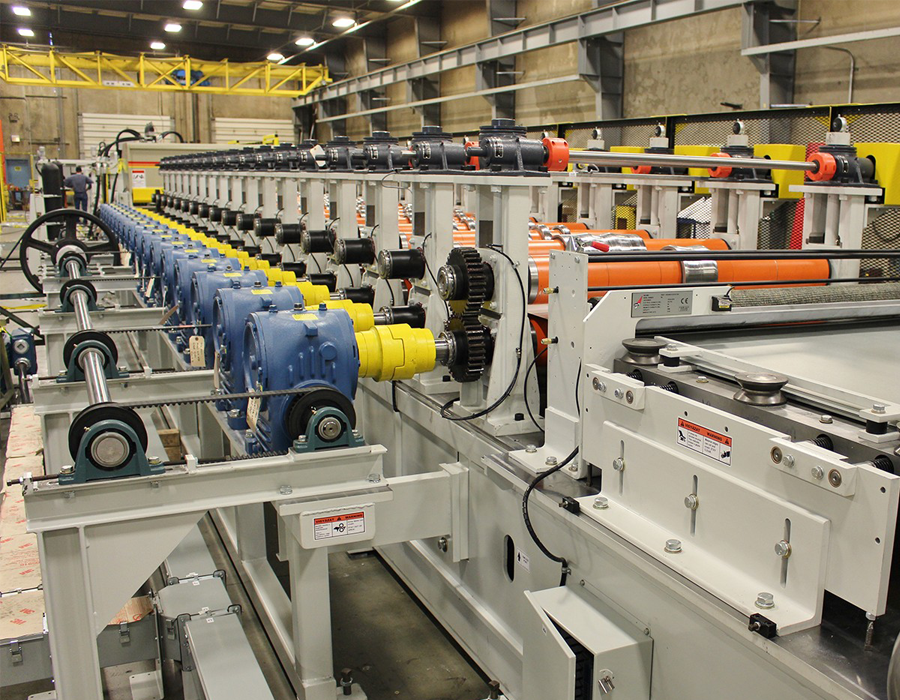
A comprehensive guide to industrial gears, their functions, common types, and applications, helping engineers and businesses choose the best gear solutions.
1. Definition and Functions of Industrial Gears
Industrial gears are essential components in mechanical transmission systems, used to transfer power from one shaft to another, and to adjust speed, torque, or rotation direction through gear ratios. Depending on engineering requirements, gears provide power transmission, load distribution, and precise motion control across a variety of industrial equipment.
Main Functions of Industrial Gears:
- Power Transmission: Transfer motion efficiently from input to output shafts.
- Speed and Torque Adjustment: Achieve precise control of output speed and torque using gear ratios.
- Direction Change: Modify rotation axis or motion direction via gear arrangements (e.g., spur, helical, bevel gears).
- Mechanical Synchronization: Ensure precise synchronization of multiple mechanical components.
The design and manufacturing quality of industrial gears directly affect equipment efficiency, reliability, and service life.
2. Common Types of Gears
Industrial gears are classified by tooth profile, shaft arrangement, and application. Here are the most common types:
1. Spur Gears
- Features: Teeth parallel to the shaft; simple structure and low manufacturing cost.
- Applications: Gearboxes, machine tools, conveyors.
- Advantages: Stable load capacity, high transmission efficiency.
- Limitations: Noisy at high speeds.
2. Helical Gears
- Features: Teeth cut at an angle for smoother meshing.
- Applications: Automotive transmissions, high-precision industrial machinery.
- Advantages: Smooth operation, low noise, high load capacity.
- Limitations: Generates axial thrust requiring extra support.
3. Bevel Gears
- Features: Cone-shaped gears that can change rotation direction.
- Applications: Machine tools, vehicle differentials.
- Advantages: Compact design, allows 90° transmission.
- Limitations: Complex manufacturing and precise tolerances required.
4. Worm Gears
- Features: Screw-shaped worm engages a wheel; high reduction ratios.
- Applications: Lifts, conveyors, precision reducers.
- Advantages: Large reduction ratio, self-locking ability.
- Limitations: Lower efficiency and higher heat generation.
5. Planetary Gears
- Features: Composed of sun gear, planet gears, and ring gear with multiple contact points.
- Applications: Robotics, automation, precision reducers.
- Advantages: Smooth transmission, high load capacity, compact design.
- Limitations: Complex design and higher manufacturing cost.
6. Internal Gears
- Features: Teeth located on the inner surface; usually paired with planet gears.
- Applications: Planetary gear systems, precision machinery.
- Advantages: High transmission efficiency, stable meshing.
- Limitations: Complex machining and high precision requirements.
3. Industrial Gear Materials
Material selection is key to gear performance. Common industrial gear materials include:
| Material | Features | Typical Applications |
|---|---|---|
| Carbon Steel | High strength, good machinability | General gears, reducers |
| Alloy Steel | Excellent wear resistance and strength | High-load and precision gears |
| Cast Iron | High rigidity, low cost | Medium-low speed machinery |
| Bronze & Copper Alloys | Wear-resistant, corrosion-resistant | Worm gears, precision instruments |
| Nylon & Engineering Plastics | Self-lubricating, lightweight | Small drives, low-noise applications |
Material choice depends on speed, load, operating environment, and cost considerations.
4. Applications of Industrial Gears
Industrial gears are used in virtually all mechanical transmission systems:
- Metallurgy & Mining Equipment: Gear-driven rolling mills, crushers, conveyors.
- Manufacturing Machinery: Machine tools, CNC equipment, production lines.
- Automotive & Transportation: Car transmissions, drive axles, railway engines.
- Energy Equipment: Wind turbines, hydroelectric plants, steam turbines.
- Chemical & Pharmaceutical Machinery: Mixers, filters, packaging machines.
- Robotics & Automation: Planetary reducers for high-precision motion control.
- Logistics & Material Handling: Conveyors, hoists, elevators.
Proper selection of gear type, material, and precision significantly improves equipment efficiency, stability, and service life.
5. Key Design Considerations for Industrial Gears
Effective gear design requires consideration of:
- Module and Number of Teeth: Determines gear ratio and load capacity.
- Material and Heat Treatment: Enhances strength and wear resistance.
- Meshing Precision: Ensures smooth operation and reduces noise/vibration.
- Lubrication Method: Oil or grease reduces wear and heat buildup.
- Load Analysis: Accounts for static, dynamic, and impact loads.
- Environmental Adaptation: Corrosion resistance, high/low temperature performance.
Finite element analysis (FEA) and gear transmission theory help optimize gear life and efficiency.
6. Gear Maintenance and Care
Proper maintenance ensures long-term stable operation:
- Lubrication Check: Regularly replenish or replace lubricant.
- Wear Monitoring: Inspect gear teeth and backlash.
- Vibration Analysis: Detect potential gear faults early.
- Temperature Control: Avoid deformation or failure due to overheating.
- Cleanliness: Prevent dust and debris in meshing zones.
Scientific maintenance prolongs gear life and reduces downtime, increasing production efficiency.
7. Conclusion
Industrial gears are core components in modern machinery, enabling power transmission, speed and torque adjustment, directional changes, and precise synchronization. Different gear types—spur, helical, bevel, worm, planetary, and internal—offer distinct advantages and applications.
Selecting the right gear type, material, and design parameters, coupled with proper maintenance, can greatly improve equipment performance and production efficiency. In modern industrial automation, smart manufacturing, and high-end machinery, industrial gears remain indispensable for precision and reliability.