Methods for Enhancing Gear Meshing Precision
1. Introduction to Gear Meshing Precision
1.1 Definition of Gear Meshing Precision
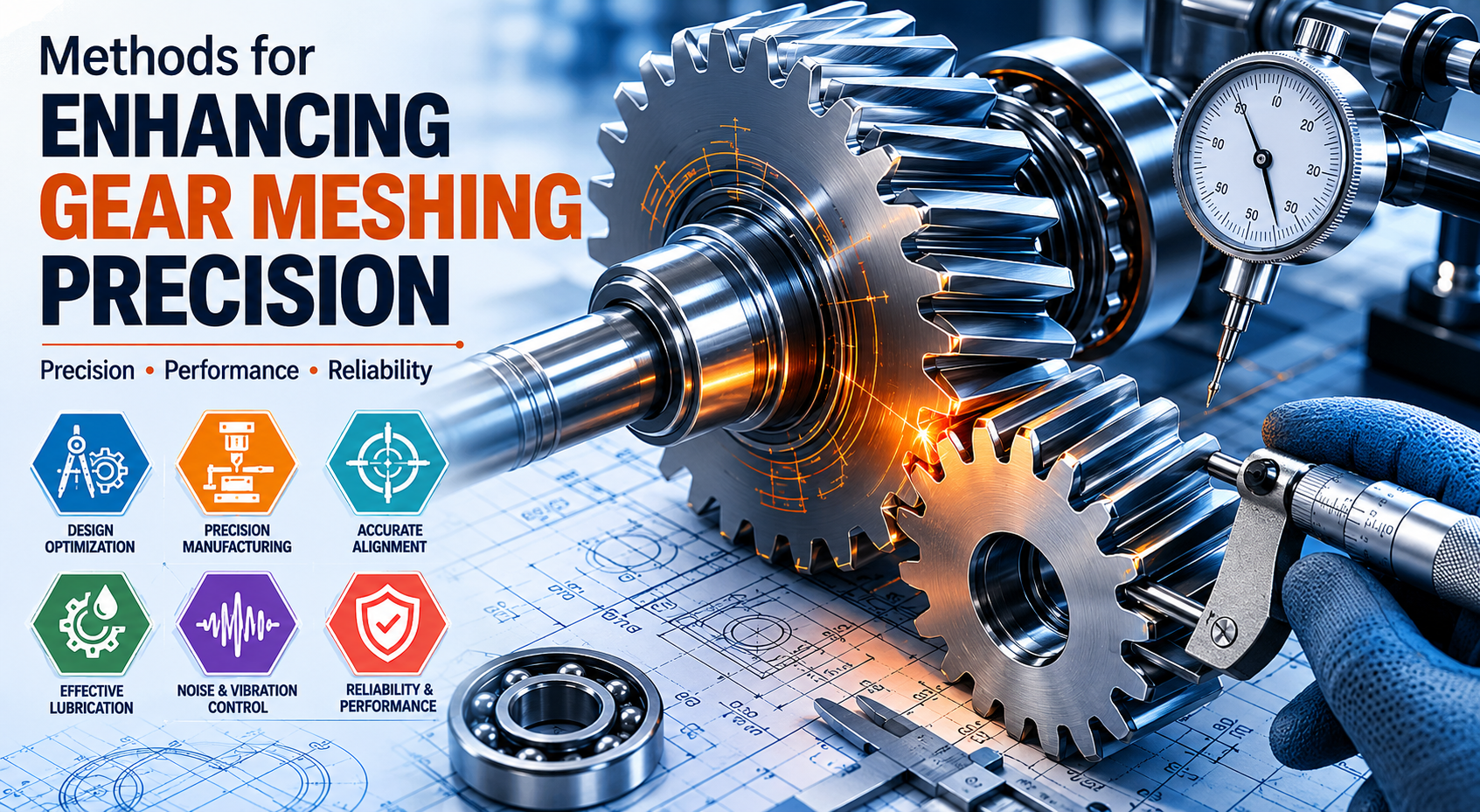
Gear meshing precision refers to the meticulous alignment and interaction of gear teeth as they engage, ensuring the transmission of motion and power with minimal backlash, vibration, or noise. It is not merely about gears fitting together; it represents the sophisticated balance of geometry, tolerances, contact patterns, and operational stability required to sustain efficient power transmission across the entire meshing cycle.
1.2 Importance in Mechanical Engineering Systems
In modern mechanical engineering systems, precision is absolutely critical. Even microscopic deviations in gear alignment can trigger accelerated wear, thermal buildup, vibration propagation, and severe efficiency losses. Industries such as automotive manufacturing, industrial automation, aerospace engineering, and robotics depend heavily on precision gear systems to maintain operational reliability and performance consistency.
For additional technical reference on gear systems, visit Wikipedia – Gear.
1.3 Relationship Between Precision and Transmission Performance
Transmission performance depends heavily on the ability of gear teeth to maintain stable and predictable contact. Higher precision reduces transmission error, lowers acoustic emissions, minimizes energy loss, and enhances torque consistency. A properly optimized gear system operates smoothly under varying load conditions while maintaining long-term durability.
2. Fundamentals of Gear Meshing Mechanics
2.1 Gear Tooth Contact Principles
Gear meshing fundamentally revolves around controlled tooth contact. The contact surfaces must engage progressively and distribute forces evenly throughout the mesh cycle. Involute tooth geometry dominates industrial applications because it preserves constant angular velocity ratios despite slight variations in center distance.
Learn more about involute profiles from Wikipedia – Involute Gear.
2.2 Load Distribution During Meshing
Uniform load distribution is essential for reducing localized stress concentrations and preventing premature fatigue failure. Uneven force distribution creates edge loading, increases vibration, and accelerates wear. Engineers often use micro-geometry corrections to improve load-sharing behavior under dynamic operational conditions.
2.3 Factors Affecting Contact Ratio
The contact ratio defines the average number of teeth simultaneously engaged during operation. Factors such as pressure angle, tooth depth, helix angle, module selection, and center distance directly affect this ratio. A higher contact ratio generally improves smoothness and reduces vibration.
3. Types of Gears and Their Meshing Characteristics
3.1 Spur Gear Meshing Behavior
Spur gears are widely used because of their simplicity and manufacturing efficiency. Their straight teeth engage abruptly, which often produces higher noise levels compared to other gear types. Precision manufacturing is particularly important for spur gears because even small spacing deviations can create noticeable operational instability.
3.2 Helical Gear Contact Dynamics
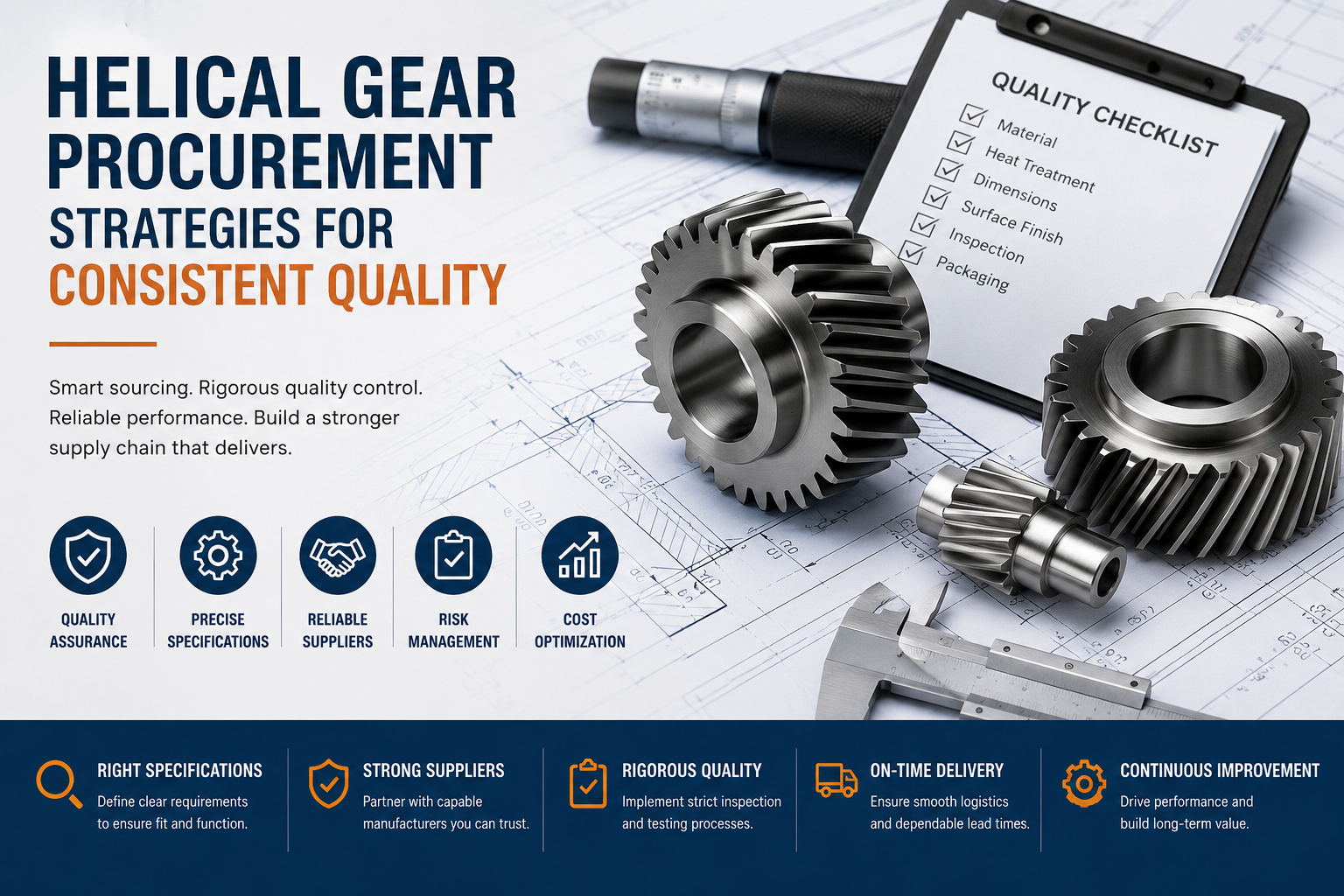
Helical gears utilize angled teeth that engage gradually, creating smoother motion transfer and quieter operation. The overlapping tooth engagement increases contact ratio and distributes load more evenly. However, the axial thrust generated by helical gears requires precise bearing support and alignment control.
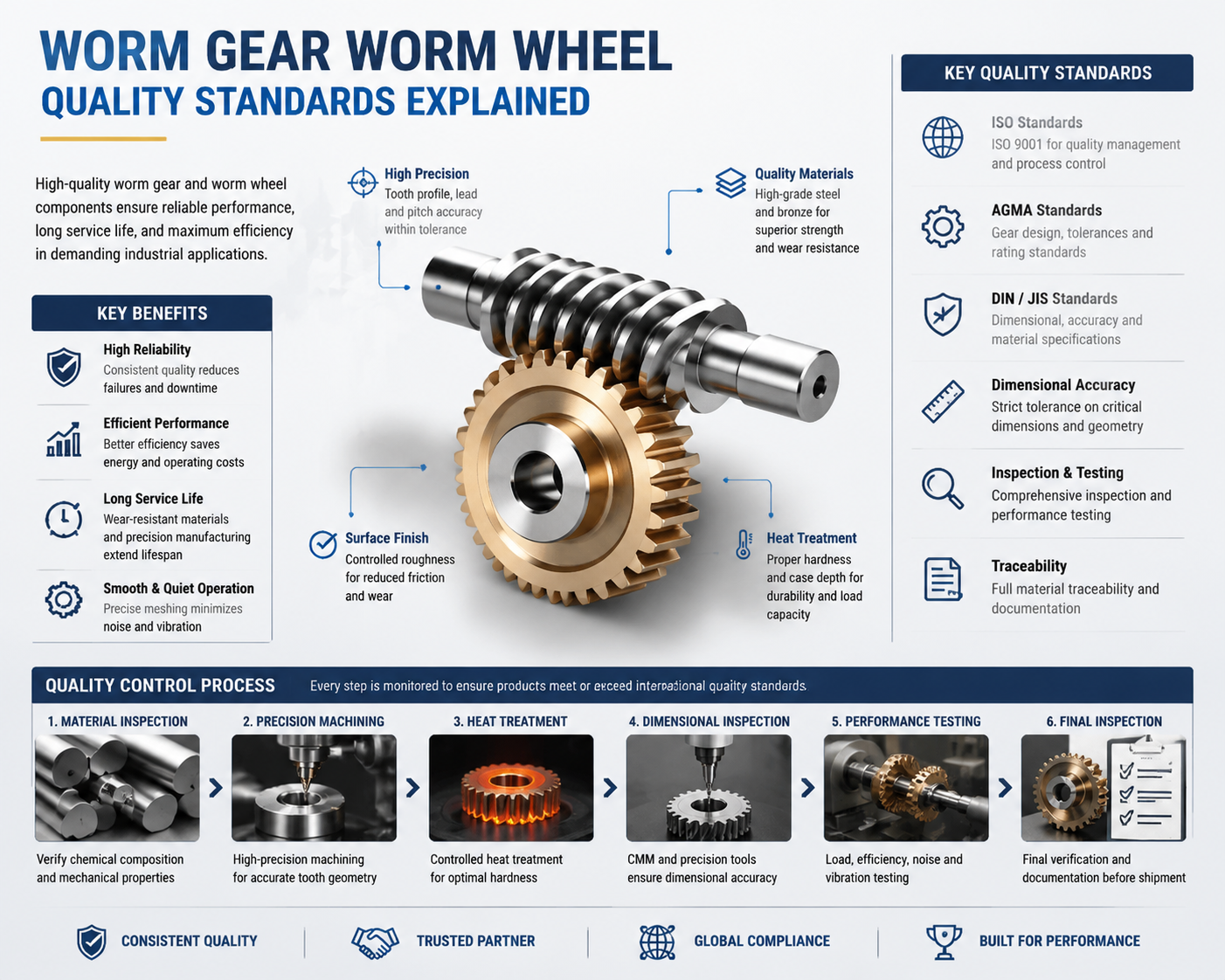
3.3 Bevel and Worm Gear Precision Considerations
Bevel and worm gears are essential for applications requiring directional power transfer. Worm gear systems are highly sensitive to alignment accuracy because their sliding contact characteristics generate considerable friction and heat. Precision machining and lubrication are indispensable for maintaining efficiency.
4. Key Causes of Poor Gear Meshing Accuracy
4.1 Manufacturing Tolerances and Deviations
Manufacturing inaccuracies such as pitch variation, profile errors, and runout deviations significantly affect meshing precision. Maintaining tight tolerances through advanced machining and inspection processes is critical for producing reliable gear systems.
4.2 Shaft Misalignment and Deflection
Shaft deflection caused by operational loading alters tooth contact patterns and introduces uneven stress distribution. Misalignment can stem from improper assembly, housing distortion, or inadequate bearing support.
4.3 Thermal Expansion and Operational Distortion
Thermal growth changes gear dimensions and affects backlash and contact conditions. Uneven temperature distribution can distort tooth geometry, creating operational instability during prolonged high-load applications.
5. Gear Tooth Profile Optimization
5.1 Involute Profile Accuracy Enhancement
Precision grinding and advanced CNC finishing processes improve involute profile accuracy and reduce transmission error. Accurate involute geometry ensures smooth power transfer and consistent velocity ratios throughout operation.
5.2 Profile Modification Techniques
Profile modification methods such as lead correction, tip relief, and root relief compensate for operational deflections and thermal effects. These modifications reduce stress concentrations and improve overall meshing stability.
5.3 Tooth Crowning and Tip Relief Methods
Tooth crowning creates a slightly convex tooth surface that minimizes edge contact during misalignment. Tip relief reduces impact loading during engagement, lowering vibration and acoustic emissions.
6. Precision Optimization Through Material Selection
6.1 High-Strength Alloy Materials
Alloy steels containing nickel, chromium, and molybdenum provide exceptional fatigue resistance and structural integrity under heavy operational loads. Material selection directly influences wear resistance and dimensional stability.
6.2 Surface Hardness and Wear Resistance
Surface hardening methods improve tooth durability by increasing resistance to pitting, scuffing, and abrasive wear. Hardened surfaces preserve tooth geometry throughout prolonged service periods.
6.3 Material Stability Under Dynamic Loads
Dynamic loading conditions impose cyclical stresses on gear teeth. Materials must maintain elasticity and toughness while resisting crack initiation and propagation.
7. Manufacturing Techniques for High-Precision Gear Meshing
7.1 Precision Hobbing and Shaping
Gear hobbing and shaping remain fundamental production methods for industrial gears. Precision depends on cutter geometry, machine rigidity, feed control, and tool calibration.
7.2 Gear Grinding and Honing Processes
Grinding and honing remove microscopic imperfections and improve tooth surface quality. These finishing methods significantly reduce friction and improve operational smoothness.
7.3 CNC Machining for Tight Tolerances
Advanced CNC machining enables micron-level dimensional control and repeatability. Integrated inspection systems further enhance manufacturing consistency and reduce production variability.
8. Heat Treatment Methods and Their Impact
8.1 Carburizing and Quenching Processes
Carburizing enriches the gear surface with carbon to create a hard wear-resistant exterior while preserving a ductile core. Quenching solidifies this hardened structure for improved fatigue performance.
8.2 Distortion Control After Heat Treatment
Controlled cooling procedures and stress-relief operations minimize distortion following heat treatment. Post-treatment grinding restores dimensional accuracy where necessary.
8.3 Surface Hardening for Meshing Stability
Techniques such as nitriding and induction hardening increase resistance to surface fatigue and maintain stable tooth geometry under severe operating conditions.
9. Gear Alignment and Assembly Precision
9.1 Shaft Alignment Techniques
Laser alignment systems and precision dial indicators help engineers achieve accurate shaft positioning, minimizing vibration and uneven load distribution.
9.2 Bearing Positioning and Housing Accuracy
Bearing placement significantly influences shaft rigidity and alignment accuracy. Proper housing tolerances help maintain consistent meshing conditions.
9.3 Assembly Procedures for Precision Optimization
Controlled assembly procedures ensure correct preload settings, backlash adjustment, and contact pattern verification, all of which are essential for operational reliability.
10. Lubrication Strategies for Improved Gear Meshing
10.1 Lubricant Selection Criteria
Lubricant viscosity, additive composition, oxidation resistance, and thermal stability all influence gear performance. Synthetic lubricants are commonly preferred for demanding applications.
10.2 Effects of Lubrication on Friction Reduction
Proper lubrication minimizes direct metal contact, reducing friction, wear, and thermal generation while improving efficiency and operational smoothness.
10.3 Advanced Lubrication Monitoring Systems
Modern monitoring systems utilize sensors to track oil condition, contamination levels, and temperature in real time, enabling predictive maintenance strategies.
11. Noise and Vibration Reduction in Gear Meshing
11.1 Sources of Gear Meshing Noise
Gear noise originates from tooth impact, transmission error, resonance, and surface irregularities. High-speed systems are particularly susceptible to vibration-induced noise amplification.
11.2 Vibration Damping Technologies
Damping systems such as elastomeric couplings, vibration isolators, and composite housing materials absorb vibratory energy and reduce resonance propagation.
11.3 NVH Optimization in High-Speed Applications
Noise, vibration, and harshness optimization is critical for electric vehicles, aerospace systems, and precision robotics where smooth operation and low acoustic signatures are required.
12. Surface Finish and Contact Quality Improvement
12.1 Importance of Surface Roughness Control
Surface roughness directly affects lubrication film formation and frictional behavior. Smoother surfaces reduce wear and improve operational efficiency.
12.2 Superfinishing and Polishing Techniques
Superfinishing methods remove microscopic asperities from gear tooth surfaces, producing ultra-smooth finishes that enhance fatigue resistance and reduce friction.
12.3 Surface Coatings for Precision Enhancement
Advanced coatings such as DLC and titanium nitride improve wear resistance, reduce friction, and extend service life in demanding applications.
13. Precision Optimization Through Gear Design
13.1 Optimizing Gear Geometry Parameters
Optimized tooth geometry balances load capacity, efficiency, noise reduction, and manufacturability. Computational modeling assists engineers in refining design parameters.
13.2 Backlash Control and Compensation
Backlash must be carefully controlled to accommodate thermal expansion while preventing excessive vibration and positional inaccuracies.
13.3 Contact Pattern Optimization
Uniform contact patterns distribute operational loads evenly and minimize localized stress concentrations that lead to premature fatigue.
14. Advanced Simulation and Analytical Techniques
14.1 Finite Element Analysis in Gear Meshing
Finite Element Analysis allows engineers to evaluate stress distribution, deformation behavior, and contact pressure under realistic loading conditions.
Additional engineering simulation resources are available from ASME.
14.2 Contact Stress Simulation Methods
Advanced contact simulations incorporate thermal behavior, lubrication effects, and dynamic loading to predict fatigue performance accurately.
14.3 Digital Twin Applications in Gear Systems
Digital twin systems create virtual replicas of physical gearboxes, enabling real-time monitoring and predictive maintenance through continuous sensor integration.
15. Measurement and Inspection Methods
15.1 Coordinate Measuring Machine (CMM) Analysis
Coordinate Measuring Machines provide high-precision dimensional verification of tooth geometry, lead accuracy, and pitch consistency.
15.2 Gear Tooth Error Detection Techniques
Laser metrology, optical scanning, and rolling tests identify profile deviations and manufacturing defects before gears enter service.
15.3 Real-Time Monitoring and Predictive Diagnostics
Real-time diagnostic systems analyze vibration signatures, thermal behavior, and acoustic emissions to predict component degradation proactively.
16. Impact of Operating Conditions on Meshing Precision
16.1 Load Variations and Dynamic Forces
Variable loading conditions influence tooth deflection, lubrication stability, and contact distribution. Sudden torque spikes can accelerate fatigue damage.
16.2 Temperature Effects on Gear Accuracy
Temperature fluctuations alter material dimensions and lubricant characteristics, affecting backlash, alignment, and meshing precision.
16.3 High-Speed and Heavy-Duty Performance Challenges
High rotational speeds intensify centrifugal forces and vibration, while heavy-duty applications generate substantial stress and thermal loads.
17. Common Gear Meshing Failures and Solutions
17.1 Pitting and Surface Fatigue Issues
Pitting occurs due to repeated contact stress cycles that initiate microscopic surface cracks. Improved lubrication and surface hardening reduce fatigue risk.
17.2 Tooth Breakage and Wear Mechanisms
Tooth failure can result from overload conditions, contamination, material defects, or severe misalignment during operation.
17.3 Corrective Maintenance and Repair Strategies
Corrective maintenance includes gear regrinding, alignment correction, bearing replacement, and lubrication system optimization.
18. Industry Applications of Precision Gear Meshing
18.1 Automotive Transmission Systems
Automotive transmissions require precise gear meshing to achieve smooth shifting, reduced noise, and improved fuel efficiency.
18.2 Aerospace and Defense Applications
Aerospace gear systems operate under extreme conditions and require exceptionally high reliability and dimensional precision.
Additional aerospace engineering resources can be found at NASA.
18.3 Industrial Machinery and Robotics
Robotic systems and industrial automation equipment depend heavily on precision gearing to maintain repeatable motion control and positioning accuracy.
19. Emerging Technologies in Gear Precision Optimization
19.1 Smart Manufacturing and AI Integration
Artificial intelligence and smart manufacturing systems enable adaptive machining, predictive quality control, and automated defect detection.
19.2 Additive Manufacturing for Precision Gears
Additive manufacturing enables complex lightweight gear geometries and rapid prototyping capabilities for specialized applications.
19.3 Sensor-Based Condition Monitoring Systems
Embedded sensors continuously monitor operational parameters including vibration, temperature, and lubrication quality to optimize maintenance schedules.
20. Best Practices for Long-Term Gear Meshing Performance
20.1 Preventive Maintenance Programs
Routine inspections, lubrication analysis, and alignment verification help maximize gearbox reliability and operational lifespan.
20.2 Continuous Precision Monitoring
Continuous monitoring systems identify performance degradation early, allowing engineers to intervene before failures occur.
20.3 Lifecycle Optimization Strategies
Lifecycle optimization integrates predictive maintenance, material upgrades, operational analysis, and performance tracking to maximize long-term value.
21. Conclusion
21.1 Summary of Precision Enhancement Methods
Enhancing gear meshing precision requires coordinated optimization of materials, manufacturing methods, lubrication systems, alignment procedures, and monitoring technologies.
21.2 Future Trends in Gear Meshing Technology
Future innovations will likely focus on AI-driven optimization, digital twins, advanced composite materials, and autonomous manufacturing systems.
21.3 Final Recommendations for Mechanical Engineers
Mechanical engineers and procurement specialists should prioritize precision-focused design methodologies, strict quality assurance standards, and predictive maintenance technologies to maximize operational reliability and efficiency throughout the entire lifecycle of gearbox systems.
For further technical standards and industrial references, visit AGMA.