Table of Contents
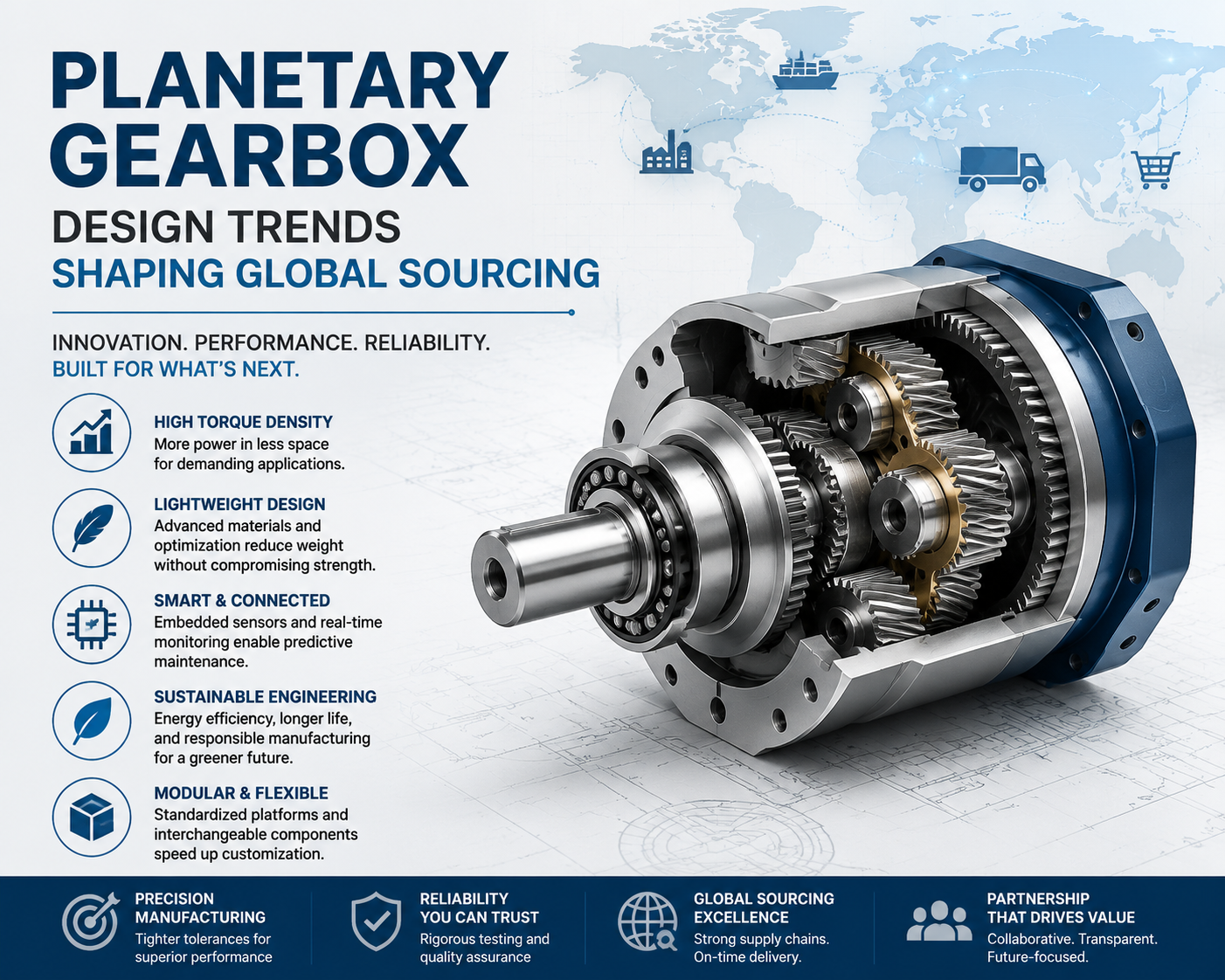
Planetary Gearbox Design Trends Shaping Global Sourcing
1. Introduction to Planetary Gearbox Evolution in Global Manufacturing
1.1 Why Planetary Gearboxes Remain Critical Across Industries
Planetary gearboxes have carved a niche as the backbone of high-performance mechanical systems, spanning robotics, wind turbines, automotive drivetrains, and industrial automation. Their coaxial arrangement delivers an impressive torque-to-weight ratio that traditional parallel-shaft gearboxes simply can’t match, making them indispensable for applications where space is tight but performance cannot be compromised. For procurement teams, this translates into a high-stakes balancing act: securing gearboxes that meet stringent performance metrics while navigating global supply chain complexities. Learn more about planetary gear systems.
1.2 How Global Sourcing Priorities Have Changed
Procurement priorities have evolved from merely sourcing the lowest-cost components to strategically partnering with suppliers that deliver reliability, compliance, and innovation. Global OEMs now scrutinize suppliers’ ability to adhere to ISO standards, implement lean manufacturing principles, and adapt to fluctuating raw material costs. In other words, the procurement lens has shifted from transactional to holistic, emphasizing long-term performance and risk mitigation across international supply chains. Relevant ISO guidelines can be found at ISO Standards.
1.3 The Relationship Between Design Innovation and Procurement Decisions
Every tweak in planetary gearbox design—from tooth geometry to material microstructure—has ripple effects on sourcing decisions. When engineers innovate with advanced alloys or novel tooth profiles to reduce backlash or enhance torque density, procurement must evaluate the availability, manufacturability, and cost implications of these design upgrades. Design choices and procurement strategies are no longer siloed—they operate in tandem to ensure the end product meets both technical and commercial objectives.
2. Understanding Planetary Gearbox Architecture and Core Components
2.1 Sun Gear, Planet Gears, and Ring Gear Functions
The sun gear, centrally positioned, transmits rotational motion to surrounding planet gears, which in turn revolve within a ring gear’s outer confines. This triad is critical for distributing load efficiently, reducing localized wear, and maintaining synchronous motion. Each component’s geometric precision directly affects torque transmission and noise levels, making meticulous material selection and heat treatment processes essential for long-term reliability. Further reference on gear arrangements: ScienceDirect Planetary Gears.
2.2 Carrier Structure and Torque Distribution Principles
The planet carrier holds and rotates planet gears, effectively acting as a fulcrum for torque transfer. Its structural integrity dictates load distribution, vibration absorption, and thermal dissipation, which are vital for continuous-duty industrial applications. Poorly engineered carriers can induce uneven stress concentrations, leading to premature failures and costly downtime, a scenario every procurement engineer wants to avoid.
2.3 Design Variables That Influence Performance
Key design variables include module size, tooth profile, backlash allowance, and gear ratios. Material hardness and surface finishing add another layer of complexity. Even subtle adjustments in gear geometry or lubrication channels can dramatically improve efficiency, reduce noise, and extend service life, thereby directly impacting supplier selection and total cost of ownership.
3. Global Demand Drivers Reshaping Planetary Gearbox Design
3.1 Electrification and Energy Efficiency Requirements
The push toward electrification in automotive and industrial sectors is driving planetary gearbox designs toward higher efficiency, reduced friction, and lighter mass. Procurement teams now factor in energy losses and efficiency curves during supplier evaluations, as even minor improvements in geartrain efficiency can translate into significant cost savings over the operational lifecycle. Read more about energy-efficient designs at US Department of Energy.
3.2 Industrial Automation and Smart Factory Expansion
With factories becoming increasingly automated, planetary gearboxes are expected to perform reliably under variable loads and frequent start-stop cycles. Smart manufacturing requires gearboxes that integrate seamlessly with IoT-enabled systems, compelling procurement professionals to prioritize suppliers offering advanced diagnostics, predictive maintenance features, and rapid response support.
3.3 Regional Manufacturing Shifts and Procurement Trends
As manufacturing hubs shift toward Asia-Pacific, Latin America, and localized North American operations, global sourcing strategies must adapt. Regional differences in production capabilities, labor costs, and regulatory compliance affect supplier selection and contract negotiation. Savvy procurement teams leverage these trends to ensure supply security without compromising quality or innovation.
4. Lightweight Design Strategies for Competitive Product Development
4.1 Advanced Material Selection Approaches
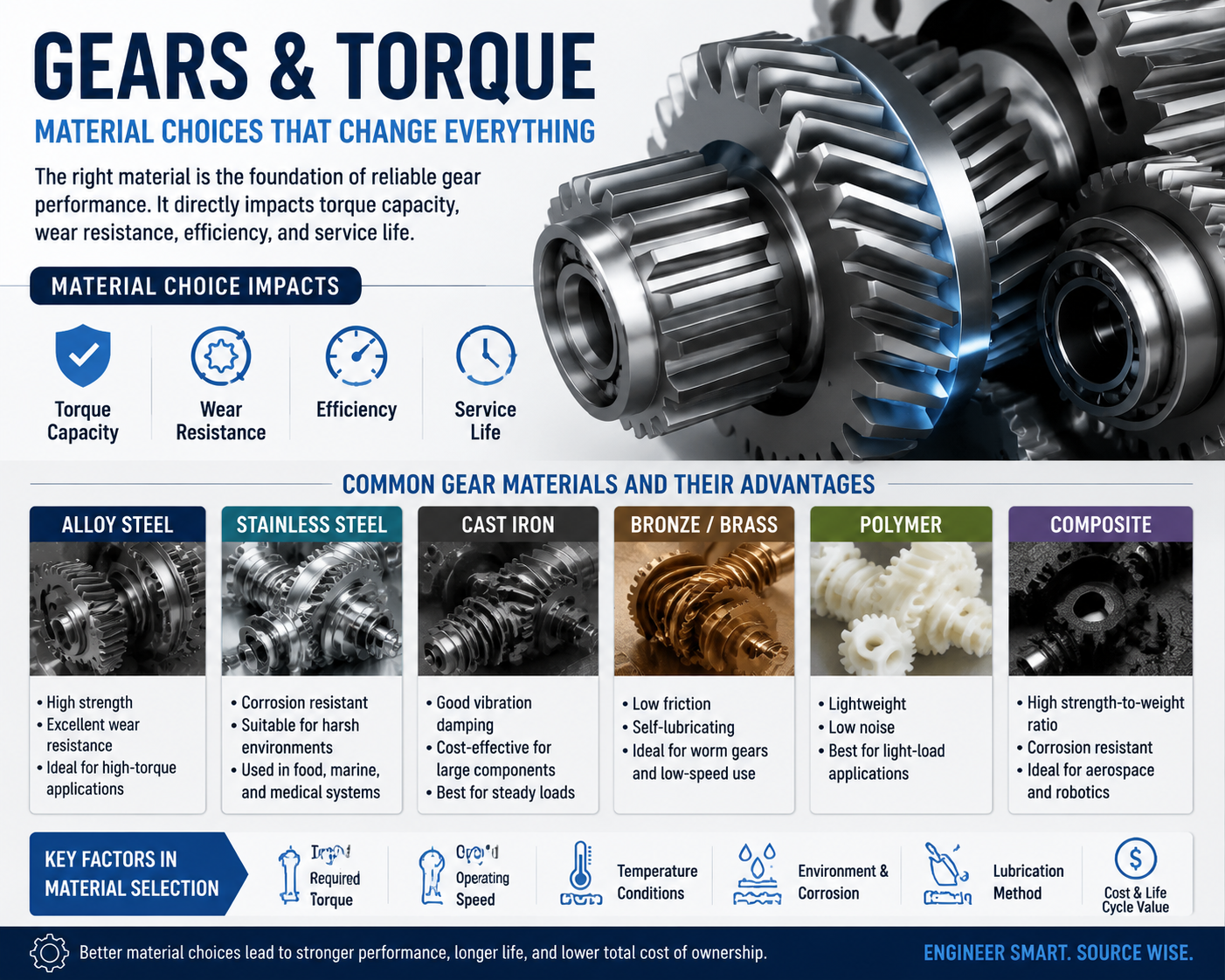
High-strength, low-weight alloys and composites are replacing traditional steels in planetary gearbox design. Materials like maraging steel, titanium alloys, and carbon-fiber reinforced polymers offer remarkable strength-to-weight ratios, reducing system mass without sacrificing durability—a critical consideration for robotic arms, aerospace actuators, and mobile machinery.
4.2 Structural Optimization for Weight Reduction
Finite element analysis (FEA) enables engineers to identify stress concentrations and optimize component geometry. Techniques such as hollowing carriers, adopting thin-walled planet gears, and reducing ring gear thickness are now mainstream, giving procurement engineers leverage to negotiate cost-effective solutions without compromising structural integrity.
4.3 Balancing Durability with Cost Targets
Reducing weight is only half the battle. Designers must balance durability with manufacturing costs, ensuring components withstand fatigue cycles, thermal expansion, and shock loads. Procurement teams often work closely with engineering to quantify lifecycle costs and select suppliers capable of delivering consistent quality at competitive prices.
5. Compact Planetary Gearbox Design for Space-Constrained Applications
5.1 Miniaturization Techniques in Modern Engineering
Miniaturization relies on precise micro-machining, advanced metallurgy, and innovative bearing arrangements. Small-scale planetary gearboxes are now capable of delivering impressive torque densities in the confines of robotic end-effectors or surgical devices, pushing procurement to assess not only cost but manufacturing precision.
5.2 Integration Challenges Across Equipment Platforms
Compact gearboxes must interface flawlessly with motors, sensors, and ancillary mechanical systems. Misalignment, coupling inefficiencies, or improper housing tolerances can cripple performance, making supplier vetting and design verification critical for avoiding integration setbacks.
5.3 Impact on Shipping and Supply Chain Efficiency
Smaller gearboxes reduce shipping costs and ease inventory management, but they also demand tighter tolerances and quality checks. Procurement must weigh logistical benefits against the potential for higher scrap rates or supplier complexity in producing micro-scale components.
6. High Torque Density as a Global Sourcing Advantage
6.1 Engineering Methods to Increase Torque Capacity
Increasing torque density involves optimizing gear tooth profiles, material hardness, and lubrication channels while minimizing energy loss. Advanced calculations such as Hertzian stress analysis and dynamic load simulations allow engineers to push torque limits without oversizing components, creating a substantial advantage for buyers seeking compact yet powerful gearbox systems.
6.2 Trade-Offs Between Size and Load Capability
Higher torque density often introduces engineering compromises including elevated bearing stress, increased thermal accumulation, and greater sensitivity to assembly alignment. Procurement teams should evaluate whether suppliers can consistently maintain these performance balances across production cycles.
6.3 Procurement Evaluation Metrics for Torque Performance
Metrics such as rated torque, peak torque, transmission efficiency, thermal stability, and operational lifespan become essential during supplier assessments. Data-backed comparisons improve sourcing decisions and reduce lifecycle ownership uncertainty.
7. Advanced Materials Driving Next-Generation Gearbox Performance
7.1 High-Strength Steel and Alloy Innovations
Maraging steels, chromium-molybdenum alloys, and case-hardened steel formulations continue redefining gearbox durability and fatigue resistance. These materials support thinner profiles and increased torque transmission while extending operational longevity. Additional material references are available at Wikipedia – Alloy Steel.
7.2 Composite and Hybrid Material Applications
Composite carriers, polymer bushings, and hybridized structural elements reduce mass while preserving mechanical integrity. Suppliers capable of maintaining process repeatability and dimensional consistency become increasingly valuable in global sourcing environments.
7.3 Surface Engineering and Wear Resistance Technologies
Advanced surface treatments such as carburizing, nitriding, shot peening, and physical vapor deposition improve wear resistance and reduce frictional losses. Procurement teams should verify process capability and inspection discipline to ensure expected lifecycle gains materialize in production environments. Additional information: ASM International.
8. Precision Manufacturing Trends Influencing Supplier Selection
8.1 High-Accuracy Machining Developments
CNC machining with ultra-fine tolerances, electrical discharge machining, and increasingly sophisticated additive manufacturing techniques allow complex planetary gearbox geometries to be produced with exceptional repeatability. Manufacturing precision directly influences efficiency, vibration behavior, and assembly consistency.
8.2 Tolerance Control and Quality Consistency
Tight tolerance management remains non-negotiable for high-performance planetary gear systems. Procurement engineers increasingly examine statistical process controls, capability indices, and quality documentation to reduce production variability and warranty exposure.
8.3 Inspection Standards for Global Procurement Teams
Modern inspection environments employ coordinate measuring machines, laser metrology, gear analyzers, and automated quality traceability systems. Supplier evaluation should confirm documented inspection procedures and internationally recognized compliance practices. For measurement standards and manufacturing references: National Institute of Standards and Technology and Engineering Toolbox – Gear Engineering.
9. Noise and Vibration Reduction as a Design Priority
9.1 Gear Tooth Profile Optimization
Tooth modifications such as crowning, tip relief, root relief, and asymmetric gear geometry reduce backlash, suppress vibration propagation, and improve transmission smoothness. These refinements minimize localized contact stress while extending operational stability. Procurement engineers increasingly evaluate suppliers based on profile grinding capability, gear finishing methods, and repeatability across production lots because minor deviations can quickly become major warranty issues in field applications. Additional technical background: Wikipedia – Gear.
9.2 Dynamic Load Management Techniques
Dynamic load control has become a defining parameter in modern planetary gearbox design. Engineers employ compliant couplings, optimized bearing arrangements, vibration isolation interfaces, and improved lubricant circulation strategies to reduce transient loading conditions and resonance amplification. Suppliers that demonstrate strong dynamic simulation capability and robust validation protocols often deliver superior long-term operational reliability.
9.3 Customer Expectations for Low-Noise Systems
Customers in medical equipment, precision automation, electric mobility, and advanced manufacturing increasingly expect near-silent operation. Planetary gearbox selection therefore extends beyond torque and efficiency metrics to include acoustic performance. Procurement teams should request measurable noise data and standardized testing methodologies to avoid downstream customer dissatisfaction.
10. Smart Planetary Gearboxes and Embedded Monitoring Technologies
10.1 Sensor Integration for Real-Time Diagnostics
Planetary gearboxes are evolving from passive mechanical assemblies into intelligent operational assets. Embedded sensors measuring vibration, torque, rotational speed, temperature, and lubrication condition enable continuous health monitoring. This shift supports proactive intervention and operational visibility while reducing unexpected maintenance events. For additional information: NASA Engineering Resources.
10.2 Predictive Maintenance Capabilities
Predictive maintenance transforms gearbox ownership economics by identifying deterioration patterns before failures occur. Through operational analytics and historical trend analysis, organizations can optimize replacement intervals and reduce emergency maintenance costs. Procurement professionals increasingly prioritize suppliers capable of delivering measurable maintenance intelligence rather than hardware alone.
10.3 Digital Connectivity in Industrial Ecosystems
Digital connectivity enables gearbox performance information to integrate into broader manufacturing systems. Communication compatibility with industrial data environments allows engineering and procurement teams to monitor equipment utilization, identify anomalies, and support data-driven sourcing decisions. Connected hardware increasingly functions as part of enterprise infrastructure rather than isolated mechanical equipment.
11. Modular Design Trends Supporting Flexible Manufacturing
11.1 Standardized Platform Engineering
Standardized gearbox platforms create scalable manufacturing ecosystems by allowing multiple variants to emerge from shared engineering architecture. Standardization reduces engineering duplication, lowers inventory complexity, and simplifies supplier qualification processes across global sourcing networks.
11.2 Interchangeable Component Strategies
Interchangeable components improve serviceability, reduce operational downtime, and support inventory optimization. Standardized carriers, shafts, housings, and gear modules enable organizations to maintain flexibility while lowering lifecycle support costs. Procurement teams increasingly value suppliers capable of supporting interchangeable design frameworks.
11.3 Faster Product Customization for OEM Programs
OEM programs demand accelerated launch cycles and greater adaptability. Modular planetary gearbox platforms shorten engineering development windows because customization occurs through predefined interfaces instead of complete redesign initiatives. This creates faster commercialization opportunities and improves sourcing responsiveness.
12. Sustainability Expectations Changing Gearbox Design
12.1 Carbon Reduction Across the Product Lifecycle
Sustainability objectives now influence gearbox design decisions from raw material extraction through manufacturing, transportation, operation, and end-of-life recovery. Engineers increasingly optimize efficiency and reduce mass to minimize total environmental impact while procurement organizations incorporate sustainability metrics into supplier evaluations. Additional lifecycle assessment reference: U.S. Environmental Protection Agency.
12.2 Circular Manufacturing and Material Recovery
Circular manufacturing strategies emphasize refurbishment, remanufacturing, and material reuse to extend product value. Recovering gearbox components and reintroducing usable materials into production flows reduces dependency on virgin resources while improving supply continuity and cost efficiency.
12.3 Environmental Compliance in International Markets
International markets increasingly require environmental accountability and documented compliance practices. Suppliers must demonstrate readiness for evolving environmental requirements, transparent reporting structures, and sustainable operational frameworks. Procurement professionals should include compliance readiness in supplier scorecards and long-term sourcing strategies. Additional reference: United Nations Industrial Development Organization.
```9. Noise and Vibration Reduction as a Design Priority
9.1 Gear Tooth Profile Optimization
Tooth modifications such as crowning, tip relief, root relief, and asymmetric gear geometry reduce backlash, suppress vibration propagation, and improve transmission smoothness. These refinements minimize localized contact stress while extending operational stability. Procurement engineers increasingly evaluate suppliers based on profile grinding capability, gear finishing methods, and repeatability across production lots because minor deviations can quickly become major warranty issues in field applications. Additional technical background: Wikipedia – Gear.
9.2 Dynamic Load Management Techniques
Dynamic load control has become a defining parameter in modern planetary gearbox design. Engineers employ compliant couplings, optimized bearing arrangements, vibration isolation interfaces, and improved lubricant circulation strategies to reduce transient loading conditions and resonance amplification. Suppliers that demonstrate strong dynamic simulation capability and robust validation protocols often deliver superior long-term operational reliability.
9.3 Customer Expectations for Low-Noise Systems
Customers in medical equipment, precision automation, electric mobility, and advanced manufacturing increasingly expect near-silent operation. Planetary gearbox selection therefore extends beyond torque and efficiency metrics to include acoustic performance. Procurement teams should request measurable noise data and standardized testing methodologies to avoid downstream customer dissatisfaction.
10. Smart Planetary Gearboxes and Embedded Monitoring Technologies
10.1 Sensor Integration for Real-Time Diagnostics
Planetary gearboxes are evolving from passive mechanical assemblies into intelligent operational assets. Embedded sensors measuring vibration, torque, rotational speed, temperature, and lubrication condition enable continuous health monitoring. This shift supports proactive intervention and operational visibility while reducing unexpected maintenance events. For additional information: NASA Engineering Resources.
10.2 Predictive Maintenance Capabilities
Predictive maintenance transforms gearbox ownership economics by identifying deterioration patterns before failures occur. Through operational analytics and historical trend analysis, organizations can optimize replacement intervals and reduce emergency maintenance costs. Procurement professionals increasingly prioritize suppliers capable of delivering measurable maintenance intelligence rather than hardware alone.
10.3 Digital Connectivity in Industrial Ecosystems
Digital connectivity enables gearbox performance information to integrate into broader manufacturing systems. Communication compatibility with industrial data environments allows engineering and procurement teams to monitor equipment utilization, identify anomalies, and support data-driven sourcing decisions. Connected hardware increasingly functions as part of enterprise infrastructure rather than isolated mechanical equipment.
11. Modular Design Trends Supporting Flexible Manufacturing
11.1 Standardized Platform Engineering
Standardized gearbox platforms create scalable manufacturing ecosystems by allowing multiple variants to emerge from shared engineering architecture. Standardization reduces engineering duplication, lowers inventory complexity, and simplifies supplier qualification processes across global sourcing networks.
11.2 Interchangeable Component Strategies
Interchangeable components improve serviceability, reduce operational downtime, and support inventory optimization. Standardized carriers, shafts, housings, and gear modules enable organizations to maintain flexibility while lowering lifecycle support costs. Procurement teams increasingly value suppliers capable of supporting interchangeable design frameworks.
11.3 Faster Product Customization for OEM Programs
OEM programs demand accelerated launch cycles and greater adaptability. Modular planetary gearbox platforms shorten engineering development windows because customization occurs through predefined interfaces instead of complete redesign initiatives. This creates faster commercialization opportunities and improves sourcing responsiveness.
12. Sustainability Expectations Changing Gearbox Design
12.1 Carbon Reduction Across the Product Lifecycle
Sustainability objectives now influence gearbox design decisions from raw material extraction through manufacturing, transportation, operation, and end-of-life recovery. Engineers increasingly optimize efficiency and reduce mass to minimize total environmental impact while procurement organizations incorporate sustainability metrics into supplier evaluations. Additional lifecycle assessment reference: U.S. Environmental Protection Agency.
12.2 Circular Manufacturing and Material Recovery
Circular manufacturing strategies emphasize refurbishment, remanufacturing, and material reuse to extend product value. Recovering gearbox components and reintroducing usable materials into production flows reduces dependency on virgin resources while improving supply continuity and cost efficiency.
12.3 Environmental Compliance in International Markets
International markets increasingly require environmental accountability and documented compliance practices. Suppliers must demonstrate readiness for evolving environmental requirements, transparent reporting structures, and sustainable operational frameworks. Procurement professionals should include compliance readiness in supplier scorecards and long-term sourcing strategies. Additional reference: United Nations Industrial Development Organization.
13. Cost Engineering Approaches for Procurement Optimization
13.1 Total Cost of Ownership Evaluation
Purchase price alone provides an incomplete picture of gearbox investment. Total cost of ownership (TCO) incorporates acquisition cost, maintenance, downtime, energy consumption, inventory requirements, and replacement cycles. Procurement teams increasingly apply TCO models to evaluate supplier proposals against lifecycle efficiency and risk mitigation.
13.2 Design Choices That Reduce Lifecycle Costs
Engineering decisions significantly affect long-term costs. Optimized lubrication channels, bearing selection, heat treatment, and maintenance-friendly housing design reduce lifecycle expenditure. Procurement engineers coordinate with design teams to quantify potential savings and select suppliers capable of delivering components meeting these optimized design choices.
13.3 Cost Modeling for Strategic Sourcing
Advanced cost modeling tools allow procurement professionals to decompose supplier pricing structures, including material costs, machining, labor, logistics, and overhead. Transparent cost breakdowns enable better negotiation, reduce risk of cost overruns, and support data-driven supplier selection.
14. Quality Assurance Frameworks for Global Supplier Networks
14.1 Supplier Qualification Processes
Rigorous supplier qualification is essential to mitigate risk in global sourcing. Structured evaluation includes capability audits, technical validation, and process maturity assessment. This approach ensures suppliers meet production, quality, and compliance standards prior to long-term engagement.
14.2 Reliability Testing and Validation Methods
Reliability validation confirms performance under expected operational conditions. Testing includes endurance cycles, thermal analysis, vibration testing, and overload scenarios. Procurement teams rely on these metrics to compare potential suppliers and predict field performance accurately.
14.3 Building Long-Term Quality Partnerships
Developing sustained supplier relationships goes beyond transactional exchanges. Collaborative improvement programs, joint audits, and technical knowledge sharing enhance product quality, operational efficiency, and innovation potential, positioning long-term partnerships as a strategic advantage for global sourcing.
15. Custom Planetary Gearbox Development for Brand Differentiation
15.1 OEM and ODM Collaboration Models
Custom planetary gearboxes often require co-development partnerships between OEMs and ODMs. Such collaboration ensures design intent aligns with manufacturability and global sourcing realities. Supplier selection focuses on engineering capability, flexibility, and proven track record in co-development projects.
15.2 Accelerating New Product Introduction
Speed-to-market is increasingly critical in competitive sectors. Modular design, concurrent engineering, and early supplier involvement reduce design cycles, enabling faster product introduction. Procurement teams evaluate supplier readiness for agile manufacturing processes and rapid delivery timelines.
15.3 Managing Engineering Changes Across Regions
Global deployment of customized gearboxes demands strict change management. Version control, documentation, and cross-region communication ensure engineering updates propagate without disrupting production or service levels, maintaining consistency across diverse markets.
16. Supply Chain Resilience Through Design Standardization
16.1 Reducing Dependency on Single Suppliers
Standardized design frameworks increase sourcing flexibility and reduce reliance on single-source suppliers. Multi-source strategies mitigate disruption risk and enhance negotiating leverage while supporting reliable supply continuity for high-volume OEM programs.
16.2 Component Compatibility Across Markets
Design standardization ensures components maintain compatibility across regional production lines. This reduces inventory fragmentation and simplifies logistics planning, benefiting both procurement and manufacturing teams in multi-region operations.
16.3 Lead Time Reduction Strategies
Standardized platforms and common parts shorten production lead times and accelerate product rollout. Procurement teams prioritize suppliers capable of rapid response and flexible production schedules to meet dynamic global demand requirements.
17. Emerging Regional Trends in Planetary Gearbox Sourcing
17.1 Asia’s Role in Manufacturing Expansion
Asia continues to strengthen its position as a global manufacturing powerhouse through production scalability, vertically integrated supply ecosystems, and increasing investment in advanced manufacturing technologies. Planetary gearbox production in the region benefits from dense supplier networks, accelerated tooling capability, and cost-efficient industrial infrastructure. Procurement teams sourcing internationally increasingly evaluate not only pricing advantages but also supplier engineering maturity, production stability, and responsiveness to evolving technical requirements. Additional industry background: World Bank.
17.2 North American Localization Strategies
North American sourcing strategies increasingly emphasize localization to improve resilience, reduce transportation exposure, and strengthen continuity planning. Manufacturers are balancing global procurement advantages with regional manufacturing footprints to shorten lead times and improve responsiveness to market fluctuations. Procurement professionals increasingly adopt dual-source strategies that combine regional agility with global competitiveness.
17.3 European Standards Influencing Global Buyers
European engineering standards continue shaping quality expectations across international markets. Buyers frequently adopt European requirements for reliability, environmental responsibility, operational safety, and manufacturing consistency. Suppliers capable of aligning with these expectations often improve competitiveness in international sourcing programs. Reference: European Union.
18. Procurement Checklist for Evaluating Planetary Gearbox Suppliers
18.1 Technical Capability Assessment Criteria
Supplier evaluation begins with a detailed review of engineering depth, manufacturing process capability, validation infrastructure, and production maturity. Procurement organizations increasingly assess machining precision, testing resources, automation adoption, and quality management systems to ensure suppliers can support both current and future program requirements.
18.2 Commercial and Production Risk Analysis
Commercial evaluation extends beyond quoted pricing. Buyers assess supplier financial stability, production flexibility, supply continuity planning, inventory strategies, and capacity scalability. Structured risk analysis reduces exposure to disruptions and improves long-term sourcing confidence.
18.3 Long-Term Partnership Evaluation Framework
Strategic supplier relationships require evaluation of communication effectiveness, responsiveness, innovation capability, and operational transparency. Organizations that establish collaborative partnerships often achieve better quality consistency, faster problem resolution, and stronger competitive positioning across product lifecycles.
19. Future Innovations Expected to Influence Planetary Gearbox Markets
19.1 AI-Assisted Design and Engineering Automation
Artificial intelligence is accelerating gearbox development by optimizing geometry, improving simulation accuracy, and reducing design iteration cycles. AI-supported engineering enables teams to evaluate multiple design pathways simultaneously and identify opportunities for performance enhancement while controlling cost and complexity. Additional reference: NIST Artificial Intelligence Resources.
19.2 Digital Twins and Virtual Validation
Digital twin environments allow engineers to replicate real operating conditions before physical production begins. Virtual validation reduces prototyping costs, accelerates qualification cycles, and improves decision-making during product development. Procurement organizations benefit through reduced sourcing uncertainty and improved launch predictability. Reference: Wikipedia – Digital Twin.
19.3 Next-Decade Procurement Opportunities
The next generation of procurement strategies will increasingly integrate engineering analytics, supply intelligence, and predictive sourcing models. Organizations that align sourcing decisions with emerging technology adoption are expected to achieve stronger resilience, operational efficiency, and competitive advantage.
20. Conclusion: Turning Design Trends into Sourcing Advantages
20.1 Aligning Engineering Goals with Procurement Objectives
Competitive advantage emerges when engineering priorities and procurement strategies operate in alignment. Successful organizations connect technical performance requirements with sourcing execution, ensuring gearbox selection supports both product excellence and commercial sustainability.
20.2 Creating Scalable Global Supply Strategies
Scalable sourcing combines flexibility, quality governance, supplier collaboration, and operational adaptability. Procurement professionals increasingly favor supply networks capable of supporting rapid growth while maintaining consistency across regional markets and changing demand conditions.
20.3 Building Competitive Advantage Through Design Decisions
Planetary gearbox sourcing has evolved beyond component purchasing into a strategic discipline that influences product competitiveness, lifecycle economics, and market responsiveness. Organizations that integrate design intelligence with procurement execution position themselves to capture long-term value and create durable differentiation in global markets.