The Advantages of Worm Gears in High-Torque Applications
The Advantages of Worm Gears in High-Torque Applications
1. Introduction to Worm Gears
1.1 Definition and Basic Functionality
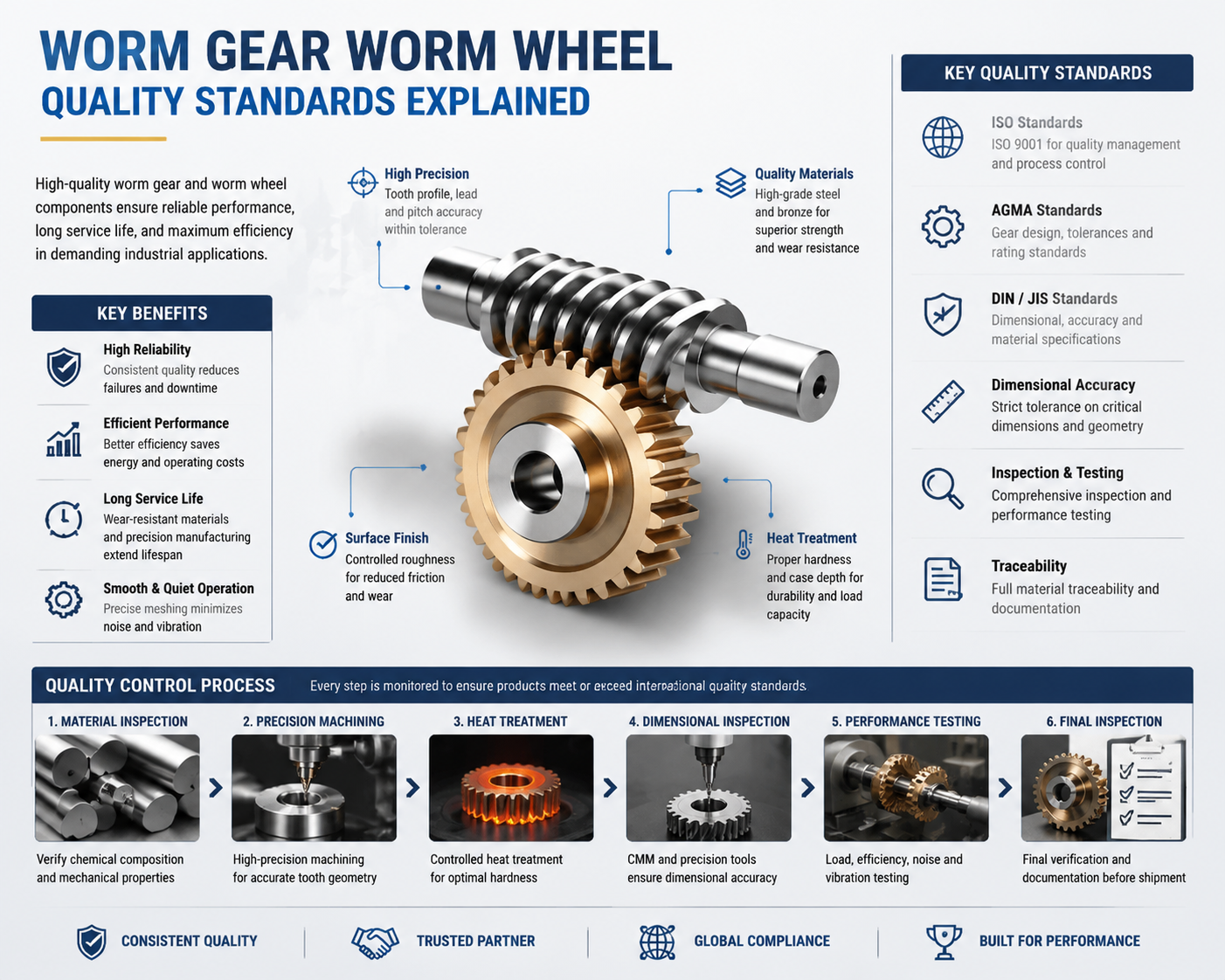
Worm gears are a type of gear configuration where a screw-like worm meshes with a gear wheel, producing a highly directional transfer of motion. They operate on a perpendicular axis, allowing rotational motion to be converted into precise torque outputs. Unlike conventional spur gears, worm gears offer a unique combination of speed reduction and torque amplification, which is especially advantageous when space constraints or high-load demands are present.
1.2 Historical Development of Worm Gears
The genesis of worm gears dates back to ancient mechanical systems, with early iterations in water-lifting devices and clock mechanisms. Over centuries, technological evolution has refined their geometry, enhancing load-bearing capacity and efficiency. Modern CNC manufacturing and metallurgical advancements have propelled worm gears from a rudimentary mechanical curiosity to a cornerstone of high-torque engineering applications.
1.3 Applications Across Industries
Worm gears are ubiquitous in industrial machinery, robotics, heavy-duty conveyors, and marine applications. Their ability to provide controlled, high-torque output makes them indispensable in scenarios where reliability and precision outweigh sheer speed. From automated material handling to precision steering in marine vessels, these gears prove their mettle across a spectrum of demanding environments.
2. Fundamental Principles of Worm Gear Mechanics
2.1 Gear Ratio and Torque Multiplication
One of the standout features of worm gears is their ability to deliver extreme torque multiplication. By adjusting the number of starts on the worm and teeth on the gear, engineers can achieve ratios that would be cumbersome or impossible with other gear types, making them ideal for heavy-lifting or high-torque applications.
2.2 Helical vs. Worm Gear Geometry
While helical gears distribute load over multiple teeth for smoother operation, worm gears utilize sliding contact along the tooth surface. This configuration trades some efficiency for torque density and self-locking capability, allowing for more compact yet potent designs in machinery where linear space is a premium commodity.
2.3 Efficiency Considerations in Power Transmission
The sliding nature of worm gears inevitably introduces frictional losses, often reducing efficiency compared to spur or helical configurations. However, with the right material pairings and lubrication regimes, these losses can be minimized, striking a balance between torque amplification and sustainable power transmission.
For more information about gear mechanics, visit Wikipedia - Worm Drive.
3. High-Torque Applications: An Overview
3.1 Industries Requiring High-Torque Solutions
Heavy construction, mining, offshore engineering, and industrial robotics consistently demand gear systems capable of handling extraordinary torque. Worm gears fit seamlessly into these sectors, providing reliable operation under loads that would quickly overwhelm conventional gear designs.
3.2 Challenges in Handling High Torque Loads
High-torque systems face common challenges, including tooth fatigue, thermal buildup, and misalignment. Proper engineering design, material selection, and lubrication strategies are crucial to ensuring long-term performance and avoiding catastrophic failures.
3.3 Importance of Reliable Gear Systems
When failure is not an option—like in conveyor systems lifting massive loads or ship steering mechanisms—a dependable worm gear system can be the difference between operational efficiency and costly downtime. Reliability, therefore, is not just a bonus; it’s a design imperative.
4. Advantages of Worm Gears in High-Torque Scenarios
4.1 Compact Design Benefits
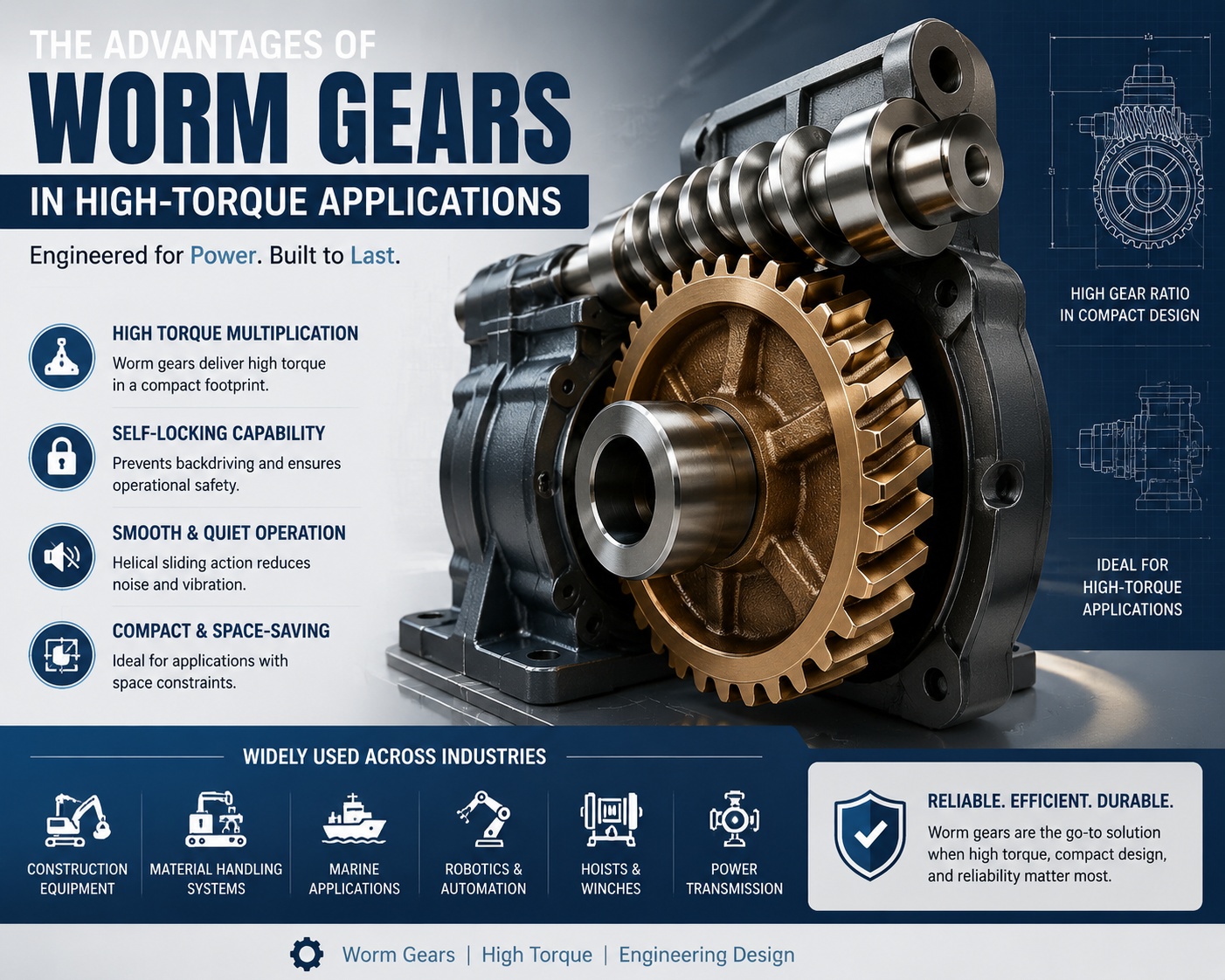
Worm gears pack a lot of torque into a small footprint, making them ideal for applications where space is tight but force demands are high. Their perpendicular axis orientation reduces the need for elaborate mechanical linkages, simplifying design and installation.
4.2 Smooth Power Transmission
Unlike gears with abrupt engagement, worm gears exhibit smooth, continuous contact. This characteristic reduces vibration, noise, and shock loads, which not only protects machinery but also enhances operator comfort in human-interfacing systems.
4.3 Self-Locking Capabilities
One of the oft-touted perks of worm gears is their inherent self-locking ability, particularly in low-backlash designs. This means a load can remain stationary without additional braking mechanisms—a highly desirable trait in lifts, hoists, and precision automation systems.
5. Torque Multiplication Mechanics
5.1 How Worm Gears Amplify Torque
Torque amplification in worm gears results from the high gear ratio between the worm and the gear wheel. Essentially, the worm’s helical threads act as a mechanical lever, distributing force over a smaller rotational input, allowing even modest motors to drive substantial loads.
5.2 Comparison with Spur and Helical Gears
While spur gears excel in efficiency and helical gears offer smooth engagement, worm gears outperform both in compact torque delivery and self-locking. The trade-off, of course, is slightly lower efficiency due to sliding friction, but this is mitigated in high-load, low-speed applications.
5.3 Calculating Gear Ratios for High-Torque Requirements
Engineers typically calculate ratios by dividing the number of gear teeth by the number of worm starts. Fine-tuning this ratio ensures the torque output meets application demands while keeping speed reduction within acceptable limits—a balancing act between force, speed, and efficiency.
Additional engineering references can be found at AGMA - American Gear Manufacturers Association.
6. Load Distribution and Stress Handling
6.1 Contact Stress Analysis
Understanding contact stress is paramount in worm gear design. Uneven stress distribution can accelerate tooth wear, leading to premature failure. Advanced simulation tools, like finite element analysis, help engineers visualize stress propagation under heavy loads.
6.2 Impact of Tooth Geometry on Load Capacity
Optimizing tooth profile, including pressure angle and lead angle, allows for better load distribution and higher torque handling. Fine adjustments can significantly extend service life and reduce the likelihood of catastrophic failure.
6.3 Mitigating Wear in High-Torque Conditions
High-torque environments accelerate wear, especially on sliding surfaces. Engineers mitigate this through surface treatments, selective alloying, and advanced lubrication systems that maintain a protective film even under extreme pressure.
7. Material Selection for Worm Gears
7.1 Common Metals and Alloys Used
Bronze, hardened steel, and specialized alloy composites dominate worm gear manufacturing due to their wear resistance, strength, and thermal conductivity. Selecting the appropriate material is a high-stakes decision, directly impacting durability and efficiency.
7.2 Lubrication and Surface Treatments
Solid lubricants, synthetic oils, and surface coatings reduce friction and wear while enhancing operational longevity. Surface treatments like nitriding or phosphating can further improve hardness and reduce the risk of galling under heavy loads.
7.3 Effects on Durability and Performance
The synergy between material choice and lubrication determines not only the lifespan but also the torque consistency of worm gears. Poor choices can lead to heat accumulation, wear, and efficiency losses, whereas optimal pairing can sustain peak performance for years.
Learn more about tribology and lubrication from STLE - Society of Tribologists and Lubrication Engineers.
8. Efficiency and Power Loss Considerations
8.1 Frictional Losses in Worm Gears
Sliding contact generates frictional resistance, which reduces overall mechanical efficiency. Although this is a known trade-off, careful design, material selection, and lubrication can keep losses within acceptable operational limits.
8.2 Strategies for Minimizing Heat Generation
Incorporating cooling fins, oil baths, or high-performance synthetic lubricants can effectively dissipate heat generated from sliding friction, preventing thermal degradation and maintaining performance consistency under heavy loads.
8.3 Energy Efficiency in Industrial Applications
While worm gears are inherently less efficient than other gears, their compact torque delivery can reduce overall system energy requirements, especially in applications where oversized motors would otherwise be necessary.
9. Noise and Vibration Characteristics
9.1 Acoustic Behavior Under Load
Worm gears generate less noise than comparable spur gears at equivalent torque levels due to their continuous engagement, making them suitable for environments where noise reduction is a secondary design requirement.
9.2 Vibration Reduction Techniques
Precision machining, balanced shafts, and damping materials reduce vibration, enhancing both mechanical longevity and operator comfort. High-torque applications particularly benefit from these measures, preventing resonance-induced failures.
9.3 Comparison with Alternative Gear Types
Compared to spur and helical gears, worm gears trade some efficiency for quieter operation and smoother torque transmission, making them a prime choice where high torque and low operational noise converge.
10. Design Considerations for High-Torque Applications
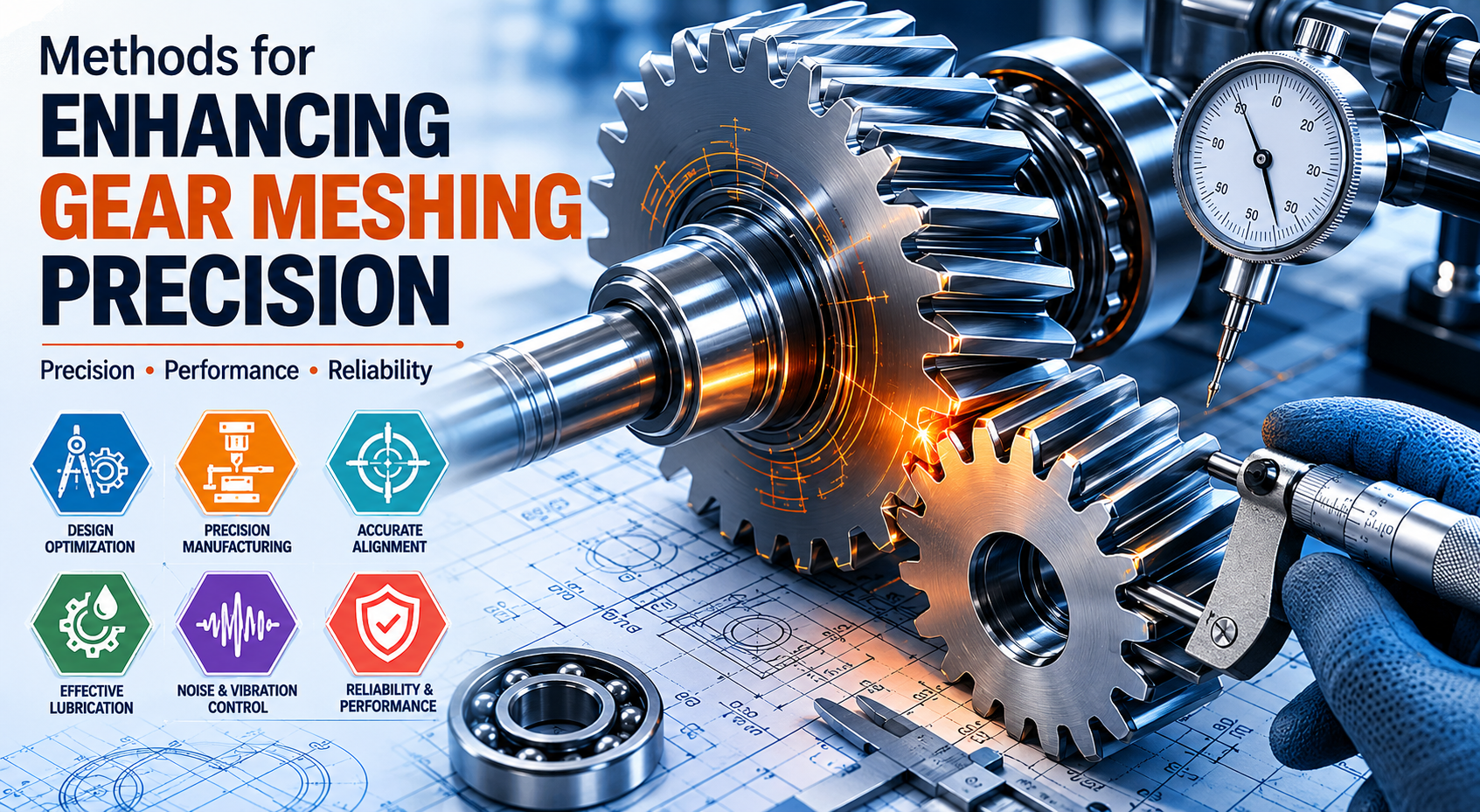
10.1 Optimal Shaft Alignment
Proper shaft alignment reduces undue stress on teeth and bearings. Misalignment can exacerbate wear and lead to catastrophic failures, particularly under sustained high-torque loads.
10.2 Housing and Bearing Support Requirements
Robust housing and appropriately rated bearings are essential to manage radial and axial loads imposed by worm gears, ensuring long-term stability and minimizing maintenance requirements.
10.3 Safety Factors in Engineering Design
Incorporating conservative safety factors, accounting for dynamic load variations, thermal expansion, and misalignment, ensures that worm gears operate reliably even under unpredictable conditions.
For detailed mechanical engineering standards, visit ASME - American Society of Mechanical Engineers.
11. Thermal Management and Lubrication Strategies
11.1 Heat Dissipation Challenges
Sliding contact produces heat, which, if not managed, can accelerate wear or even cause gear seizure. Design solutions include optimized casing ventilation, oil circulation systems, or integrated cooling channels.
11.2 Lubrication Types and Selection
Selecting between grease, oil, or synthetic lubricants depends on speed, load, and environmental conditions. High-pressure additives are often required to maintain a lubricating film under extreme torque scenarios.
11.3 Maintaining Performance in Continuous Operation
Regular lubrication checks, thermal monitoring, and proactive maintenance regimes prevent torque drop-off, ensuring consistent performance during continuous heavy-duty operation.
12. Customization and Adaptability
12.1 Modular Worm Gear Systems
Modular designs allow engineers to swap components, adjust ratios, or integrate gears into existing machinery without major redesigns, enhancing flexibility and reducing downtime.
12.2 Adjustable Gear Ratios
Variable worm starts and gear teeth configurations provide the ability to fine-tune torque output, enabling precise matching to application-specific requirements.
12.3 Integration with Existing Machinery
Worm gears can seamlessly retrofit older machinery or integrate into new designs, offering engineers a versatile solution for a wide range of mechanical challenges.
13. Case Studies in Industrial Applications
13.1 Heavy Machinery and Construction Equipment
Cranes, hoists, and excavators often utilize worm gears for lifting and movement, taking advantage of their torque amplification and self-locking characteristics in high-load scenarios.
13.2 Automotive and Marine Applications
Steering systems, winches, and propulsion mechanisms benefit from the compact, high-torque capabilities of worm gears, improving reliability while minimizing mechanical complexity.
13.3 Robotics and Automation Systems
Precision robotics leverage worm gears for controlled motion, combining torque density with self-locking to achieve accurate, repeatable movements critical for assembly and handling tasks.
14. Common Challenges and Solutions
14.1 Wear and Fatigue Issues
Continuous high-load operation leads to surface wear and fatigue. Engineers mitigate this with material hardening, lubrication strategies, and optimized tooth geometry.
14.2 Misalignment and Backlash Problems
Proper installation, alignment jigs, and tight manufacturing tolerances reduce backlash and misalignment, preserving torque transmission and system longevity.
14.3 Maintenance and Longevity Solutions
Scheduled inspections, predictive maintenance using thermal or vibration sensors, and timely lubrication changes extend worm gear service life, avoiding unexpected downtime.
15. Cost-Benefit Analysis
15.1 Initial Manufacturing Costs
Worm gears may incur higher upfront costs due to precision machining and material requirements, but these costs are offset by operational efficiency and durability.
15.2 Operational Efficiency Savings
High-torque capabilities allow smaller motors and simplified designs, reducing energy consumption and operational complexity, which translates into long-term savings.
15.3 Long-Term Maintenance Considerations
Durable materials, effective lubrication, and proactive maintenance strategies minimize downtime and replacement costs, offering a favorable total cost of ownership over the system's lifespan.
16. Future Trends in Worm Gear Technology
16.1 Advanced Materials and Coatings
Emerging materials like composites and nano-enhanced alloys promise lower friction, reduced wear, and improved thermal performance, expanding worm gear applications in extreme conditions.
16.2 Integration with Smart Sensors
IoT-enabled worm gears equipped with load, temperature, and vibration sensors allow predictive maintenance, real-time monitoring, and performance optimization, driving the next generation of industrial reliability.
16.3 Innovations in High-Torque Engineering Design
Adaptive gear geometries, hybrid lubrication systems, and precision manufacturing techniques are pushing worm gear performance boundaries, making them ever more competitive in high-torque applications.
17. Conclusion
17.1 Summary of Key Advantages
Worm gears combine compact design, high torque delivery, smooth power transmission, and self-locking capabilities, making them indispensable in demanding engineering applications.
17.2 Strategic Applications for Engineers
From heavy machinery to robotics, these gears provide reliable, space-efficient solutions for engineers seeking precision and durability in high-torque environments.
17.3 Recommendations for Selecting Worm Gears
Engineers should prioritize material selection, lubrication strategies, and ratio optimization, while buyers should weigh upfront costs against long-term performance to ensure the right worm gear solution for their application.