Table of Contents
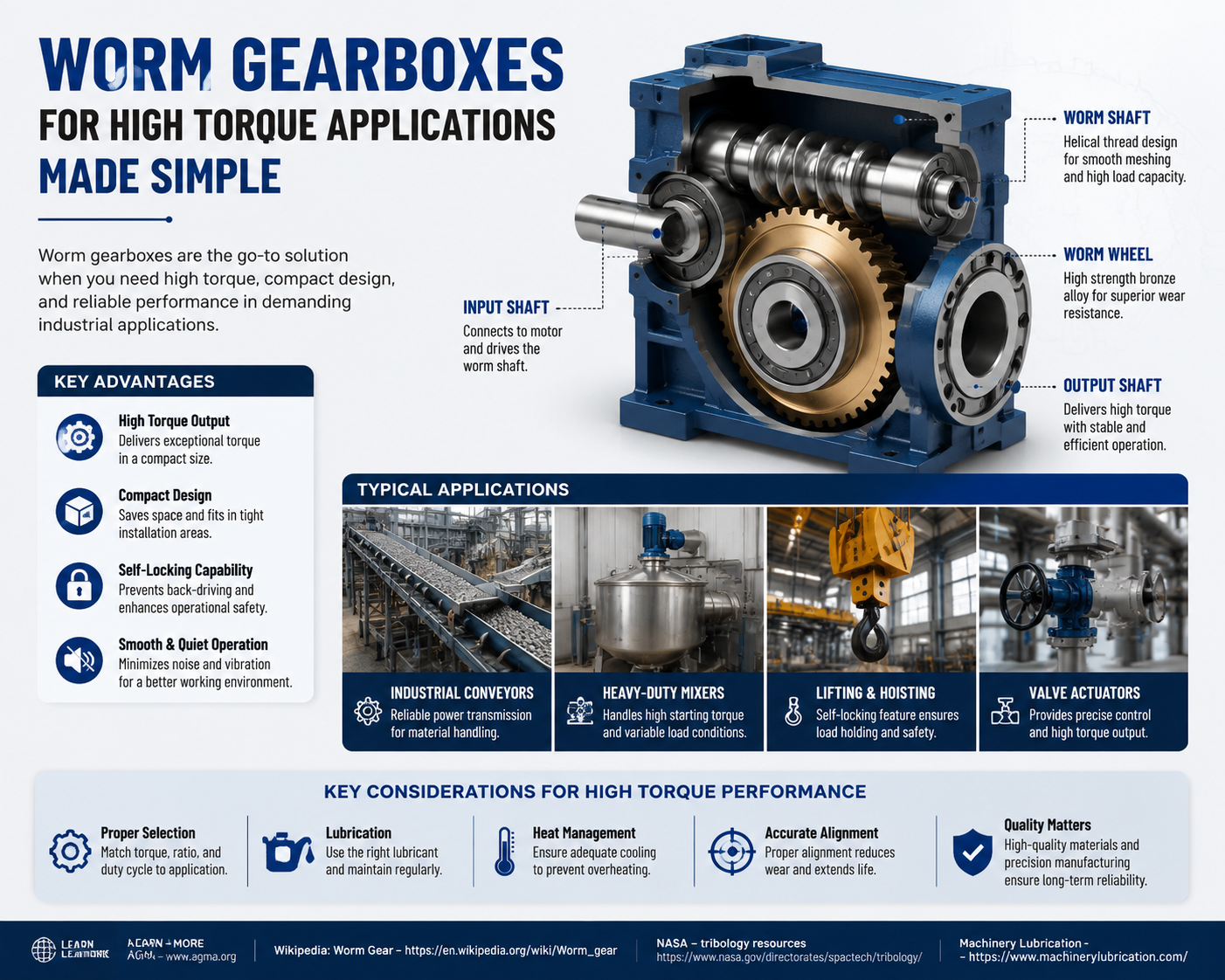
Worm Gearboxes for High Torque Applications Made Simple
1. Introduction to Worm Gearboxes
1.1 Definition and Key Components
A worm gearbox is essentially a mechanical marvel where a helical worm engages with a toothed wheel, forming a right-angle drive system capable of transmitting torque efficiently across non-intersecting shafts. At its heart, the assembly consists of a worm shaft, worm wheel, bearings, and a housing designed to withstand substantial loads and stress cycles. The worm shaft, often precision-ground and hardened, meshes with a gear wheel crafted from bronze or other durable alloys, creating a combination that can handle torque loads that would make ordinary gearsets sweat bullets.
1.2 Importance in Mechanical Systems
These gearboxes aren’t just another cog in the machine—they are the unsung workhorses in countless mechanical systems, from conveyor drives to industrial mixers. Their unique configuration allows for high torque multiplication in a relatively compact form, reducing footprint while boosting performance. In high-stakes applications, where downtime can cost thousands per hour, the reliability of a worm gearbox can be the difference between a smooth-running operation and a production nightmare.
1.3 Overview of High Torque Applications
High torque applications demand gears that can handle substantial rotational force without yielding, deforming, or generating catastrophic heat. Think heavy-duty hoists, steel mill conveyors, and colossal material-handling systems where torque levels can reach tens of thousands of Newton-meters. Worm gearboxes excel here because their helical-tooth design offers gradual load engagement, reducing shock loading and enabling smoother starts and stops in grueling operational conditions. For more details, see Worm drive - Wikipedia.
2. How Worm Gearboxes Work
2.1 Worm and Wheel Interaction
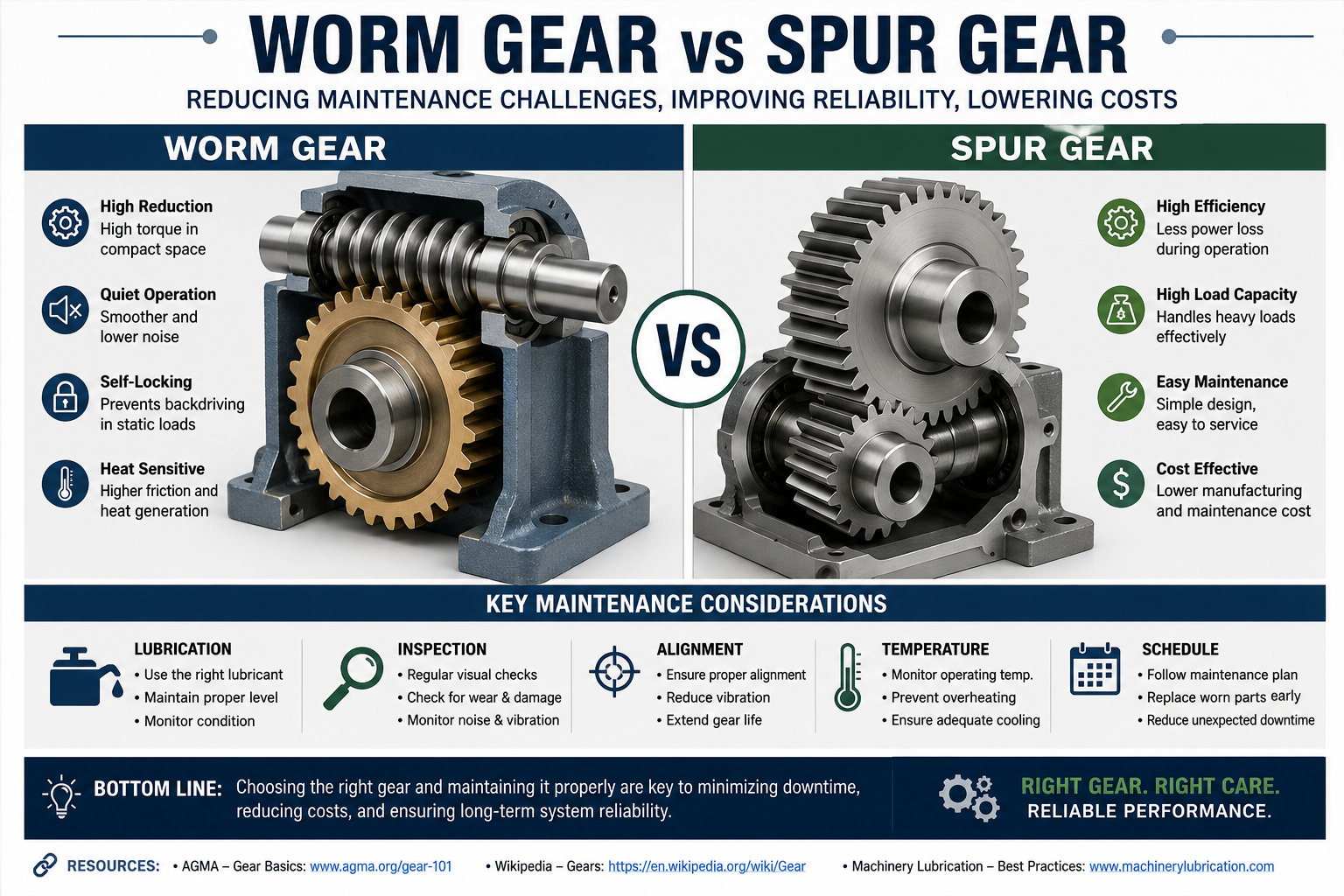
The magic lies in the intimate dance between the worm and wheel, where the worm threads act like a screw, driving the wheel’s teeth in a controlled, progressive manner. Unlike spur gears, which can be harsh and abrupt, the worm's engagement spreads the load across multiple teeth, minimizing localized stress and extending operational lifespan. This interaction also inherently limits reverse motion, creating a self-locking effect that proves invaluable in hoisting and braking applications.
2.2 Torque Transmission Mechanism
Torque transmission in worm gearboxes is a study in mechanical leverage, where a relatively low input torque on the worm translates into a significant output torque on the wheel. This multiplication effect is dictated by the gear ratio—the number of worm threads versus the wheel teeth—and careful calculation ensures that the system operates within safe thermal and stress limits, preventing catastrophic failure in continuous-duty applications. For a deeper understanding, visit Machine Design: Worm Gear Basics.
2.3 Efficiency and Load Distribution
Efficiency can be a double-edged sword in worm drives; the sliding contact between worm and wheel generates friction, which reduces mechanical efficiency compared to other gear types but contributes to load distribution and heat dissipation. Proper lubrication, material choice, and surface finishing can mitigate these losses, allowing the gearbox to carry higher loads while maintaining a manageable thermal profile, a key consideration for long-term reliability.
3. Types of Worm Gearboxes
3.1 Single-Thread vs Multi-Thread Worms
Single-thread worms offer high torque multiplication but operate at lower speeds, ideal for heavy-duty lifting or precise positioning tasks. Multi-thread worms, on the other hand, allow faster rotational speeds but trade off torque, making them suitable for applications like moderate-load conveyors or processing equipment where speed matters more than sheer muscle.
3.2 Right-Angle Worm Gearboxes
Right-angle configurations are the bread and butter of worm gearboxes, allowing shafts to intersect at 90 degrees while transmitting torque efficiently. This arrangement not only reduces footprint but also simplifies alignment in complex assemblies, making them a favorite in OEM designs and retrofits where space is at a premium.
3.3 Enclosed vs Open Gear Designs
Enclosed designs offer superior protection from contaminants and ensure consistent lubrication, making them ideal for harsh industrial environments. Open gears, although more exposed, provide ease of inspection and maintenance, often preferred in low-dust, controlled factory settings where speed of access trumps environmental protection.
4. Key Specifications for High Torque Applications
4.1 Torque Ratings and Limits
Selecting the right gearbox starts with knowing your torque requirements. Each unit comes with a rated torque—the maximum continuous load it can handle without risk of permanent deformation. Overloading beyond this threshold can induce wear, generate excessive heat, and reduce efficiency dramatically.
4.2 Gear Ratio Selection
The gear ratio determines how input speed translates to output torque. For high torque applications, a higher ratio is usually preferable, amplifying torque while lowering output speed. Calculating the optimum ratio requires balancing load demands, space constraints, and the desired operational cadence to prevent underperformance or catastrophic stress.
4.3 Input Speed and Output Speed Considerations
Input speed affects lubrication performance, heat generation, and overall efficiency. Worm gearboxes must be matched carefully to motor RPMs and operational load cycles; mismatched speeds can accelerate wear and compromise reliability, making thorough specification review critical before procurement.
5. Material Selection
5.1 Worm Shaft Materials
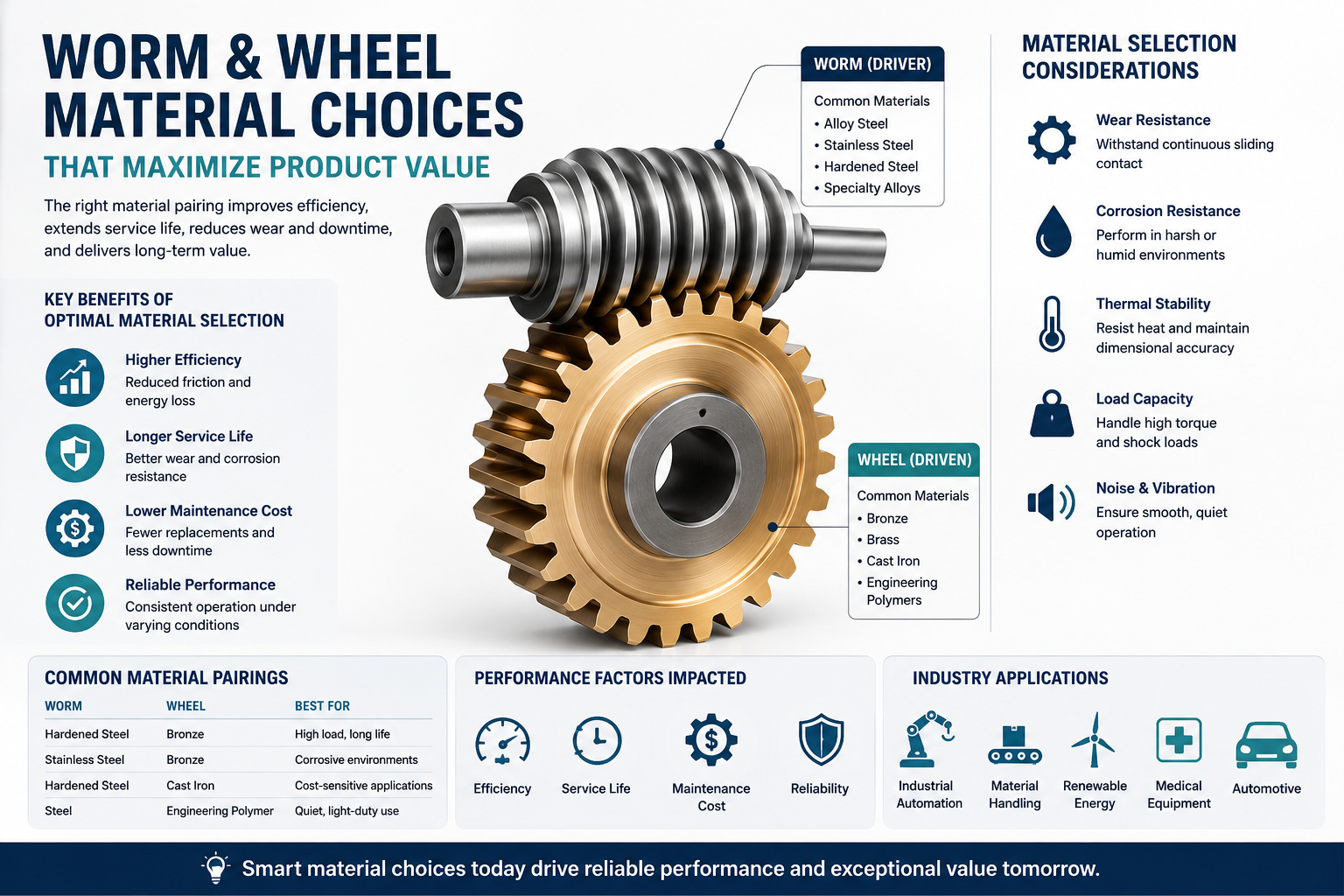
High-strength steel alloys, often carburized or nitrided, are preferred for worm shafts to withstand sliding friction and repeated cyclic loads. Microstructural hardening ensures the teeth resist pitting and deformation over prolonged operational life, an absolute must in torque-heavy applications.
5.2 Worm Wheel Materials
Bronze, phosphor bronze, or specialized composites are commonly used for worm wheels, providing a low-friction mating surface with the hardened worm. Material selection affects wear patterns, thermal conductivity, and overall gearbox lifespan, influencing both maintenance cycles and total cost of ownership. More on bronze alloys can be found at AZoM: Bronze Alloys.
5.3 Surface Treatment and Coatings
Surface treatments such as shot peening, nitriding, or DLC (diamond-like carbon) coatings can drastically reduce friction and wear. Coatings also enhance corrosion resistance, a critical factor for outdoor or chemical-exposed installations. The right treatment can extend service intervals and prevent downtime.
6. Design Considerations for High Torque
6.1 Load Capacity Calculation
Accurate load calculations are non-negotiable for high torque applications. Engineers must consider static and dynamic loads, shock factors, and duty cycles, ensuring that the gearbox can survive peak demands without premature failure. Overdesigning slightly can act as a safeguard, but excessive overengineering increases cost and weight unnecessarily.
6.2 Heat Dissipation and Lubrication
Sliding contact generates heat that must be managed through proper lubrication, cooling fins, or even auxiliary cooling systems for extreme applications. Maintaining thermal equilibrium ensures consistent performance and prevents gear tooth softening, a critical factor in long-term reliability.
6.3 Backlash and Efficiency Optimization
Backlash—slight movement between gear teeth—can be both a blessing and a curse. Too much leads to positioning errors; too little increases friction and wear. Optimal design balances backlash, torque output, and efficiency, often leveraging precision manufacturing techniques to achieve tight tolerances without sacrificing durability.
7. Lubrication and Maintenance
7.1 Types of Lubricants
High-performance synthetic oils or greases designed for extreme pressure are standard for high torque worm gearboxes. Additives such as anti-wear agents, friction modifiers, and thermal stabilizers enhance longevity and prevent tooth scuffing under heavy loads.
7.2 Maintenance Intervals
Regular maintenance ensures peak performance. Intervals depend on load, operating environment, and duty cycles. Proactive monitoring of oil levels, temperature, and wear patterns can prevent catastrophic failures and extend gearbox life significantly.
7.3 Signs of Wear and Tear
Watch out for unusual noise, vibration, overheating, or oil discoloration—these are the harbingers of wear or impending failure. Early detection allows corrective action before downtime or costly replacements occur.
8. Common Challenges in High Torque Applications
8.1 Overheating Issues
Sliding friction generates heat that can compromise lubrication and soften gear teeth. Overheating often results from undersized gearboxes, inadequate lubrication, or excessive duty cycles, necessitating careful specification and heat management strategies.
8.2 Gear Tooth Wear
Continuous high torque leads to pitting, scuffing, or material fatigue. Monitoring wear patterns and performing timely maintenance or part replacement preserves operational integrity and prevents catastrophic failure.
8.3 Noise and Vibration Problems
Excessive noise or vibration can indicate misalignment, inadequate lubrication, or design flaws. These issues not only reduce efficiency but also accelerate wear, making vibration analysis an essential part of the maintenance routine.
9. Advantages of Worm Gearboxes
9.1 High Torque Output
Worm gearboxes excel at multiplying torque in compact packages, allowing smaller motors to drive heavy loads efficiently. This capability makes them indispensable in high torque scenarios where brute force is needed without expanding footprint.
9.2 Compact Design Benefits
Right-angle arrangements save space and simplify mechanical layouts, which is a blessing in crowded industrial environments where every inch counts. Engineers appreciate the elegant combination of torque and minimal space requirements.
9.3 Self-Locking Capabilities
The natural resistance of the worm to back-driving provides inherent safety for lifting, hoisting, and braking applications. This self-locking property eliminates the need for additional braking systems in many designs, simplifying construction and reducing maintenance overhead.
10. Limitations of Worm Gearboxes
10.1 Efficiency Losses
Friction-driven worm gearboxes typically operate at 50–90% efficiency, depending on design and lubrication. While torque multiplication is excellent, energy losses must be accounted for in system efficiency calculations.
10.2 Load Constraints
Despite high torque capability, worm gearboxes have finite load limits. Exceeding these limits leads to premature wear or catastrophic failure, making proper sizing and material selection non-negotiable.
10.3 Speed Limitations
Worm gearboxes are engineered primarily for torque multiplication rather than high-speed power transmission. As rotational speed increases, frictional losses between the worm and wheel become more pronounced, generating heat and reducing overall efficiency. In applications demanding rapid output speeds, other gearbox technologies such as helical or planetary gear systems may provide a more suitable solution.
For procurement specialists evaluating drivetrain options, it is essential to understand that a worm gearbox should not be selected solely based on torque output. Operating speed, duty cycle, ambient temperature, and expected service life all play critical roles in determining whether the gearbox will perform reliably over the long haul. Ignoring these factors can lead to excessive thermal buildup, accelerated wear, and unplanned downtime.
11. Sourcing High-Quality Worm Gearboxes
11.1 Choosing Reliable OEM/ODM Manufacturers
Selecting the right manufacturing partner is often as important as selecting the gearbox itself. A reputable OEM or ODM supplier should possess extensive engineering expertise, advanced manufacturing equipment, robust quality management systems, and a proven track record in producing worm gearboxes for demanding industrial environments.
11.2 Assessing Product Certifications
Certifications provide tangible evidence that a manufacturer follows established quality and manufacturing standards. Common certifications include ISO 9001 for quality management systems, ISO 14001 for environmental management, and industry-specific standards depending on the target market.
11.3 Supplier Evaluation Criteria
Comprehensive supplier evaluation extends far beyond unit price comparisons. Key assessment areas include:
- Engineering and design capability
- Manufacturing capacity
- Quality control procedures
- Delivery performance
- After-sales technical support
- Financial stability
- Customization flexibility
- Continuous improvement initiatives
12. Cost Considerations
12.1 Total Cost of Ownership
Purchase price represents only a fraction of the total investment associated with a worm gearbox. Savvy procurement professionals focus on Total Cost of Ownership (TCO), which encompasses acquisition costs, installation expenses, maintenance requirements, energy consumption, downtime risks, spare parts inventory, and expected service life.
12.2 Balancing Quality vs Price
Every procurement project faces budget constraints, yet compromising quality to achieve short-term savings frequently creates long-term problems. Inferior materials, inadequate heat treatment, poor machining accuracy, and inconsistent assembly practices can significantly reduce gearbox performance and longevity.
12.3 Long-Term ROI
Return on Investment should be evaluated across the entire operational lifecycle. High-quality worm gearboxes can provide measurable benefits through extended service life, reduced maintenance frequency, improved operational reliability, lower downtime costs, better load-handling capability, and enhanced workplace safety.
13. Installation Best Practices
13.1 Proper Alignment Techniques
Precise alignment is fundamental to achieving optimal gearbox performance. Misalignment creates uneven loading conditions, increases bearing stress, generates vibration, and accelerates component wear.
13.2 Mounting and Coupling Tips
The mounting surface should be rigid, flat, and capable of supporting operational loads without distortion. Flexible or uneven mounting structures can induce housing stress and misalignment.
13.3 Testing Before Full Operation
Before placing a gearbox into continuous service, comprehensive testing should be conducted. Typical commissioning procedures include verifying lubricant levels, checking alignment, monitoring temperature, measuring vibration levels, confirming noise characteristics, and inspecting for leaks.
14. Case Studies of High Torque Applications
14.1 Industrial Conveyors
Industrial conveyor systems often operate continuously under substantial loads, making worm gearboxes an attractive solution for torque-intensive applications. Their ability to provide smooth power transmission and high reduction ratios enables controlled movement of bulk materials, packaged products, and heavy industrial components.
14.2 Heavy-Duty Mixers
Industrial mixers used in chemical processing, wastewater treatment, food manufacturing, and construction materials production require significant torque to overcome material resistance. Worm gearboxes provide the torque multiplication necessary to maintain consistent mixing performance while accommodating variable load conditions.
14.3 Lifting and Hoisting Equipment
Hoists, lifts, winches, and material handling systems frequently utilize worm gearboxes because of their high torque output and self-locking characteristics. The ability to resist back-driving enhances operational safety by helping maintain load position during power interruptions or system shutdowns.
15. Troubleshooting and Problem-Solving
15.1 Common Operational Issues
Typical gearbox problems include excessive temperature rise, oil leakage, abnormal noise, vibration, reduced efficiency, and accelerated gear wear. Early recognition of these symptoms allows maintenance teams to address root causes before severe damage occurs.
15.2 Diagnostic Techniques
Modern diagnostic methods include vibration analysis, oil analysis, thermal imaging, acoustic monitoring, and condition-based maintenance programs. These techniques provide valuable insights into gearbox health, enabling predictive maintenance strategies that reduce unexpected failures and optimize maintenance scheduling.
15.3 Preventive Measures
Effective preventive maintenance programs typically include scheduled inspections, lubricant analysis, temperature monitoring, vibration trending, seal replacement, and alignment verification. Preventive maintenance is often significantly less expensive than reactive repairs, particularly in critical production environments where downtime carries substantial financial consequences.
16. Future Trends in Worm Gearbox Technology
16.1 Advanced Materials and Coatings
Emerging material technologies are transforming gearbox performance. Advanced alloy steels, engineered bronzes, ceramic-enhanced materials, and sophisticated surface coatings are improving wear resistance, reducing friction, and extending service life. Future gearbox designs will likely leverage these innovations to achieve greater durability while reducing maintenance requirements.
16.2 Smart Monitoring Systems
Industry 4.0 initiatives are accelerating the adoption of intelligent gearbox monitoring solutions. Integrated sensors can continuously track temperature, vibration, load, lubricant condition, and operating parameters. Real-time monitoring enables predictive maintenance strategies, helping organizations identify potential failures before they impact production.
16.3 Energy Efficiency Innovations
Energy efficiency remains a major focus across the industrial sector. Manufacturers are developing improved tooth geometries, advanced lubrication technologies, optimized materials, and enhanced manufacturing processes to reduce frictional losses. As sustainability objectives become increasingly important, future worm gearboxes will likely deliver higher efficiency levels while maintaining exceptional torque multiplication capabilities.
Conclusion
Worm gearboxes continue to serve as one of the most practical and dependable solutions for high torque applications across industrial sectors. Their unique ability to provide substantial torque multiplication, compact packaging, smooth operation, and self-locking functionality makes them particularly valuable in demanding environments ranging from conveyors and mixers to hoists and heavy material-handling equipment.
For mechanical engineers and procurement professionals alike, successful gearbox selection requires careful evaluation of torque requirements, gear ratios, material specifications, thermal management considerations, maintenance requirements,