Case Study: Large Industrial Gears
1. Introduction to Large Industrial Gears
1.1 Definition and Role in Industrial Machinery
Large gears are the unsung workhorses of industrial machinery, transmitting torque and rotational motion across heavy-duty systems where precision, durability, and load-bearing capacity are non-negotiable. Unlike smaller gears, these mechanical behemoths are engineered to endure extreme operational stresses while maintaining alignment and efficiency, acting as the backbone for high-power machinery in sectors ranging from steel production to wind energy.
1.2 Importance for B2B Operations
For B2B clients, the choice of large gears is not merely a mechanical decision but a strategic one. The correct selection directly impacts machine uptime, production throughput, and the overall return on industrial capital. Poorly specified or low-quality gears can cascade into increased maintenance cycles, unexpected downtime, and inflated operational costs, making these components critical touchpoints in enterprise-scale industrial planning.
1.3 Overview of the Case Study Objectives
This case study aims to dissect a real-world deployment of large industrial gears, highlighting engineering strategies, material selection, design principles, and operational outcomes. It provides B2B clients with actionable insights into optimizing gear performance, ensuring reliability, and integrating precision engineering into large-scale industrial machinery.
2. Industry Context for Large Gears
2.1 Market Demand and Trends
The global appetite for large gears has surged alongside the expansion of heavy industries and renewable energy infrastructure. Trends indicate a growing emphasis on high-torque, precision-machined gears capable of supporting sustainable and energy-efficient operations. B2B clients are increasingly prioritizing long-term operational reliability over short-term cost savings, driving demand for advanced gear solutions.
2.2 Common Industrial Sectors Using Large Gears
Steel mills, cement factories, mining operations, and wind turbine installations represent the primary consumers of large gears. Each sector presents unique load profiles, operational cycles, and environmental challenges that influence gear specifications, from shock resistance in mining conveyors to high-precision torque transfer in wind energy generators.
2.3 Challenges Faced by Enterprises in Gear Selection
Selecting the right gear often feels like threading a needle in a hurricane—misalignment between operational demands and gear capabilities can lead to catastrophic failures. Enterprises must navigate material constraints, thermal expansion issues, vibration harmonics, and cost-benefit trade-offs while balancing production targets and maintenance schedules.
3. Types of Large Industrial Gears
3.1 Spur Gears and Their Applications
Spur gears, with their straight-toothed simplicity, remain a staple for transmitting moderate loads efficiently. In industrial scenarios, they are preferred for applications requiring precise speed ratios without the complexity of angled teeth, such as in conveyor systems and machinery where axial loads are minimal.
3.2 Helical and Bevel Gears for Heavy Machinery
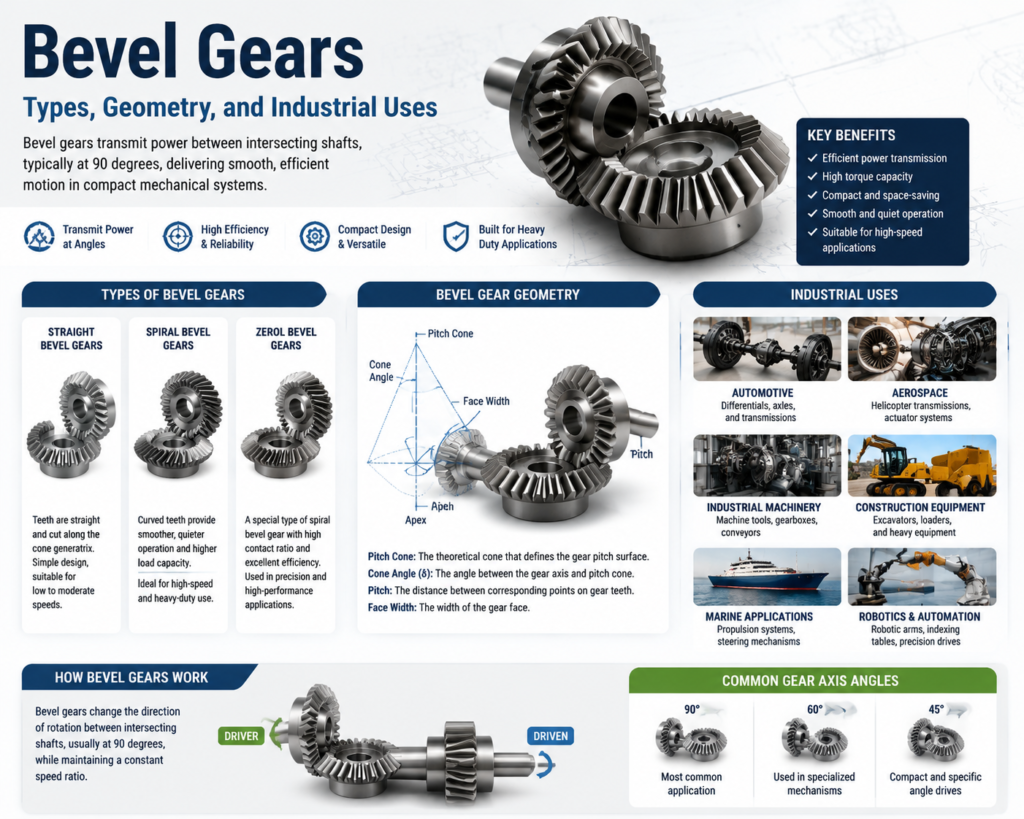
Helical gears, with their angled teeth, provide smoother engagement and superior torque handling, ideal for high-speed applications where vibration suppression is paramount. Bevel gears, conversely, are essential for directional changes in rotational motion, critical in gearboxes and industrial mixers where compact layouts demand spatial ingenuity.
3.3 Custom Large Gears for Specialized Operations
For B2B clients tackling unconventional mechanical challenges, off-the-shelf solutions rarely suffice. Custom gears, tailored through finite element analysis and simulation, address unique load distributions, unusual torque requirements, or extreme environmental conditions, providing a bespoke solution that maximizes operational efficiency.
4. Material Selection for Large Gears
4.1 Steel Alloys and Their Performance
High-strength steel alloys dominate large gear fabrication due to their balance of tensile strength, fatigue resistance, and machinability. Micro-alloyed steels with optimized carbon and chromium content offer exceptional wear resistance, crucial for gears subjected to continuous cyclic loading and abrasive conditions.
4.2 Surface Treatments and Coatings
Surface engineering techniques, including carburizing, nitriding, and shot peening, significantly enhance gear longevity by improving hardness and reducing susceptibility to pitting or scuffing. Advanced coatings like DLC (diamond-like carbon) can further mitigate friction and improve energy efficiency in high-speed industrial applications.
4.3 Balancing Cost vs Durability
B2B clients face a delicate balancing act between upfront investment and lifecycle performance. While premium alloys and treatments raise initial costs, the reduction in downtime and maintenance over a gear’s operational life often justifies the expenditure, emphasizing a total-cost-of-ownership mindset over mere acquisition cost.
5. Design Principles for Large Industrial Gears
5.1 Load Distribution and Torque Optimization
Effective load distribution across gear teeth is paramount to prevent premature fatigue. Engineers employ finite element modeling to simulate stress concentrations and optimize tooth profiles for even torque transmission, ensuring that the gears can handle both peak and fluctuating loads without catastrophic failure.
5.2 Precision Engineering for High Efficiency
Industrial efficiency hinges on meticulous tolerancing. Even minor deviations in pitch diameter or tooth alignment can induce vibration, energy losses, and accelerated wear. Precision machining combined with rigorous inspection protocols guarantees that gears perform consistently under extreme operational conditions.
5.3 Safety Factors in Gear Design
Safety margins are integrated into all design calculations to account for unanticipated overloads or misalignments. These factors include over-dimensioning gear teeth, enhancing shaft rigidity, and incorporating redundant support structures to safeguard against mechanical surprises that could halt production lines.
6. Manufacturing Processes
6.1 Forging and Casting Techniques
Large gears typically originate from forged or cast blanks, which provide a dense, homogeneous microstructure critical for high-stress applications. Forging ensures superior grain flow alignment, improving fatigue resistance, while precision casting accommodates complex geometries where forging is impractical.
6.2 CNC Machining and Finishing
CNC milling and hobbing bring gears to their final dimensions with sub-millimeter precision. Specialized finishing techniques, including lapping and grinding, refine tooth surfaces to minimize friction, enhance meshing efficiency, and extend operational longevity.
6.3 Quality Control in Manufacturing
Industrial case studies repeatedly highlight the importance of quality assurance. Non-destructive testing, including ultrasonic and magnetic particle inspection, detects internal defects, while coordinate measuring machines verify tolerances to guarantee that every gear meets rigorous engineering specifications.
7. Case Study Background
7.1 Client Profile and Industrial Sector
The client, a global B2B enterprise operating in heavy-duty mining equipment, required large gears capable of sustaining continuous high-torque operation under harsh environmental conditions. Their operational footprint spanned multiple continents, necessitating reliable and standardized gear solutions.
7.2 Initial Operational Challenges
Prior to the intervention, the client faced frequent gear failures, unexpected downtime, and high maintenance costs. Inconsistent material selection, suboptimal tooth profiles, and misalignment during installation were identified as primary culprits.
7.3 Objectives for Gear Implementation
The project aimed to deliver custom-engineered large gears that would reduce maintenance cycles, improve torque transmission efficiency, and support long-term operational reliability, all while integrating seamlessly into existing machinery.
8. Project Planning and Strategy
8.1 Needs Assessment and Feasibility Study
A thorough needs assessment evaluated the client’s load requirements, production schedules, and environmental factors. Feasibility studies incorporated computational simulations to predict gear performance, informing design parameters and material choices.
8.2 Timeline and Resource Allocation
A structured timeline mapped out each project phase, from preliminary design to final installation. Resource allocation ensured that specialized tooling, material procurement, and skilled labor were synchronized, minimizing delays and cost overruns.
8.3 Risk Management Strategies
Mitigating risk involved contingency plans for material shortages, machining errors, and installation mishaps. Redundant verification steps and real-time monitoring of production metrics provided additional layers of assurance against operational surprises.
9. Custom Gear Design Approach
9.1 Engineering Calculations and Simulations
Finite element analysis modeled stress distribution, thermal expansion, and vibration harmonics. These simulations informed tooth geometry, root fillet radii, and contact ratios to ensure the gears could endure prolonged cyclic loading without degradation.
9.2 Prototype Development and Testing
Prototypes underwent rigorous testing under simulated operational conditions. Measurements of backlash, torque transmission efficiency, and thermal behavior were compared against design expectations to refine the final product.
9.3 Adjustments Based on Client Feedback
Iterative adjustments incorporated client feedback on operational experience, ensuring the final gears addressed real-world challenges such as alignment tolerances, load variability, and environmental exposure.
10. Installation and Integration
10.1 Preparation of Machinery for Gear Installation
Machinery was thoroughly inspected, with shafts and housings cleaned, aligned, and preconditioned. Critical surfaces were lubricated and tolerances double-checked to facilitate seamless integration.
10.2 Alignment and Calibration Procedures
Precision alignment tools and laser-guided measurements ensured that gear meshing was flawless. Calibration accounted for thermal expansion, shaft deflection, and residual stresses to optimize operational efficiency.
10.3 Ensuring Minimal Operational Downtime
Installation was strategically scheduled during planned maintenance windows, employing multiple teams to reduce idle time. Contingency spares were on hand to prevent unexpected delays, reflecting a lean yet robust project execution strategy.
11. Performance Evaluation
11.1 Load Testing and Stress Analysis
Gears were subjected to incremental load testing, with sensors capturing stress distribution, torque transfer, and micro-vibrations. This validated both design assumptions and manufacturing precision.
11.2 Efficiency and Power Transmission Assessment
Efficiency metrics were monitored under varying operational conditions. Optimized tooth profiles and surface finishes minimized friction losses, ensuring maximum energy utilization and reduced wear.
11.3 Identifying Areas
for Improvement
Data-driven insights revealed minor misalignments and lubrication refinements. These findings informed continuous improvement strategies, underscoring the value of post-installation monitoring in industrial case studies.
12. Maintenance and Longevity
12.1 Routine Inspection Schedules
Scheduled inspections include visual checks, ultrasonic testing, and backlash measurements, providing early detection of wear and fatigue before failures occur.
12.2 Lubrication and Wear Prevention
High-performance lubricants and automatic lubrication systems reduce friction, inhibit corrosion, and extend the operational lifespan of large gears. Lubricant condition monitoring further enhances preventive maintenance strategies.
12.3 Lifecycle Planning for Long-Term Use
Lifecycle management integrates predictive analytics, historical performance data, and scheduled overhauls to optimize total cost of ownership and ensure that large gears continue delivering reliable service for decades.
13. Cost-Benefit Analysis
13.1 Initial Investment vs Operational Savings
While the upfront expenditure for custom-engineered large gears is substantial, the reduction in downtime, maintenance interventions, and energy losses yields significant long-term savings.
13.2 ROI for B2B Enterprises
B2B clients benefit from quantifiable ROI through enhanced productivity, longer service intervals, and lower emergency repair costs, making strategic investment in high-quality gears a no-brainer.
13.3 Comparison with Alternative Solutions
Comparative analysis highlights the superiority of tailored solutions over generic or substandard gears, emphasizing efficiency gains, reduced wear, and extended operational lifespan.
14. Client Outcomes and Feedback
14.1 Improvement in Operational Efficiency
Post-implementation, the client observed smoother torque transmission, reduced vibration, and higher uptime, directly translating into improved throughput and productivity.
14.2 Reduction in Downtime and Maintenance Costs
Maintenance cycles lengthened, emergency repairs became rare, and overall operational costs decreased, validating the value of investing in robust, precision-engineered gears.
14.3 Client Testimonials and Satisfaction
The client praised the engineering rigor, adherence to timelines, and tangible operational improvements, reinforcing the importance of collaboration and data-driven gear selection.
15. Lessons Learned from the Case Study
15.1 Key Engineering Insights
Optimizing tooth geometry, material properties, and surface treatments is critical for sustaining performance under extreme operational conditions.
15.2 Project Management Takeaways
Close coordination, risk mitigation, and iterative feedback loops ensure successful delivery in complex industrial environments.
15.3 Recommendations for Similar Industrial Projects
Future projects should emphasize upfront simulation, precise material selection, and rigorous quality control to maximize gear lifespan and operational reliability.
16. Future Trends in Large Industrial Gears
16.1 Innovations in Gear Materials and Design
Emerging alloys, composite materials, and additive manufacturing techniques are redefining possibilities for lighter, stronger, and more efficient large gears.
16.2 Automation and Smart Gear Monitoring
Integration of sensors, IoT-enabled monitoring, and predictive analytics is allowing B2B clients to proactively manage gear health and optimize maintenance schedules.
16.3 Opportunities for B2B Enterprises to Adopt Advanced Solutions
Enterprises that embrace advanced gear technologies can achieve higher throughput, lower operational risk, and a significant competitive edge in industrial markets.
17. Conclusion and Key Takeaways
17.1 Summary of Case Study Achievements
The deployment of custom large gears delivered measurable improvements in efficiency, reliability, and operational cost savings, demonstrating the impact of precision engineering in industrial applications.
17.2 Strategic Implications for Industrial Clients
Selecting high-quality, tailored gear solutions should be viewed as a long-term strategic investment rather than a short-term expense, with tangible benefits for productivity and reliability.
17.3 Call to Action for B2B Decision-Makers
Industrial decision-makers are encouraged to evaluate their current gear infrastructure, consider precision-engineered solutions, and adopt forward-looking maintenance and monitoring strategies to maximize ROI and operational resilience.