Table of Contents
Spiral Bevel Gear: Boost Your Machine Efficiency Today
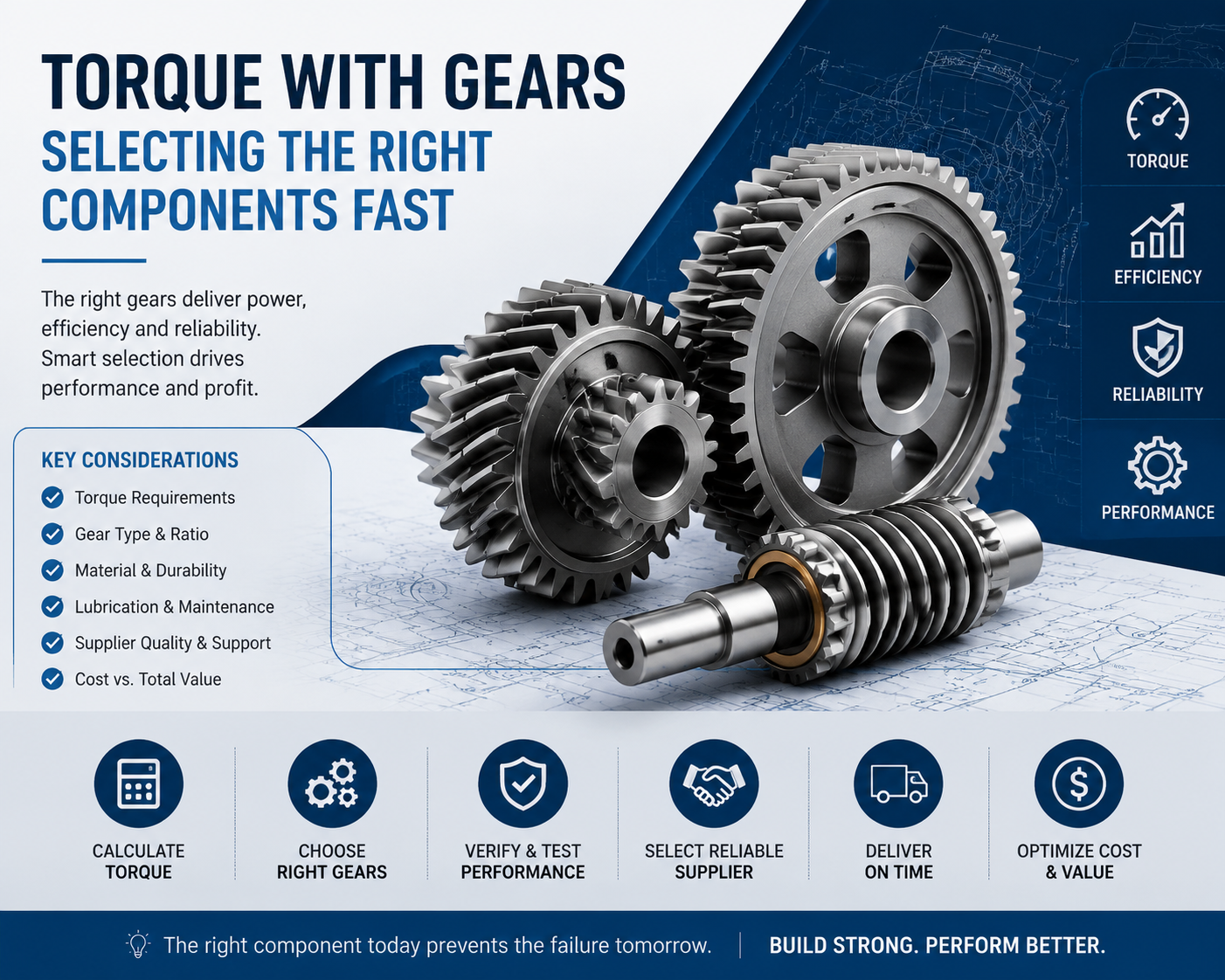
Torque with Gears Selecting the Right Components Fast
1. Introduction to Torque with Gears
1.1 Definition of Torque and Its Importance in Gear Systems
Torque, simply put, is the rotational force that gears apply to move mechanical loads. It’s the lifeblood of any drive system, the invisible hand that transforms input energy into motion. In industrial applications, understanding torque isn’t just academic—it dictates the longevity, efficiency, and safety of your machinery. Miscalculations in torque can lead to catastrophic gear failures, unexpected downtime, or premature wear, all of which translate into lost production hours and revenue. For procurement professionals, having a firm grasp of torque ensures that the components you source can handle operational demands without overpaying for over-engineered parts.
1.2 Overview of Gear Types and Their Roles
Gears come in a dizzying array of types—spur, helical, bevel, worm, and planetary, to name the most common. Each type carries unique torque transmission characteristics: spur gears are straightforward and cost-effective, helical gears smooth out engagement under load, bevel gears redirect torque across axes, and planetary arrangements maximize torque density in compact spaces. Understanding each gear’s role is crucial, because the wrong type in the wrong application is a recipe for inefficiency, overheating, or catastrophic mechanical failure.
1.3 Why Selecting the Right Components Matters
Selecting the right gear components isn’t just about matching specifications; it’s about foreseeing operational demands, environmental conditions, and long-term reliability. A procurement engineer must balance performance, cost, and availability, ensuring that each component can endure peak loads, resist wear, and integrate seamlessly into the system. Choosing the right gear means fewer headaches down the line, shorter maintenance windows, and a well-oiled machine—literally and figuratively.
2. Understanding Gear Torque Requirements
2.1 Calculating Torque for Mechanical Applications
Calculating torque is more than plugging numbers into a formula—it involves understanding the forces at play in real-world conditions. Torque (τ) is calculated as force (F) multiplied by radius (r), τ = F × r, but engineers must also consider dynamic loads, shock loads, and angular velocity. For procurement professionals, verifying that suppliers provide gears rated for peak torque and continuous duty ensures components won’t fail under unexpected strain.
2.2 Factors Affecting Torque in Gears
Multiple factors influence torque in gear systems: load distribution, lubrication, tooth geometry, and material properties all play a role. Environmental factors like temperature, humidity, and contamination can degrade torque transmission over time. Understanding these factors helps procurement teams avoid under-specification and ensures that sourced components can withstand operational realities rather than just ideal conditions.
2.3 Impact of Load and Speed on Torque
Torque and speed are two sides of the same coin. High-speed applications often require lower torque but demand precision and minimal backlash, whereas low-speed, heavy-load applications demand maximum torque capacity. Misalignment between expected load and gear capabilities can cause excessive heat, pitting, or even catastrophic tooth failure. Procurement engineers must evaluate both parameters carefully, balancing performance against durability.
3. Types of Gears and Their Torque Capabilities
3.1 Spur Gears and Their Efficiency
Spur gears are the workhorses of mechanical engineering: simple, robust, and efficient at moderate speeds. Their straight teeth allow for straightforward torque transfer with minimal axial forces, making them ideal for cost-conscious applications. They shine where efficiency and reliability outweigh noise concerns.
3.2 Helical Gears for Smooth Torque Transfer
Helical gears feature angled teeth that engage gradually, reducing vibration and distributing load across multiple teeth. This makes them suitable for high-speed, high-torque applications, such as automotive transmissions. Procurement teams should weigh their slightly higher cost against longevity and quieter operation.
3.3 Bevel, Worm, and Planetary Gears Overview
Bevel gears redirect torque across axes and are crucial for angular drives. Worm gears provide high reduction ratios in compact designs but suffer efficiency losses. Planetary gears, on the other hand, are torque-dense, ideal for robotics and aerospace applications. Selecting the right type requires understanding both mechanical requirements and cost constraints.
4. Material Considerations for Gear Components
4.1 Steel, Aluminum, and Composite Materials
Steel remains the dominant gear material due to its high tensile strength and wear resistance, but aluminum and composite materials offer weight savings and corrosion resistance in specialized applications. Material selection affects torque capacity, durability, and overall system performance, making it a critical factor for procurement decisions.
4.2 Hardness, Durability, and Wear Resistance
Hardness is crucial for preventing tooth deformation under high torque, while durability dictates component lifespan. Advanced surface treatments, like carburizing or nitriding, enhance wear resistance, ensuring gears endure millions of operational cycles without failure.
4.3 Material Selection Based on Torque Needs
Procurement engineers must align material properties with torque demands. Over-specifying materials wastes cost and weight, under-specifying risks operational failures. A careful balance, informed by engineering data and supplier specifications, ensures optimal performance without overspending.
5. Gear Geometry and Torque Performance
5.1 Tooth Profile and Its Effect on Torque
The shape of gear teeth determines how force is transmitted between gears. Involute profiles are standard due to their consistent torque transmission and minimal wear, but modified profiles can optimize engagement for specific load conditions.
5.2 Gear Ratio and Torque Amplification
Gear ratio directly affects torque output: increasing the ratio boosts torque at the expense of speed, while lower ratios favor speed over torque. Selecting the appropriate ratio is critical to meet application requirements without overloading the system.
5.3 Backlash and Its Influence on Efficiency
Backlash—the small gap between meshing teeth—reduces binding but introduces play that can reduce precision. For high-torque applications, minimal backlash is preferred, though it may increase manufacturing complexity and cost.
6. Lubrication and Its Role in Torque Optimization
6.1 Types of Lubricants for Gears
Lubricants reduce friction, dissipate heat, and prevent corrosion. Options range from mineral oils for light loads to synthetic lubricants for extreme temperatures and high-torque conditions. Correct selection extends gear life and maintains torque efficiency.
6.2 Lubrication Frequency and Maintenance
Consistent lubrication schedules prevent premature wear and torque loss. Maintenance protocols should align with operational demands, environmental conditions, and lubricant type, ensuring that gears perform optimally across their lifecycle.
6.3 Reducing Friction for Maximum Torque
Friction is the silent enemy of torque. Proper lubrication, surface finishing, and alignment minimize energy losses, translating input torque into effective rotational force rather than heat and wear.
7. Temperature and Environmental Considerations
7.1 Heat Generation in High-Torque Applications
High torque produces heat, which can soften materials and degrade lubricants. Engineers must account for thermal expansion, gear deformation, and heat dissipation in their component selection to prevent performance drops or failures.
7.2 Operating Conditions and Gear Life
Dust, moisture, and chemical exposure impact gear longevity. Understanding the operational environment allows procurement teams to specify protective materials, coatings, and seals to maintain consistent torque transmission.
7.3 Protective Coatings and Treatments
Surface treatments like phosphate coating, hard chrome plating, or anodizing enhance corrosion resistance and wear performance, especially in harsh or high-torque environments, ensuring gears maintain their integrity over prolonged use.
8. Supplier Selection for High-Performance Gears
8.1 Evaluating OEM vs ODM Suppliers
OEM suppliers provide standardized components with proven reliability, while ODM suppliers offer customization for specific torque needs. Procurement engineers must weigh flexibility, cost, and delivery times when choosing between them.
8.2 Quality Certifications and Standards
ISO 9001, AGMA (American Gear Manufacturers Association), and DIN certifications guarantee quality and performance. Selecting certified suppliers reduces risk and ensures consistency, especially in mission-critical applications.
8.3 Lead Times and Global Sourcing
Lead times impact production schedules. Evaluating suppliers’ geographic location, stock availability, and logistics ensures timely delivery without compromising quality or torque performance.
9. Cost vs Performance Analysis
9.1 Balancing Budget with Torque Requirements
Maximizing torque efficiency while staying within budget requires understanding material performance, gear geometry, and supplier capabilities. Over-engineering inflates costs, under-specifying risks failures.
9.2 Total Cost of Ownership Considerations
Procurement professionals consider not just upfront cost but maintenance, downtime, and replacement expenses. High-quality gears may cost more initially but reduce long-term expenditures and operational headaches.
9.3 Avoiding Over-Engineering While Maintaining Safety
Overly robust designs may waste material and increase weight. Striking a balance between safety margins and efficiency ensures optimal performance without unnecessary expenditure.
10. Testing and Validation of Gear Components
10.1 Torque Testing Methods
Dynamometers, strain gauges, and torsion testing confirm that gears meet torque specifications under realistic loads, ensuring components won’t fail in the field.
10.2 Fatigue and Endurance Testing
Repeated cycles can cause microfractures. Endurance tests simulate long-term operational stress to verify gear durability and lifespan.
10.3 Performance Verification Before Production
Pre-production testing identifies potential design or manufacturing flaws, reducing costly recalls or retrofits while ensuring torque reliability.
11. Integration with Mechanical Systems
11.1 Matching Gear Torque to Motor Output
Mismatched torque between gears and motors leads to inefficiency, excessive wear, or failure. Correct alignment ensures smooth energy transfer and maximizes system performance.
11.2 Coupling and Alignment Considerations
Misalignment causes uneven load distribution and premature wear. Precision in coupling ensures torque is fully transmitted without loss or vibration.
11.3 Minimizing Energy Loss in Transmission
Every misalignment, friction point, or backlash reduces effective torque. Optimized integration ensures maximum energy efficiency and operational reliability.
12. Software and Simulation Tools
12.1 CAD Modeling for Torque Analysis
3D modeling visualizes torque pathways and identifies potential stress points before physical production, saving time and material costs.
12.2 FEA Simulations for Stress and Torque
Finite Element Analysis predicts how gears respond under load, revealing weak points, stress concentrations, and potential failure modes. Learn more about Finite Element Analysis.
12.3 Predicting Component Lifespan Digitally
Digital twin simulations estimate service life and maintenance intervals, allowing procurement engineers to plan replacements proactively.
13. Common Pitfalls in Component Selection
13.1 Misjudging Torque Requirements
Underestimating peak loads leads to early failure, while overestimating increases cost and weight. Accurate assessment is critical.
13.2 Ignoring Material Fatigue
Even high-strength materials succumb to fatigue under cyclic loading. Ignoring this factor reduces reliability and increases maintenance frequency.
13.3 Overlooking Supplier Capabilities
Choosing the wrong supplier can result in inconsistent quality, delivery delays, or substandard torque performance, which impacts the entire production line.
14. Fast-Track Procurement Strategies
14.1 Pre-Qualified Supplier Lists
Maintaining a vetted list of trusted suppliers accelerates sourcing while ensuring quality, compliance, and torque performance.
14.2 Standardization of Gear Components
Standard parts reduce lead times, simplify inventory, and minimize errors in assembly while maintaining consistent torque characteristics.
14.3 Just-In-Time Sourcing Techniques
JIT procurement reduces storage costs, ensures fresh components, and keeps production responsive to demand without compromising torque reliability.
15. Case Studies of Efficient Gear Selection
15.1 Automotive Applications
Modern automotive transmissions leverage helical and planetary gears to maximize torque density while minimizing noise and vibration, demonstrating the balance of efficiency and durability.
15.2 Industrial Machinery Success Stories
Heavy-duty manufacturing lines rely on carefully matched gear materials and ratios to sustain high torque for continuous operation, minimizing downtime and maintenance costs.
15.3 Robotics and Precision Engineering Examples
Robotics applications demand precision torque control, with planetary and harmonic drive systems delivering compact, high-performance solutions for tight spaces.
16. Future Trends in Gear Torque Optimization
16.1 Advanced Materials for Higher Torque
New alloys, composites, and hybrid materials push torque limits higher while reducing weight, opening possibilities for more compact, efficient systems.
16.2 Smart Gears and IoT Integration
Embedded sensors in gears monitor torque, temperature, and wear in real-time, enabling predictive maintenance and smarter procurement decisions. Additional information about industrial IoT can be found at NIST.
16.3 Sustainability in Gear Manufacturing
Eco-friendly materials, energy-efficient production methods, and recyclable components are shaping future procurement priorities without sacrificing torque performance.
17. Conclusion and Key Takeaways
17.1 Summary of Selection Best Practices
Choosing gears involves balancing torque requirements, material properties, geometry, and supplier reliability, ensuring high performance and long service life.
17.2 Common Mistakes to Avoid
Avoid underestimating torque, ignoring fatigue, and overcomplicating designs, as these pitfalls cost time, money, and operational efficiency.
17.3 Steps for Fast and Accurate Gear Procurement
Leverage simulations, pre-qualified suppliers, standardization, and smart sourcing strategies to quickly acquire components that meet or exceed torque specifications.
For additional engineering references, consult: AGMA, Wikipedia Torque, Wikipedia Gear, Finite Element Method, and NIST.
```