Table of Contents
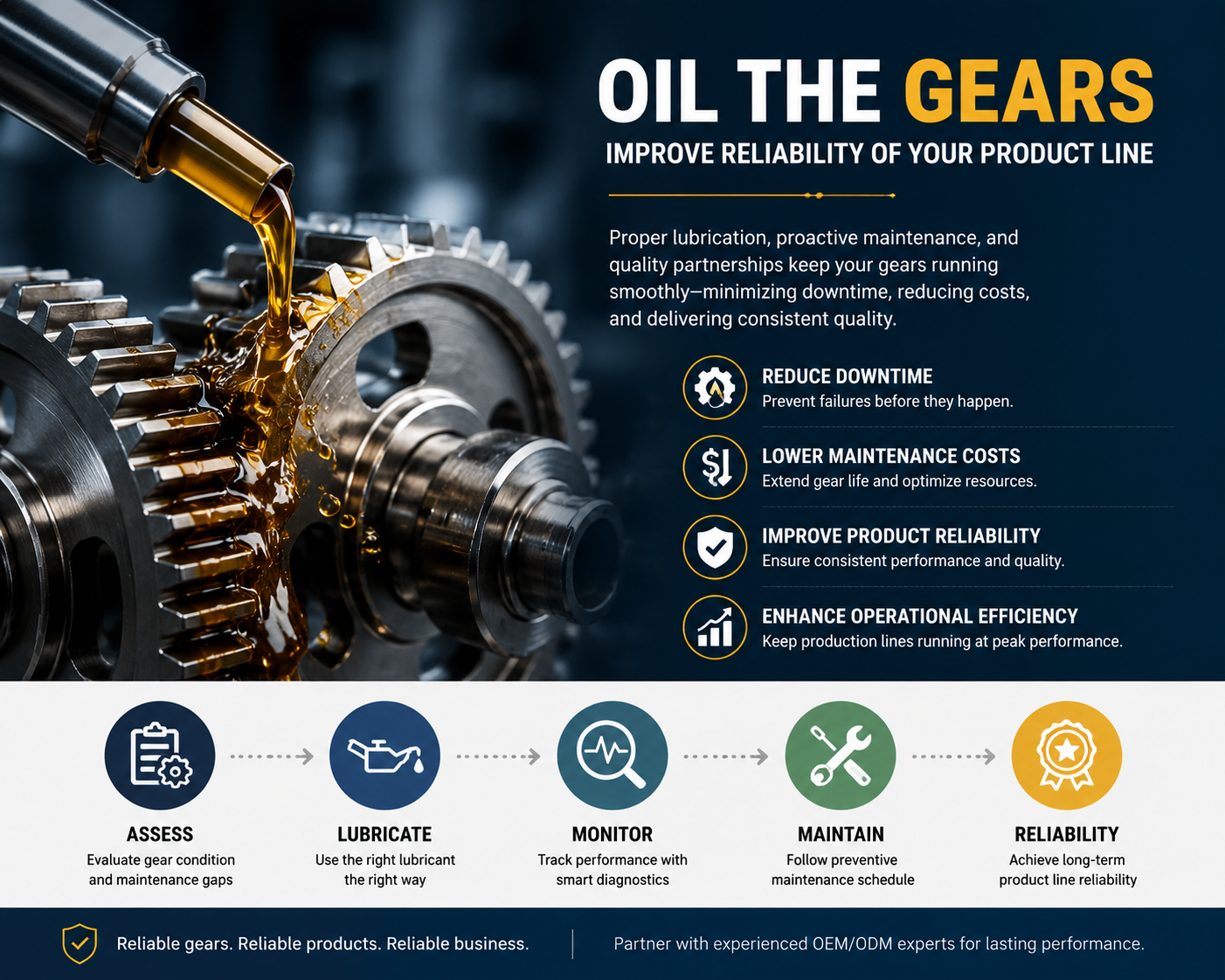
Oil the Gears to Improve Product Line Reliability
1. Introduction to Oil the Gears Concept
1.1 Understanding the Metaphor in Manufacturing
In the fast-paced world of manufacturing, the phrase oil the gears is more than a quaint idiom; it encapsulates the essence of keeping complex systems humming with precision. Much like an intricately meshed gear train in a high-performance transmission, every component in a production line relies on seamless interaction. Neglecting even a single cog can cascade into inefficiencies that ripple throughout the entire process, turning what should be a smooth operation into a grinding nightmare. Understanding this metaphor allows procurement engineers to visualize maintenance and optimization as a strategic, almost surgical intervention that enhances reliability across the board.
1.2 Importance for Product Line Reliability
Reliability is the lifeblood of any brand, particularly when customers expect consistent performance from every product. In a manufacturing context, oiling the gears directly translates into reduced wear, minimal unexpected downtime, and an extended service life for machinery. By proactively maintaining gear systems, procurement engineers ensure that products roll off the line without hiccups, safeguarding brand reputation and operational continuity. Reliability is not just an engineering concern—it’s a strategic lever for market competitiveness.
1.3 Overview of Benefits for Brand Procurement
For procurement professionals, the benefits of meticulous gear maintenance extend beyond machinery. It improves supply chain predictability, reduces emergency repair costs, and enables smarter negotiation with OEM and ODM suppliers by clearly demonstrating a commitment to quality. Additionally, a well-maintained production line facilitates compliance with international quality standards and positions the brand as a trustworthy partner in global markets. Simply put, keeping the gears oiled isn’t just engineering—it’s good business sense.
2. The Role of Gears in Product Manufacturing
2.1 Mechanical Functionality and Performance
Gears are the silent workhorses of manufacturing, translating rotational motion, torque, and speed across machinery with exacting precision. From the miniature bevels in robotic assembly arms to the heavy-duty spur gears in conveyor systems, they form the backbone of consistent mechanical performance. Properly synchronized gears reduce energy loss, minimize vibration, and ensure that every component downstream operates within intended tolerances.
2.2 Common Issues Affecting Gear Efficiency
Despite their resilience, gears are susceptible to a range of issues that can compromise efficiency. Misalignment, pitting, surface fatigue, and inadequate lubrication are common culprits, each capable of accelerating wear or precipitating catastrophic failure. In high-speed operations, even minor imperfections in gear engagement can amplify stress points, resulting in increased maintenance costs and unpredictable downtime.
2.3 Impact on Overall Product Reliability
Gear inefficiencies don’t exist in isolation—they directly affect product reliability. Misfunctioning gears can produce inconsistent output, defective components, and ultimately, dissatisfied customers. For procurement teams, this translates into higher warranty claims, delayed shipments, and compromised brand integrity. Maintaining peak gear performance ensures that the production line consistently produces products that meet or exceed quality expectations.
3. How Proper Lubrication Enhances Longevity
3.1 Types of Lubricants and Their Properties
Selecting the right lubricant is a science and an art. Oils, greases, and advanced synthetic compounds each have distinct viscosity profiles, thermal stability, and anti-wear additives tailored to specific gear geometries and operating conditions. For instance, high-viscosity synthetic oils provide superior shock absorption in heavy-duty applications, while low-viscosity oils are optimal for precision machinery requiring minimal resistance. Understanding these nuances ensures longevity and operational stability.
3.2 Effects on Wear and Tear Reduction
Lubrication forms a critical barrier between metal surfaces, reducing friction and preventing micro-abrasions that compound over time. Proper lubrication mitigates scoring, pitting, and material fatigue, significantly extending the operational lifespan of gears. Beyond the obvious mechanical benefits, it also enhances efficiency by lowering energy consumption and heat generation, which are often overlooked but crucial factors in high-volume production environments.
3.3 Choosing the Right Lubricant for Your Gears
Choosing a lubricant is not a plug-and-play decision. It requires careful evaluation of load-bearing capacity, environmental conditions, operational speed, and even contamination risks. Procurement engineers must collaborate closely with OEM and ODM partners to ensure that lubrication protocols align with material specifications and operational demands, thereby guaranteeing optimal performance without introducing unnecessary maintenance complexity.
4. OEM and ODM Considerations in Gear Maintenance
4.1 Supplier Standards for Gear Lubrication
OEMs and ODMs operate with different design philosophies, but all suppliers are bound by the principle that lubrication standards must meet operational tolerances. Ensuring that partners adhere to rigorous standards—including lubrication type, replenishment schedules, and monitoring procedures—is crucial. Deviations can cause cascading failures that compromise the entire product line.
4.2 Integrating Maintenance into OEM Agreements
Procurement contracts should explicitly define maintenance responsibilities. This includes specifying intervals for lubrication, inspection requirements, and accountability measures for non-compliance. Integrating these clauses ensures suppliers understand that proactive maintenance is not optional—it’s a contractual expectation that directly affects product reliability.
4.3 Ensuring ODM Compliance with Product Specs
ODMs often handle design customization, which can introduce variability in gear specifications. Procurement teams must ensure that lubrication and maintenance practices are tailored to these unique configurations. This reduces the risk of performance inconsistencies and ensures that even customized products maintain the same operational reliability as standard designs.
5. Preventing Downtime Through Proactive Gear Care
5.1 Recognizing Early Signs of Gear Failure
Effective maintenance starts with vigilance. Early warning signs—such as unusual vibration, abnormal noise, or temperature spikes—can signal impending failure. By equipping maintenance teams with the knowledge and tools to detect these anomalies early, procurement professionals can mitigate production interruptions before they escalate.
5.2 Scheduling Preventive Maintenance
Preventive maintenance is the cornerstone of reliability. Implementing scheduled inspections, lubrication, and component replacements reduces unexpected downtime and ensures predictable operational cycles. For global production lines, synchronization of maintenance schedules across multiple sites is essential to maintain uniform product quality.
5.3 Reducing Production Delays and Costs
Proactive care reduces not only downtime but also the financial burden of emergency repairs. Strategically planned interventions prevent secondary damage that often accompanies gear failure, ensuring that production lines remain agile and cost-efficient.
6. Quality Control Measures for Gear Reliability
6.1 Inspection Procedures and Frequency
Regular inspection routines—including visual checks, laser alignment, and dimensional verification—help maintain gear integrity. Frequency should be dictated by operational load, environmental conditions, and production velocity, ensuring that no wear or defect goes unnoticed.
6.2 Using Advanced Diagnostics Tools
Modern diagnostic tools such as vibration analysis, infrared thermography, and ultrasonic testing allow engineers to detect sub-surface defects and micro-fractures invisible to the naked eye. Leveraging these technologies maximizes reliability and minimizes the risk of unexpected failure.
6.3 Maintaining Consistent Performance Across Products
Consistency is key for brand procurement. Standardized inspection protocols and real-time monitoring ensure that every product leaving the factory meets exacting performance standards, thereby protecting brand reputation and customer trust.
7. Case Studies of Improved Product Reliability
7.1 Success Stories from OEM Partners
Numerous OEMs have reported dramatic improvements in product uptime and longevity following the adoption of rigorous gear maintenance protocols. These success stories highlight the quantifiable benefits of lubrication, alignment, and proactive monitoring.
7.2 Lessons Learned from Gear Failures
Conversely, case studies of gear failures illustrate the costs of negligence. From costly recalls to reputational damage, these lessons reinforce the need for structured maintenance programs and supplier accountability.
7.3 Applying Insights to Your Brand Procurement
Procurement engineers can leverage these case studies to design contracts, monitoring frameworks, and maintenance schedules that preemptively address potential risks, ensuring operational continuity and cost-effectiveness.
8. Cost-Benefit Analysis of Regular Gear Maintenance
8.1 Short-Term vs Long-Term Financial Impact
While regular maintenance entails upfront costs, the long-term financial benefits—reduced downtime, extended equipment life, and improved production consistency—far outweigh initial expenditures. Procurement teams must evaluate these trade-offs holistically.
8.2 Balancing Maintenance Costs with ROI
Determining the optimal maintenance budget requires balancing immediate costs with measurable returns in reliability, product quality, and supplier performance. Strategically investing in gear care pays dividends in operational resilience.
8.3 Budgeting for Reliable Production
Establishing a dedicated budget line for gear maintenance, including lubrication, inspection tools, and personnel training, ensures that reliability is financially sustainable and operationally prioritized.
9. Training Teams on Gear Handling and Care
9.1 Educating Manufacturing Staff
Operational reliability depends on human expertise. Comprehensive training programs equip staff with the skills to identify anomalies, perform routine lubrication, and report potential issues effectively.
9.2 Standard Operating Procedures
Documented SOPs ensure uniform maintenance practices across shifts and facilities. Clear procedures reduce variability and provide a baseline for performance measurement.
9.3 Reducing Human Error in Gear Maintenance
Human error is a significant contributor to mechanical failures. Training, paired with SOPs and real-time monitoring, minimizes mistakes and ensures proactive interventions are consistently applied.
10. Technological Innovations in Gear Lubrication
10.1 Smart Lubrication Systems
Automated lubrication systems deliver precise quantities of lubricant at optimal intervals, reducing waste and ensuring consistent protection for gears under varying operational loads.
10.2 IoT Monitoring for Gear Health
IoT-enabled sensors provide continuous feedback on vibration, temperature, and torque, allowing predictive maintenance and early problem detection before failures occur. Learn more about industrial IoT applications at NIST.
10.3 Predictive Analytics to Prevent Failures
Predictive analytics transforms gear maintenance from a reactive activity into a strategic advantage. By analyzing historical operating data, lubrication trends, vibration signatures, thermal patterns, and load fluctuations, advanced algorithms can forecast potential failures long before they become visible problems. Instead of waiting for a gearbox to fail unexpectedly, maintenance teams can intervene at precisely the right moment.
For procurement professionals managing large-scale supply chains, predictive analytics delivers measurable value. It reduces spare parts inventory uncertainty, improves maintenance scheduling accuracy, and minimizes costly emergency shutdowns. In highly competitive markets where every hour of production counts, predictive maintenance can be the difference between meeting delivery commitments and missing critical deadlines.
Organizations that embrace predictive analytics are not merely maintaining gears; they are building resilient manufacturing ecosystems capable of sustaining long-term growth and customer satisfaction.
11. Selecting the Right Suppliers for Gear Quality
11.1 Vetting OEM and ODM Manufacturers
Choosing the right OEM or ODM supplier is one of the most important decisions a procurement engineer can make. A supplier's capability extends far beyond providing competitive pricing. Their expertise in gear design, material selection, heat treatment, machining precision, and lubrication management directly impacts the reliability of the final product.
A comprehensive supplier evaluation should include:
- Manufacturing process audits
- Quality management system reviews
- Production capacity assessments
- Technical engineering capabilities
- Gear inspection equipment verification
- Maintenance program evaluations
Factory visits often reveal valuable insights that cannot be captured in a quotation sheet. Walking through production facilities, observing quality control procedures, and speaking directly with engineering teams provides a clearer picture of a supplier's true capabilities.
11.2 Ensuring Material Standards and Certifications
Even the most sophisticated gear design can fail if material quality falls short of requirements. Procurement teams must verify that suppliers consistently meet applicable international standards and certifications.
Critical considerations include:
- Material traceability documentation
- Chemical composition verification
- Mechanical property testing
- Heat treatment certification
- Surface hardness validation
- Metallurgical inspection reports
Standards such as ISO 9001, IATF 16949, DIN, AGMA, and JIS provide valuable benchmarks for evaluating manufacturing quality. Reliable suppliers maintain comprehensive documentation and willingly provide evidence supporting compliance.
Material consistency is particularly important because microscopic defects can evolve into macroscopic failures under repeated loading cycles. What appears insignificant during manufacturing may become a significant reliability issue after thousands of operating hours.
11.3 Building Long-Term Supplier Relationships
Successful procurement is not solely about finding suppliers; it is about developing partnerships. Long-term supplier relationships foster trust, improve communication, and encourage continuous improvement initiatives.
When suppliers understand a brand's quality expectations and business objectives, they become more proactive in identifying opportunities for optimization. Collaborative partnerships often lead to:
- Improved product quality
- Faster issue resolution
- Enhanced engineering support
- Better pricing stability
- More reliable delivery schedules
- Joint innovation projects
Strong supplier relationships create a win-win environment where both parties are invested in achieving operational excellence.
12. Environmental Considerations in Gear Maintenance
12.1 Eco-Friendly Lubricants
Environmental responsibility is becoming increasingly important in global manufacturing. Many organizations are transitioning toward environmentally friendly lubricants that reduce ecological impact without sacrificing performance.
Modern eco-friendly lubricants offer several advantages:
- Reduced toxicity
- Improved biodegradability
- Lower environmental contamination risk
- Enhanced workplace safety
- Regulatory compliance support
Advanced synthetic and bio-based lubricants continue to improve, making them viable alternatives for many industrial applications. Procurement professionals should evaluate these options carefully when developing sustainability strategies.
12.2 Waste Reduction in Maintenance Processes
Waste reduction is not only environmentally responsible but also economically beneficial. Excess lubricant consumption, inefficient maintenance practices, and unnecessary component replacement contribute to both environmental burden and operational cost.
Effective waste reduction strategies include:
- Precision lubrication systems
- Condition-based maintenance
- Oil filtration and reclamation
- Improved storage practices
- Leak prevention programs
Small improvements implemented consistently across multiple production facilities can generate substantial savings while supporting corporate sustainability goals.
12.3 Compliance with Global Environmental Standards
Manufacturers operating internationally must navigate an increasingly complex regulatory landscape. Compliance requirements may vary significantly between regions, making proactive environmental management essential.
Key regulatory frameworks often include:
- REACH compliance
- RoHS requirements
- ISO 14001 environmental management systems
- Local environmental regulations
- Waste disposal requirements
Working with suppliers that prioritize environmental compliance reduces risk and helps ensure uninterrupted market access.
13. Scaling Gear Maintenance Across Multiple Product Lines
13.1 Standardizing Procedures Across Factories
As organizations expand globally, maintaining consistent gear maintenance practices becomes increasingly challenging. Different facilities may develop their own maintenance habits, creating variability that affects reliability.
Standardization helps eliminate inconsistency by establishing:
- Common lubrication procedures
- Uniform inspection protocols
- Shared maintenance schedules
- Standard training programs
- Consistent documentation requirements
When every facility follows the same best practices, product quality becomes more predictable regardless of manufacturing location.
13.2 Maintaining Quality Across Different Products
Different products often require different gear configurations, operating loads, and environmental conditions. Nevertheless, the underlying principles of reliability remain constant.
Successful organizations develop maintenance frameworks flexible enough to accommodate product variation while preserving core quality standards. This approach ensures reliability without creating unnecessary operational complexity.
13.3 Leveraging Centralized Monitoring Systems
Centralized monitoring platforms provide procurement and engineering teams with unprecedented visibility into manufacturing performance.
These systems can consolidate data from multiple facilities, including:
- Lubrication records
- Inspection results
- Gear condition assessments
- Maintenance schedules
- Downtime reports
- Failure analyses
With centralized visibility, decision-makers can identify trends, benchmark performance, and allocate resources more effectively.
14. Risk Management and Contingency Planning
14.1 Identifying Potential Gear Failures
Effective risk management begins with identifying vulnerabilities before they cause disruption.
Common gear-related risks include:
- Lubrication failure
- Material defects
- Improper installation
- Misalignment
- Overloading
- Contamination
A structured risk assessment process helps prioritize resources toward the most critical threats and ensures appropriate mitigation strategies are implemented.
14.2 Developing Contingency Strategies
Even the most robust maintenance programs cannot eliminate every risk. Contingency planning ensures organizations can respond effectively when unexpected events occur.
Strong contingency plans typically include:
- Critical spare part inventories
- Backup production capacity
- Emergency maintenance procedures
- Supplier support agreements
- Alternative sourcing strategies
Prepared organizations recover faster from disruptions and minimize customer impact.
14.3 Minimizing Impact on Production and Delivery
Production interruptions can trigger a chain reaction throughout the supply chain. Missed production targets often lead to delayed deliveries, customer dissatisfaction, and financial penalties.
By combining proactive maintenance with robust contingency planning, organizations can significantly reduce the likelihood and severity of disruptions. This resilience strengthens customer confidence and supports long-term business growth.
15. Metrics to Measure Product Line Reliability
15.1 Key Performance Indicators for Gears
Reliable decision-making requires accurate measurement. Procurement and engineering teams should establish KPIs that provide meaningful insights into gear performance.
Common gear reliability KPIs include:
- Mean Time Between Failures (MTBF)
- Mean Time To Repair (MTTR)
- Lubrication compliance rates
- Gear wear progression
- Vibration levels
- Operating temperature trends
These metrics provide objective evidence of maintenance effectiveness and equipment health.
15.2 Monitoring Downtime and Failure Rates
Downtime is one of the most visible indicators of operational performance. Tracking both planned and unplanned downtime allows organizations to evaluate maintenance efficiency and identify improvement opportunities.
Failure rate analysis helps uncover recurring issues that may be linked to design deficiencies, supplier quality concerns, or inadequate maintenance practices.
15.3 Reporting Insights to Procurement Teams
Procurement professionals require clear, actionable information rather than overwhelming amounts of raw data.
Effective reporting should highlight:
- Reliability trends
- Supplier performance comparisons
- Maintenance effectiveness
- Cost implications
- Risk indicators
- Improvement opportunities
When procurement teams have access to meaningful reliability data, they can make more informed sourcing and supplier management decisions.
16. Conclusion and Action Plan for Brand Procurement
16.1 Summarizing the Benefits of Oil the Gears
The concept of oiling the gears extends far beyond lubrication. It represents a comprehensive approach to maintaining the health, efficiency, and reliability of manufacturing systems.
Organizations that prioritize gear maintenance benefit from:
- Reduced downtime
- Improved product quality
- Lower operating costs
- Longer equipment lifespan
- Enhanced customer satisfaction
- Stronger supplier relationships
Reliability is not achieved through luck; it is built through disciplined engineering and procurement practices.
16.2 Step-by-Step Implementation for Procurement Teams
A practical implementation roadmap may include:
- Audit existing gear maintenance practices.
- Evaluate OEM and ODM supplier capabilities.
- Standardize lubrication specifications.
- Establish preventive maintenance schedules.
- Implement condition monitoring technologies.
- Develop supplier performance scorecards.
- Train maintenance and production personnel.
- Continuously review performance metrics.
16.3 Future-Proofing Your Product Line Reliability
Manufacturing continues to evolve through automation, digitalization, artificial intelligence, and advanced materials science. Organizations that embrace these developments while maintaining strong maintenance fundamentals will be best positioned for future success.
Future-proofing reliability requires:
- Investing in smart maintenance technologies
- Building strategic supplier partnerships
- Adopting predictive analytics
- Supporting workforce development
- Maintaining rigorous quality standards
For brand procurement professionals, the message is straightforward: reliable products begin with reliable manufacturing systems. When gears are properly maintained, suppliers are carefully managed, and data drives decision-making, organizations create a powerful competitive advantage that resonates throughout the entire supply chain.
In manufacturing, there is an old workshop truth that still holds today: when the gears run smoothly, everything else tends to fall into place. By consistently oiling the gears—both literally and figuratively—brands can build stronger product lines, reduce operational risk, and deliver the dependable performance that customers expect year after year.
Learn more about mechanical gear maintenance at AGMA and global manufacturing standards at ISO.org.