Table of Contents
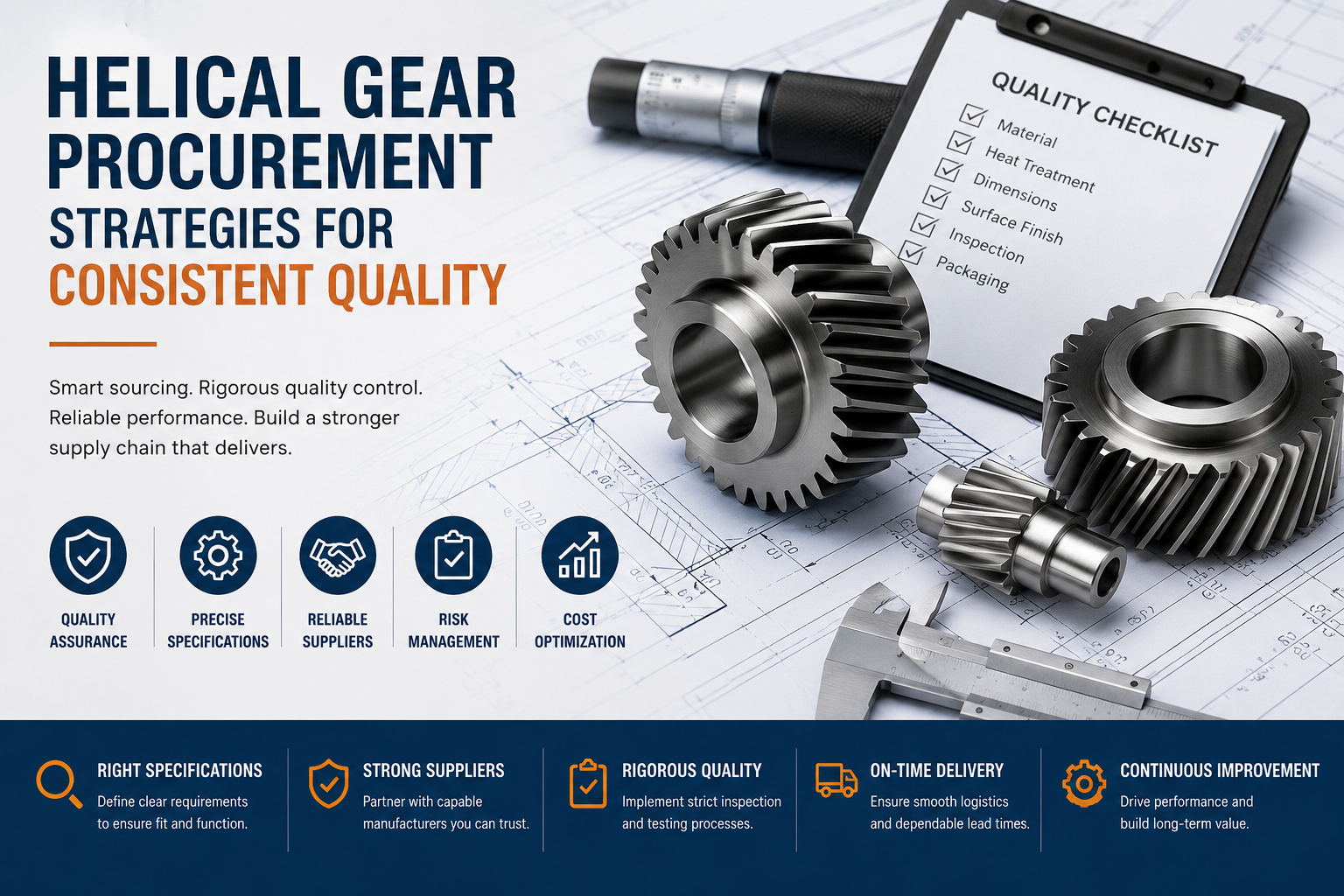
Helical Gear Procurement Strategies for Consistent Quality
1. Introduction to Helical Gear Procurement
Understanding the Role of Helical Gears in Industrial Applications
Helical gears are the unsung heroes of modern mechanical engineering, quietly transmitting torque and power across countless applications without making a fuss. Unlike their spur gear cousins, helical gears boast angled teeth that engage gradually, ensuring smoother motion and reduced noise—a critical factor in precision machinery, automotive drivetrains, and industrial robots. In environments where vibration can wreak havoc on performance, helical gears act as the stabilizing force, distributing load more evenly and extending the life of associated components. From heavy-duty compressors to intricate conveyor systems, understanding their role is non-negotiable for procurement pros aiming to guarantee seamless operations.
Why Consistent Quality Matters for Brand Owners
For brand procurement teams, inconsistent gear quality is like throwing a wrench in a well-oiled machine—literally. Subpar gears can trigger cascading failures, increased maintenance costs, and, worst of all, damage to brand reputation. Consistency isn’t just a nice-to-have; it’s a contractual expectation. Reliable performance translates into predictable maintenance cycles, reduced downtime, and a product that meets—or exceeds—end-user expectations. In a market where global competitors are only a click away, securing consistent gear quality becomes a strategic advantage, not just an operational necessity.
Common Procurement Challenges in Global Supply Chains
Navigating the labyrinth of global supply chains for helical gears is fraught with obstacles. Suppliers may promise premium quality but fall short due to outdated machinery, inconsistent raw materials, or gaps in quality assurance protocols. Language barriers, differing industrial standards, and logistical hiccups further complicate procurement. Exchange rates, tariffs, and shipping delays can affect cost-efficiency, while geopolitical factors may introduce risk. For procurement teams, the challenge lies in not just identifying capable suppliers, but also in creating resilient systems that safeguard quality from factory floor to assembly line.
2. Understanding Helical Gear Fundamentals Before Purchasing
Helical Gear Design and Working Principles
Helical gears operate on a deceptively simple principle: teeth cut at an angle to the axis engage gradually, producing a near-continuous transfer of motion. This oblique engagement reduces shock loads and vibrations compared to straight-cut gears, but it also generates axial thrust that must be managed through bearings and housing design. The helix angle, tooth width, and module are critical parameters that define load capacity, efficiency, and noise characteristics. For procurement engineers, knowing these principles is vital to match the right gear to the application without overpaying for unnecessary tolerances.
Key Differences Between Helical and Spur Gears
The devil is in the details when comparing helical and spur gears. Spur gears engage abruptly and are best for low-speed, low-noise applications, whereas helical gears excel in high-speed, high-load environments thanks to smoother engagement and higher torque capacity. Helical gears also have a more complex manufacturing process, demanding precision grinding and heat treatment, which translates to higher upfront cost but superior longevity. For purchasing engineers, understanding these differences ensures that the gear type aligns with operational requirements rather than chasing trends or cost savings alone.
Industries That Depend on High-Quality Helical Gears
Industries ranging from aerospace and automotive to robotics and heavy machinery rely on helical gears for performance-critical operations. In robotics, precision and silent operation are paramount, whereas in automotive transmissions, heat resistance and torque transfer dominate the specification sheet. Even in energy generation, such as wind turbines or hydroelectric systems, high-quality helical gears sustain loads over decades, demonstrating the stakes involved in procurement decisions.
3. Defining Quality Standards and Procurement Objectives
Establishing Performance Requirements
The first step in a procurement strategy is translating application demands into quantifiable performance metrics. Torque capacity, backlash tolerance, noise levels, and operational lifespan are the parameters that must be locked down early. Establishing these requirements ensures that all suppliers are evaluated on a common playing field, reducing ambiguity and eliminating guesswork during supplier negotiations.
Aligning Procurement Goals with Product Applications
Procurement objectives must dovetail with product design requirements to avoid costly mismatches. High-speed industrial equipment may prioritize reduced vibration and axial load management, whereas automotive gears may prioritize thermal stability under fluctuating loads. Aligning procurement strategy with end-use application ensures that each gear purchased contributes meaningfully to product reliability, efficiency, and brand reputation.
Creating Measurable Quality Benchmarks
A rigorous procurement plan demands measurable benchmarks: surface finish Ra values, microhardness ranges, tooth profile accuracy, and metallurgical composition. These benchmarks become the yardstick for supplier evaluation, incoming inspection, and long-term supplier performance monitoring. Without them, procurement becomes a guessing game rather than a data-driven strategy.
4. Identifying the Right Helical Gear Material
Common Materials Used in Helical Gear Manufacturing
Helical gears are forged or machined from a spectrum of materials, each with unique properties. Alloy steels like 20CrMnTi or 42CrMo offer high strength and wear resistance, while stainless steels provide corrosion resistance in demanding environments. Powder metallurgy and sintered steel options may appear cost-effective but demand scrutiny for mechanical consistency and density uniformity.
Material Selection Based on Load and Environment
Selecting the right material is a balancing act. High-load applications require superior fatigue strength, while corrosive or high-temperature environments necessitate stainless or treated alloys. Materials also influence post-processing methods, such as carburization, nitriding, or induction hardening, which directly affect gear longevity and performance.
Balancing Cost, Durability, and Performance
Procurement engineers face the classic triangle: cost, durability, and performance. Opting for the cheapest material may compromise operational lifespan, while ultra-premium alloys could inflate budgets unnecessarily. Effective procurement strategies balance these variables by aligning material selection with operational realities and life-cycle cost analysis rather than superficial pricing.
5. Evaluating Supplier Manufacturing Capabilities
Assessing Production Equipment and Technology
Not all factories are created equal. Precision CNC machining, hobbing machines, and state-of-the-art grinding equipment directly impact gear quality. Evaluating the supplier’s technological landscape helps anticipate the consistency of manufacturing and the ability to scale production without sacrificing precision.
Reviewing Engineering and Design Expertise
Supplier competence extends beyond machines; engineering know-how matters just as much. Suppliers must understand the nuances of tooth geometry, load distribution, and stress concentration to ensure that designs are manufacturable and reliable. Technical consultation during the procurement phase often prevents headaches down the line.
Understanding Manufacturing Capacity and Scalability
Production capability isn’t just about quality—it’s about meeting demand consistently. A supplier might produce a flawless batch of 1,000 gears, but can they scale to 10,000 units while maintaining tolerances? Understanding capacity and scalability is essential for long-term procurement planning, especially for OEMs with growing production requirements.
6. Analyzing Supplier Quality Management Systems
Importance of Certified Quality Systems
ISO 9001, IATF 16949, and AS9100 certifications aren’t just letterheads; they’re proof of systemic quality controls. A supplier with robust certification protocols demonstrates commitment to process control, traceability, and continuous improvement. For procurement engineers, certified systems provide confidence that quality isn’t left to chance.
Evaluating Inspection and Testing Procedures
A supplier’s inspection toolkit—coordinate measuring machines, surface profilometers, hardness testers—directly affects the accuracy of delivered gears. Understanding their testing protocols, sampling plans, and frequency of inspections is critical to verify that production matches specification consistently.
Reviewing Continuous Improvement Programs
A culture of continuous improvement, often signaled by Six Sigma or lean initiatives, ensures suppliers are proactively identifying inefficiencies and mitigating defects. For brand owners, this reduces the likelihood of recurring quality issues and enhances long-term partnership value.
7. Critical Gear Specifications Procurement Teams Must Verify
Module, Pitch, and Tooth Profile Accuracy
The backbone of helical gear performance lies in precise tooth geometry. Module, pitch, and tooth profile errors can lead to accelerated wear, noise, and even catastrophic failure. Procurement engineers must ensure that suppliers deliver gears within specified tolerance ranges using verified measurement methods.
Helix Angle and Gear Geometry Requirements
Even minor deviations in helix angle can impact axial thrust and load distribution. Understanding the permissible range and the supplier’s ability to maintain it consistently is crucial for smooth operation and long-term reliability.
Tolerance Standards and Dimensional Consistency
Dimensional consistency affects assembly ease and overall system efficiency. ISO or AGMA standards provide reference points, but verification through sampling and first article inspection is essential to prevent downstream issues.
8. Heat Treatment Requirements for Reliable Performance
Common Heat Treatment Methods
Carburizing, nitriding, induction hardening—each heat treatment method modifies surface hardness, core toughness, and residual stress. Selecting the correct process ensures the gear can handle design loads without premature fatigue.
Impact of Heat Treatment on Gear Life
Incorrect or uneven heat treatment can result in micro-cracks, distortion, or inconsistent hardness, shortening operational life. Procurement teams must demand documented proof of process parameters and post-treatment inspection results.
Verifying Hardness and Metallurgical Properties
Testing methods such as Rockwell hardness, microhardness mapping, and metallographic analysis confirm that heat treatment objectives are met. Ensuring these checks are part of supplier workflow safeguards against performance variability.
9. Surface Finish and Machining Quality Considerations
Surface Roughness Requirements
Surface roughness affects friction, wear, and noise levels. Gear surfaces with excessive roughness can generate heat and premature wear, compromising efficiency. Procurement teams must define Ra values and verify adherence through profilometry.
Precision Grinding and Finishing Processes
Grinding and finishing are where tolerances are tightened and noise minimized. Suppliers must demonstrate capability in generating smooth, precise tooth surfaces that align with design intent, especially for high-speed applications.
Effects of Surface Quality on Performance
Even minor imperfections can escalate wear, increase energy loss, and reduce operational life. High-quality surface finishing is an investment in efficiency and longevity rather than a cosmetic feature.
10. Supplier Qualification and Audit Strategies
Conducting Factory Audits
On-site audits allow procurement engineers to observe process adherence, equipment maintenance, and staff competence. Audits uncover discrepancies between documentation and actual practices, offering actionable insights for supplier selection.
Reviewing Past Customer Performance
References and case studies provide a reality check. Evaluating a supplier’s history with similar clients can reveal reliability trends, issue resolution effectiveness, and responsiveness under pressure.
Evaluating Technical Communication Capabilities
Suppliers must understand complex drawings, tolerances, and specifications. Poor communication can lead to misinterpretation and repeated defects, even with competent machinery. Assessing technical clarity early prevents headaches later.
11. Building a Robust Incoming Inspection Process
Creating Inspection Checklists
A detailed checklist encompassing dimensional checks, visual inspections, hardness tests, and surface finish verification ensures that no critical parameter slips through the cracks. Standardized checklists promote consistency across batches and shifts.
Sampling Methods for Gear Verification
Statistical sampling ensures efficiency without compromising quality. Sampling plans like ANSI/ASQ Z1.4 help determine batch acceptance criteria, balancing thoroughness with practicality.
Documentation and Traceability Requirements
Traceable records of inspections, batch numbers, and material certificates create accountability. Procurement teams rely on these documents for warranty claims, audits, and continuous supplier performance evaluation.
12. Managing Prototype and First Article Approval
Importance of Prototype Validation
Prototypes allow functional testing under real-world conditions. Early validation identifies design or manufacturing issues before mass production, preventing expensive recalls or rework.
First Article Inspection Procedures
FAI confirms that production processes can replicate the prototype accurately. This step involves detailed measurement, comparison to CAD data, and verification of material and heat treatment properties.
Corrective Actions Before Mass Production
Any discrepancies found during FAI require root cause analysis and corrective action. Ensuring suppliers can implement changes quickly safeguards mass production schedules and product reliability.
13. Developing Effective Supplier Collaboration Programs
Establishing Clear Communication Channels
Transparent, consistent communication reduces misunderstandings and accelerates problem resolution. Digital platforms, scheduled calls, and on-site visits create a shared understanding of expectations.
Sharing Technical Drawings and Specifications
Providing suppliers with clear, up-to-date technical data prevents misinterpretation. Controlled revision management ensures everyone works from the same blueprint, minimizing errors.
Managing Engineering Changes Efficiently
Change requests are inevitable. A structured process ensures that updates to design or material are implemented without affecting ongoing production or causing quality issues.
14. Reducing Quality Risks in Global Sourcing
Identifying Common Procurement Risks
Risks include inconsistent quality, logistical delays, intellectual property concerns, and regulatory compliance issues. Recognizing potential pitfalls enables proactive mitigation.
Creating Risk Mitigation Plans
Mitigation strategies include multi-sourcing, contractual quality clauses, insurance coverage, and robust supplier auditing. These measures reduce the likelihood of costly disruptions.
Establishing Contingency Supply Strategies
Maintaining backup suppliers, strategic inventory buffers, and flexible logistics arrangements ensures continuity of supply even when unexpected challenges arise.
15. Cost Optimization Without Sacrificing Quality
Evaluating Total Cost of Ownership
Procurement decisions should factor in not just purchase price but maintenance, downtime, and failure costs. TCO analysis often justifies paying more upfront for superior quality.
Avoiding Hidden Costs from Poor Quality
Defective gears lead to rework, replacements, warranty claims, and reputation damage. Preventing defects upstream saves far more than chasing minimal unit price reductions.
Strategic Cost Reduction Opportunities
Negotiating long-term contracts, optimizing batch sizes, and collaborating with suppliers on process improvements can reduce costs without compromising quality or performance.
16. Logistics, Packaging, and Storage Best Practices
Protective Packaging for Precision Gears
Gears must be shielded from moisture, dust, and impact during transit. Custom packaging solutions, including anti-corrosion coatings and cushioning, preserve dimensional integrity.
Transportation Risk Management
Selecting reliable carriers, monitoring transit conditions, and ensuring insurance coverage mitigates risk of damage or delays that could disrupt production schedules.
Storage Conditions for Long-Term Quality Preservation
Controlled temperature, humidity, and cleanliness prevent corrosion and surface degradation, ensuring gears remain ready for immediate use.
17. Performance Monitoring After Delivery
Tracking Supplier Quality Metrics
Key performance indicators such as defect rates, on-time delivery, and corrective action effectiveness help monitor supplier consistency and reliability over time.
Analyzing Field Performance Data
Real-world operational feedback—noise levels, wear patterns, and failure rates—provides actionable insights for future procurement decisions and continuous improvement initiatives.
Managing Warranty and Failure Reports
Efficient tracking of warranty claims and failure analysis ensures accountability and helps negotiate supplier responsibility for substandard components.
18. Leveraging Data and Digital Tools in Procurement
Supplier Performance Dashboards
Digital dashboards provide real-time visibility into supplier KPIs, enabling procurement teams to make data-driven decisions and quickly identify potential issues.
Digital Quality Documentation Systems
Electronic records of inspections, material certificates, and compliance documentation streamline audits and reduce errors associated with paper-based processes.
Predictive Procurement Analytics
Advanced analytics can forecast potential supplier failures, lead```html time delays, or quality issues, allowing proactive measures to maintain production continuity and reduce risk.
19. Long-Term Supplier Relationship Management
Building Strategic Partnerships
Treating suppliers as strategic partners rather than transactional vendors fosters collaboration, loyalty, and mutual investment in quality improvements.
Supplier Development Programs
Structured programs can help suppliers improve capabilities, adopt best practices, and align more closely with brand standards, benefiting both parties over the long term.
Creating Mutual Growth Opportunities
Joint innovation projects, co-development initiatives, and shared risk-reward models incentivize continuous improvement and strengthen supply chain resilience.
20. Future Trends in Helical Gear Procurement
Smart Manufacturing and Industry 4.0
Automation, IoT-enabled production lines, and real-time monitoring allow manufacturers to maintain unprecedented levels of precision and consistency, reducing procurement risk.
Sustainability and Responsible Sourcing
Environmentally responsible materials, energy-efficient manufacturing, and ethical labor practices are becoming procurement criteria, influencing supplier selection and brand reputation.
Emerging Quality Assurance Technologies
AI-driven inspection, 3D scanning, and predictive maintenance tools enable proactive defect detection and continual process optimization, reshaping traditional procurement strategies.
21. Helical Gear Procurement Checklist for Consistent Quality
Pre-Sourcing Evaluation Checklist
Evaluate supplier certifications, machinery, past performance, material expertise, and engineering capabilities before placing orders.
Production and Inspection Verification Checklist
Confirm adherence to dimensional tolerances, heat treatment processes, surface finishes, inspection protocols, and documentation standards.
Supplier Performance Review Checklist
Monitor delivery reliability, defect rates, responsiveness, continuous improvement initiatives, and compliance with contractual obligations.
22. Conclusion
Key Takeaways for Procurement Professionals
Consistent quality in helical gear procurement hinges on detailed specifications, rigorous supplier evaluation, and ongoing performance monitoring. Every step, from material selection to logistics, plays a critical role.
Action Steps for Improving Procurement Outcomes
Implement robust inspection protocols, leverage digital tools, maintain strong supplier relationships, and continuously analyze operational data to mitigate risks.
Building a Sustainable Quality-Driven Supply Chain
By prioritizing consistency, investing in supplier development, and embracing technological advancements, procurement teams can create a resilient, reliable, and high-performance supply chain that delivers lasting value.