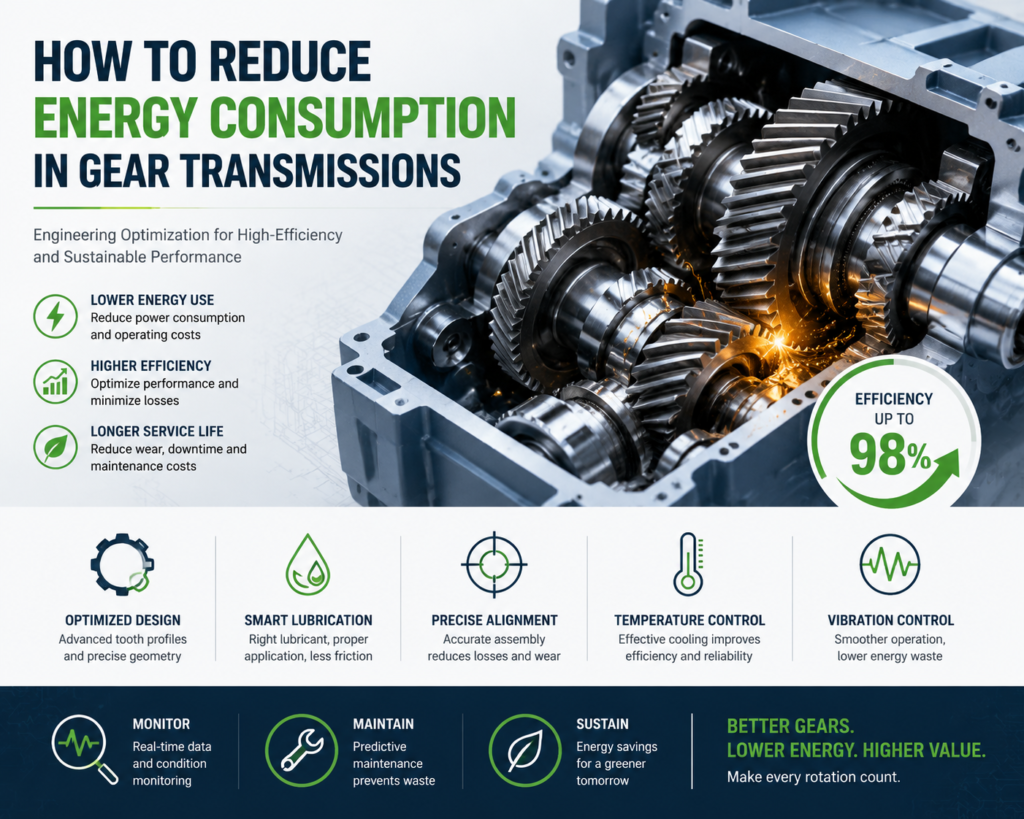
Energy-Saving Gears: Maximizing Efficiency in Industrial Transmissions
1. Introduction to Energy-Saving Gears
1.1 Definition and Importance of Energy-Saving Gears
Energy-saving gears, at their core, are engineered to minimize energy dissipation while maintaining optimal torque transmission, which directly translates into cost savings and enhanced equipment longevity. In industries where every kilowatt counts, these gears aren’t just a luxury—they are a necessity for reducing operational overhead and environmental footprint, particularly in high-load machinery.
1.2 Current Trends in High-Efficiency Transmission Systems
The trend in modern transmission systems leans heavily toward integration of high-precision gears with low-friction surfaces, coupled with intelligent monitoring. Engineers are increasingly specifying gears with optimized helix angles and advanced metallurgy to squeeze every joule of energy from the system, while manufacturers adopt predictive maintenance and IoT-enabled analytics to keep these systems humming efficiently.
1.3 Overview of Mechanical Optimization for Industrial Applications
Mechanical optimization isn’t simply about swapping out components; it’s a holistic approach where load paths, torque curves, and even housing tolerances are evaluated. By harmonizing these factors, engineers can reduce parasitic losses and ensure that machinery runs smoother, quieter, and with a measurable reduction in energy consumption—a win-win for procurement teams chasing both cost efficiency and reliability.
2. Fundamentals of Gear Efficiency
2.1 Factors Affecting Gear Efficiency
Efficiency hinges on variables like tooth contact ratio, lubrication viscosity, surface roughness, and alignment precision. Even minor deviations in gear tooth geometry can induce micro-slips, generating heat that literally burns energy. Understanding these subtle contributors is key to designing systems that punch above their weight in energy performance.
2.2 Energy Losses in Conventional Gear Systems
Conventional spur or bevel gears typically exhibit 2–6% energy losses due to sliding friction, windage, and hysteresis in material deformation. Over prolonged operation, these losses accumulate, underscoring why high-efficiency transmissions are increasingly the industry standard rather than an optional upgrade.
2.3 Role of Material Selection in Efficiency Improvement
Choosing the right alloy or heat treatment regimen can be a game-changer. Steels with optimized carbon content, nitriding treatments, or even composite inserts can reduce hysteresis, wear, and friction coefficients, directly impacting energy efficiency while maintaining mechanical robustness.
3. Types of Energy-Saving Gears
3.1 Helical and Herringbone Gears
These gears distribute loads over multiple teeth, reducing stress peaks and sliding friction. Herringbone gears, with their double-helical design, virtually eliminate axial thrust, making them a top choice in heavy-duty, high-torque applications.
3.2 Bevel and Hypoid Gears
Bevel and hypoid gears offer angular transmission while allowing smoother meshing, higher contact ratios, and less energy loss. In automotive or industrial applications where torque transfer is critical, these gears are the unsung heroes behind energy savings.
3.3 Planetary and Epicyclic Gear Systems
Planetary configurations not only save space but enhance torque efficiency by sharing load across multiple contact points. Their compact design is ideal for applications where both efficiency and footprint reduction are paramount.
4. High-Efficiency Transmission Principles
4.1 Minimizing Friction and Heat Generation
Friction is the silent energy thief. By optimizing tooth surface roughness, employing advanced lubricants, and designing for proper lubrication pathways, engineers can drastically reduce heat buildup and parasitic losses.
4.2 Optimizing Gear Geometry for Load Distribution
Gear geometry tweaks—like adjusting helix angles or tooth crowning—ensure more uniform load distribution. This prevents localized wear and keeps the transmission operating closer to its theoretical efficiency.
4.3 Lubrication Strategies for Energy Conservation
Lubrication is more than “oil it and forget it.” Precision lubrication, including micro-dosing and synthetic oils with specific viscosity-temperature profiles, can cut energy losses by reducing drag and prolonging component life.
5. Material Innovations for Mechanical Optimization
5.1 Advanced Alloys for Durability and Efficiency
From high-chrome steels to maraging alloys, material selection profoundly affects gear performance. Tougher alloys handle higher loads with less deformation, meaning energy that would otherwise be wasted in flexing is preserved.
5.2 Surface Treatments and Coatings
Nitriding, PVD coatings, and diamond-like carbon (DLC) layers reduce friction, resist corrosion, and extend operational lifespan—critical factors in energy-conscious design.
5.3 Lightweight Composite Materials
Composite gears are emerging as viable solutions in low-to-medium torque applications, delivering reduced inertia, lower energy consumption, and resistance to vibration-induced wear.
6. Gear Design Strategies for Energy Savings
6.1 Tooth Profile Modifications
Involute, trochoid, and custom-modified tooth profiles influence sliding and rolling ratios, impacting efficiency. Tailoring profiles to load conditions can shave energy losses by several percentage points—a small tweak with big dividends.
6.2 Optimizing Pitch and Module Parameters
Correct pitch and module selection minimize contact stress and reduce unnecessary micro-slippage. Engineers often run iterative simulations to dial in these parameters for each unique transmission system.
6.3 Reducing Backlash and Vibration
Backlash isn’t just a source of mechanical play; it’s wasted energy. Precise machining, preloaded gear assemblies, and vibration damping techniques keep transmissions tightly meshed and energy-efficient.
7. Load Management and Torque Optimization
7.1 Calculating Optimal Torque for Energy Efficiency
Torque must be delivered efficiently, not just maximized. Over-torquing burns energy unnecessarily, while under-torquing causes slippage and wear—both scenarios require careful engineering calculation.
7.2 Load Sharing in Multi-Stage Transmissions
Multi-stage gearboxes distribute loads across several stages. Proper design ensures each stage shares the burden evenly, reducing energy losses and component fatigue.
7.3 Impact of Misalignment on Energy Consumption
Even slight misalignment introduces friction, vibration, and heat, which can sap system efficiency. Precision assembly and alignment verification are non-negotiable for high-performance gear systems.
8. Gearbox Configurations for High Efficiency
8.1 Parallel-Shaft Gearboxes
Simple, robust, and widely used, parallel-shaft gearboxes benefit from low friction coefficients and high mechanical efficiency when properly lubricated.
8.2 Right-Angle Gearboxes
Right-angle drives, particularly hypoid types, balance compact design with energy efficiency, making them ideal for space-constrained industrial machinery.
8.3 Planetary Gearboxes and Compact Designs
Planetary gearboxes shine in high-torque, compact applications, providing excellent load distribution, minimal backlash, and superior energy transfer efficiency.
9. Lubrication Techniques for Energy Conservation
9.1 Selecting the Right Lubricants for High Efficiency
Lubricant chemistry must match load, speed, and thermal profiles. Synthetic oils with low-viscosity, high-film-strength properties reduce drag and energy loss.
9.2 Grease vs. Oil Lubrication in Gears
Oil enables heat dissipation and lower friction in high-speed gears, while grease is suited for slower-moving or sealed units. Correct choice directly impacts efficiency and maintenance cycles.
9.3 Advanced Lubrication Systems and Monitoring
Automated micro-lubrication, oil mist, and real-time viscosity monitoring can prevent energy-sapping dry spots and maintain peak efficiency over prolonged operation.
10. Thermal Management in Gear Systems
10.1 Heat Generation and Dissipation Mechanisms
Frictional heat, hysteresis, and windage can degrade efficiency. Designing for optimal airflow and thermal conduction paths prevents overheating and keeps losses in check.
10.2 Cooling Systems for High-Efficiency Transmissions
Air, oil, or liquid cooling systems dissipate heat effectively, maintaining gear performance under continuous or high-load operation.
10.3 Temperature Monitoring and Predictive Maintenance
Integrating thermocouples or infrared sensors allows engineers to spot anomalies early, mitigating energy loss and preventing catastrophic failures.
11. Noise and Vibration Reduction
11.1 Sources of Noise in Gear Transmissions
Meshing imperfections, gear tooth impacts, and resonance contribute to noise, which is a visible indicator of inefficiency in mechanical systems.
11.2 Vibration Damping Techniques
Elastomeric mounts, tuned mass dampers, and precision balancing reduce vibration, improving energy transfer and reducing wear.
11.3 Acoustic Optimization for Energy-Saving Designs
Optimized tooth profiles and housing resonance treatments not only lower noise but enhance energy efficiency by minimizing mechanical losses.
12. Integration with Industrial Automation
12.1 Role of Sensors in Energy-Efficient Gear Systems
Torque, speed, and vibration sensors provide real-time data that allow systems to self-optimize and minimize wasted energy.
12.2 Smart Control Systems for Load Optimization
Programmable logic controllers (PLCs) and motor drives can dynamically adjust load distribution, ensuring gears operate at peak efficiency.
12.3 Predictive Analytics for Maintenance and Efficiency
Data-driven algorithms forecast wear patterns and efficiency drops, enabling timely intervention that preserves energy performance.
13. Cost-Benefit Analysis of Energy-Saving Gears
13.1 Initial Investment vs. Long-Term Savings
High-efficiency gears may cost more upfront, but reduced energy consumption and maintenance costs pay back handsomely over their operational life.
13.2 Return on Investment for Industrial Buyers
Quant
ifying energy savings, downtime reduction, and extended component lifespan helps purchasing engineers justify investments to management.
13.3 Lifecycle Assessment of High-Efficiency Gear Systems
A full lifecycle view highlights hidden costs and savings opportunities, from material sourcing to disposal or recycling, ensuring economically and environmentally sound decisions.
14. Case Studies of Successful Implementations
14.1 Energy Savings in Heavy Machinery
Industrial presses, crushers, and mills have achieved 5–15% energy reduction by replacing conventional gears with optimized high-efficiency variants.
14.2 Transmission Optimization in Manufacturing Lines
Assembly line conveyors and automated feeders benefit from reduced torque losses, leading to smoother operation and measurable energy savings.
14.3 Retrofitting Conventional Gear Systems
Retrofitting existing gearboxes with precision-aligned, coated, and lubricated gears can often deliver near-new efficiency without full equipment replacement.
15. Regulatory and Industry Standards
15.1 ISO and AGMA Standards for Energy-Efficient Gears
Compliance ensures design consistency, safety, and predictable efficiency performance across industrial sectors.
15.2 Environmental Compliance and Sustainability Considerations
Energy-efficient gears support carbon reduction goals and may qualify for green manufacturing incentives.
15.3 Certification and Testing Procedures
Standardized testing, including back-to-back efficiency measurements and thermal cycling, ensures that claimed energy savings are real and reproducible.
16. Future Trends in Gear Efficiency
16.1 Emerging Materials and Manufacturing Techniques
Additive manufacturing, high-performance composites, and novel alloy systems promise lighter, stronger, and more efficient gear solutions.
16.2 Integration of AI and IoT in Transmission Optimization
Adaptive control systems powered by AI can continuously tweak gear operation, achieving near-perfect energy utilization in dynamic industrial environments.
16.3 Predictive and Adaptive Gear Systems for Next-Generation Machinery
Self-monitoring and self-optimizing gear systems will redefine energy efficiency, moving from reactive maintenance to proactive, energy-conscious operation.
17. Conclusion and Key Takeaways
17.1 Summary of Energy-Saving Strategies
From precision design and material selection to lubrication and automation, multiple levers exist to enhance gear efficiency.
17.2 Benefits for Engineers and Purchasing Agents
Optimized gears reduce energy consumption, maintenance frequency, and total operational cost, providing tangible benefits for both technical and procurement stakeholders.
17.3 Recommendations for Selecting High-Efficiency Gears
Evaluate load requirements, environmental conditions, and lifecycle costs, prioritize advanced materials and coatings, and integrate smart monitoring for maximum energy-saving potential.
If you want, I can also create a visually structured infographic outline that highlights these 17 sections in a way suitable for engineers and purchasing teams—making it easier to digest at a glance. Do you want me to do that next?