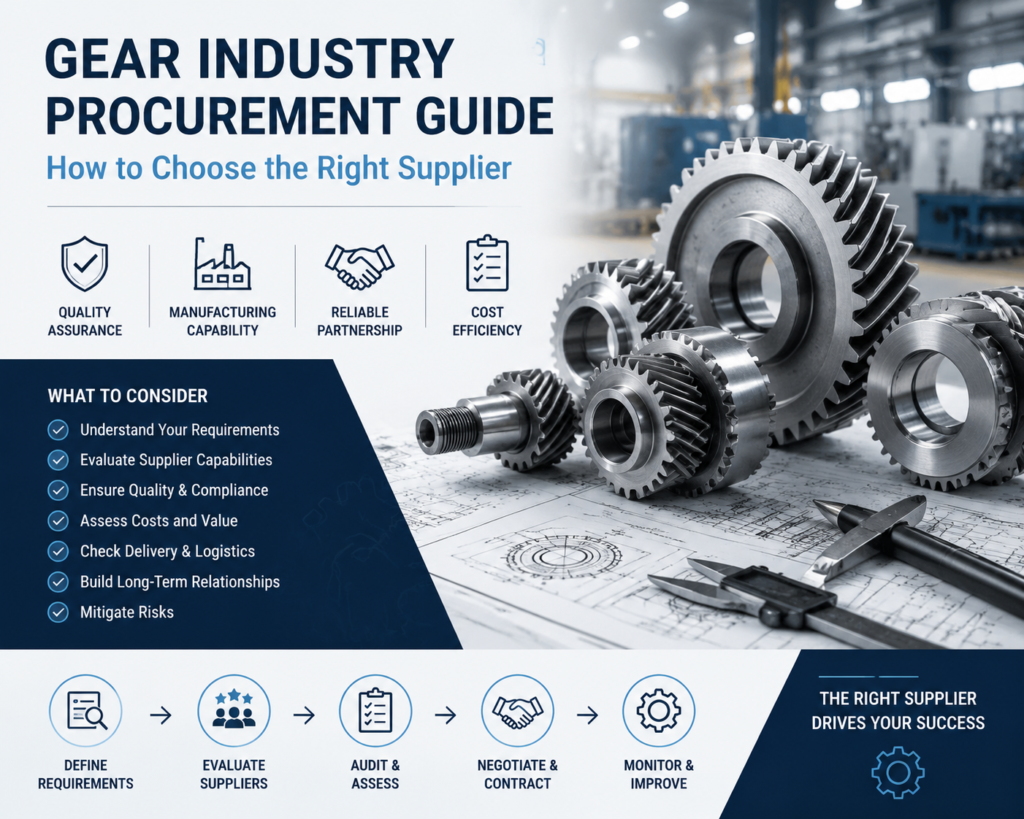
Gear Industry Procurement Guide: How to Choose the Right Supplier
1. Introduction to Gear Procurement
The gear industry, a cornerstone of mechanical motion and power transmission, functions on a complex and often labyrinthine supply chain, spanning raw material suppliers, precision machining workshops, and assembly lines that push tolerances to their physical limits. Selecting the right B2B supplier is not just a matter of cost or lead time—it’s about aligning with partners who can consistently deliver precision-engineered components that won’t make your assembly line grind to a halt. Challenges abound: from fluctuating steel grades and material inconsistencies to communication gaps across time zones, even seasoned procurement engineers can find themselves navigating a minefield of variables that directly impact production uptime.
2. Understanding Your Gear Requirements
Before reaching out to suppliers, it’s crucial to dissect the exact specifications required. Identifying gear procurement types—be it spur, helical, bevel, or worm—and their respective module, pitch, and hardness requirements can save headaches down the line. Quantity and delivery cadence also dictate supplier selection, especially when your operations rely on just-in-time inventory; overstocking inflates costs, while understocking risks downtime. Equally critical are operational conditions: gears subjected to high torque, extreme temperatures, or corrosive environments require specialized materials and coatings, which only certain suppliers can reliably provide.
3. Gear Procurement Key Factors in Supplier Selection
A supplier’s reputation and industry experience often speak louder than glossy brochures. Years of proven performance indicate they understand not just the machinery but the nuances of mechanical tolerances and material science. Quality certifications, such as ISO 9001 or TS 16949, provide a baseline of assurance, but the devil is in the details—auditing adherence to these standards often reveals the supplier’s true capability. Financial stability and production capacity cannot be overlooked; even a technically perfect supplier is of little value if they can’t scale up to meet your peak demand cycles without compromising quality.
4. Evaluating Manufacturing Capabilities
Modern gear production is a marriage of traditional metallurgy and advanced CNC precision. Assessing a supplier’s production technologies—hobbing machines, gear shapers, induction hardening ovens—is critical to determine if they can meet your design tolerances. Customization capabilities, from specialized tooth profiles to bespoke surface treatments, are equally important, particularly for niche industrial applications. Lead times and scalability also play a pivotal role; a supplier who can crank out 1,000 units flawlessly but stumbles at 10,000 is not a strategic partner.
5. Gear Procurement Quality Assurance Practices
A robust QA program is the bedrock of reliable procurement. Inspecting gears using coordinate measuring machines (CMM), gear measurement centers, and surface roughness testers ensures tolerances are consistently met. Equally critical is traceability of raw materials—knowing the origin of your steel, its batch number, and heat treatment process prevents future failures. Handling defective or non-conforming products with a clear protocol prevents small issues from cascading into full-blown production disasters.
6. Pricing and Cost Considerations
Gear Procurement engineers must navigate the delicate balance between cost and performance. Comparing quotes requires looking beyond unit price to the total cost of ownership, including shipping, tooling, and potential warranty claims. Smart negotiation strategies, often leveraging multi-year contracts or volume-based discounts, can make a significant difference without compromising on quality, but this requires a keen understanding of market dynamics and supplier constraints.
7. Supplier Communication and Responsiveness
Clear and timely communication is the oil that keeps procurement running smoothly. Whether it’s confirming specifications, tracking shipments, or troubleshooting production hiccups, suppliers must respond promptly and unambiguously. Utilizing collaborative platforms, shared ERPs, or dedicated supplier portals ensures that everyone stays on the same page, minimizing errors that can lead to costly delays. Urgent inquiries—like rush orders due to unforeseen machine downtime—require suppliers who are not just reactive but proactively engaged.
8. Gear Procurement Supplier Location and Logistics
Geographical considerations play a significant role in procurement strategy. Local suppliers offer faster lead times and simplified logistics, while international suppliers may provide cost advantages but introduce complexities such as customs clearance, shipping delays, and currency fluctuations. Choosing the right shipping method—air, sea, or multimodal—and ensuring robust warehousing and inventory management protocols can prevent operational bottlenecks and safeguard production continuity.
9. Sustainability and Compliance
Environmental responsibility and regulatory compliance are increasingly central to supplier evaluation. Suppliers adhering to ISO 14001 or equivalent standards demonstrate commitment to sustainable practices, from energy-efficient processes to responsible waste management. Cross-border procurement requires navigating diverse regulatory landscapes, ensuring products meet all relevant safety and environmental standards. Suppliers offering sustainability programs or eco-friendly materials not only reduce ecological impact but often enhance long-term reliability and corporate reputation.
10. Risk Management in Gear Procurement
Every procurement strategy should incorporate a structured approach to risk. Identifying potential supply chain vulnerabilities—such as single-source dependencies, geopolitical instability, or volatile material pricing—is the first step. Contingency planning, including maintaining backup suppliers or holding strategic inventory reserves, mitigates disruptions. Continuous monitoring of supplier performance, through KPIs like on-time delivery, defect rates, and responsiveness, ensures risks are managed before they escalate.
11. Leveraging Engineer Recommendations
Design and production engineers are invaluable in supplier selection. Their hands-on experience with gear performance, compatibility, and failure modes provides critical insights beyond what procurement data can reveal. Technical feedback often uncovers subtle issues such as backlash inconsistencies or surface finish inadequacies, while case studies and historical supplier performance highlight who can deliver under real-world conditions rather than just on paper.
12. Supplier Audits and Site Visits
Supplier audits are not mere formalities—they are critical inspections of a supplier’s operational backbone. Planning site visits to observe production processes, machine maintenance, and workforce competence allows procurement teams to verify claims of precision and capacity. Evaluating management practices and workforce skill levels can reveal cultural and operational nuances that directly affect quality and delivery reliability.
13. Contract Negotiation and Terms
Contracts formalize expectations and protect both parties. Key clauses include performance standards, penalties for late delivery, and obligations for warranty and after-sales service. Payment terms, escalation clauses, and dispute resolution mechanisms ensure a clear framework for financial and operational accountability. Well-negotiated agreements foster long-term trust while mitigating risks associated with supply disruptions or quality lapses.
14. Technology and Digital Tools in Procurement
Modern procurement leverages digital ecosystems to streamline operations. ERP systems, supplier portals, and real-time tracking enable transparent, data-driven decision-making. Analytics tools allow engineers and procurement teams to monitor supplier performance, identify trends, and proactively address issues before they affect production. Automation reduces manual errors, accelerates order processing, and enables predictive planning for high-demand periods.
15. Building Long-Term Supplier Relationships
Strategic partnerships offer benefits far beyond transactional exchanges. Collaborative development of specialized gear solutions, joint R&D initiatives, and shared risk management programs enhance innovation and resilience. Continuous improvement initiatives, facilitated by regular feedback loops and performance reviews, cultivate mutual trust and ensure that suppliers evolve alongside your operational requirements.
16. Case Studies and Best Practices
Successful procurement often comes down to learning from real-world examples. Case studies demonstrate how proper supplier vetting, rigorous QA protocols, and robust logistical planning prevent costly downtime and improve ROI. Conversely, examining procurement failures highlights pitfalls such as overreliance on a single supplier or insufficient quality audits. Industry benchmarks provide tangible standards, enabling companies to measure supplier performance against proven best practices.
17. Conclusion and Key Takeaways
In the fast-paced and precision-driven world of gear manufacturing, selecting the right B2B supplier is both an art and a science. Prioritizing quality, reliability, and operational compatibility while leveraging technical expertise ensures smooth production and minimized risk. By implementing structured evaluation criteria, fostering collaborative relationships, and continuously monitoring performance, procurement engineers can secure a supply chain that is as robust and efficient as the gears it supports, turning what could be a logistical headache into a strategic advantage. Gear Procurement